

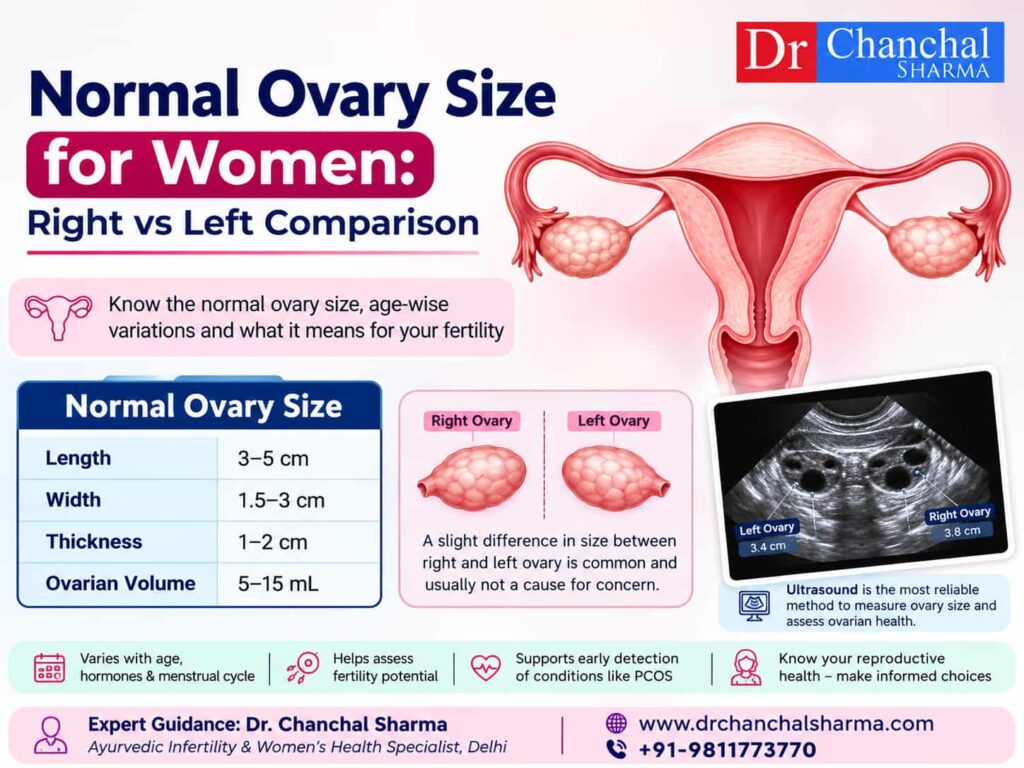
Knowing the normal ovary size is important for understanding women’s reproductive health. The size of the ovaries can naturally vary depending on age, hormonal changes, and the menstrual cycle. A slight difference between the right ovary size and left ovary size is common and is usually not a cause for concern.
Doctors generally assess ovary size using a pelvic or transvaginal ultrasound, along with ovarian volume, follicle count, and other clinical findings. While ovary size can provide valuable information, it should always be interpreted together with symptoms, medical history, and fertility goals.
In this guide, you’ll learn the normal ovary size in centimeters, age-wise variations, ultrasound measurements, and how ovary size may relate to fertility.
The normal ovary size in women of reproductive age is generally around 3–5 cm in length, 1.5–3 cm in width, and 1–2 cm in thickness, with an average ovarian volume of 5–15 mL. The right ovary may sometimes be slightly larger than the left ovary, and this is often considered normal. Ultrasound is the most reliable method for measuring ovary size and evaluating overall ovarian health.
Normal Ovary Size Chart
| Measurement | Normal Range |
| Length | 3–5 cm |
| Width | 1.5–3 cm |
| Thickness | 1–2 cm |
| Ovarian Volume | 5–15 mL |
Note: Ovary size can vary based on age, menstrual cycle, pregnancy, and menopause. A healthcare professional should interpret ultrasound findings in the context of your overall reproductive health.
What Is the Normal Ovary Size in Women?
The ovaries are two small, almond-shaped organs located on either side of the uterus. They play a vital role in the female reproductive system by producing eggs, releasing hormones such as estrogen and progesterone, and supporting fertility.
A healthy ovary size is not the same for every woman. Factors such as age, hormonal status, pregnancy, and the menstrual cycle can influence ovarian dimensions. During the reproductive years, ovaries are generally larger and more active, while they gradually shrink after menopause.
Why Does Normal Ovary Size Matter?
Understanding the normal ovary size helps doctors:
- Evaluate overall ovarian health
- Monitor ovulation and follicular development
- Assess fertility potential
- Detect ovarian cysts or enlarged ovaries
- Identify age-related changes
- Support diagnosis of conditions such as PCOS when combined with other clinical findings
It’s important to remember that ovary size alone does not determine fertility. Doctors also consider ovarian reserve, hormone levels, antral follicle count (AFC), and ultrasound findings before making any diagnosis.
Right Ovary Size vs Left Ovary Size: Is One Ovary Bigger?
Many women wonder whether the right ovary size and left ovary size should be exactly the same. In most cases, the answer is no.
A slight difference in size between the two ovaries is completely normal. In some women, the right ovary may appear slightly larger because of natural anatomical differences, blood supply, or the presence of a developing follicle during the menstrual cycle.
Right Ovary vs Left Ovary Comparison
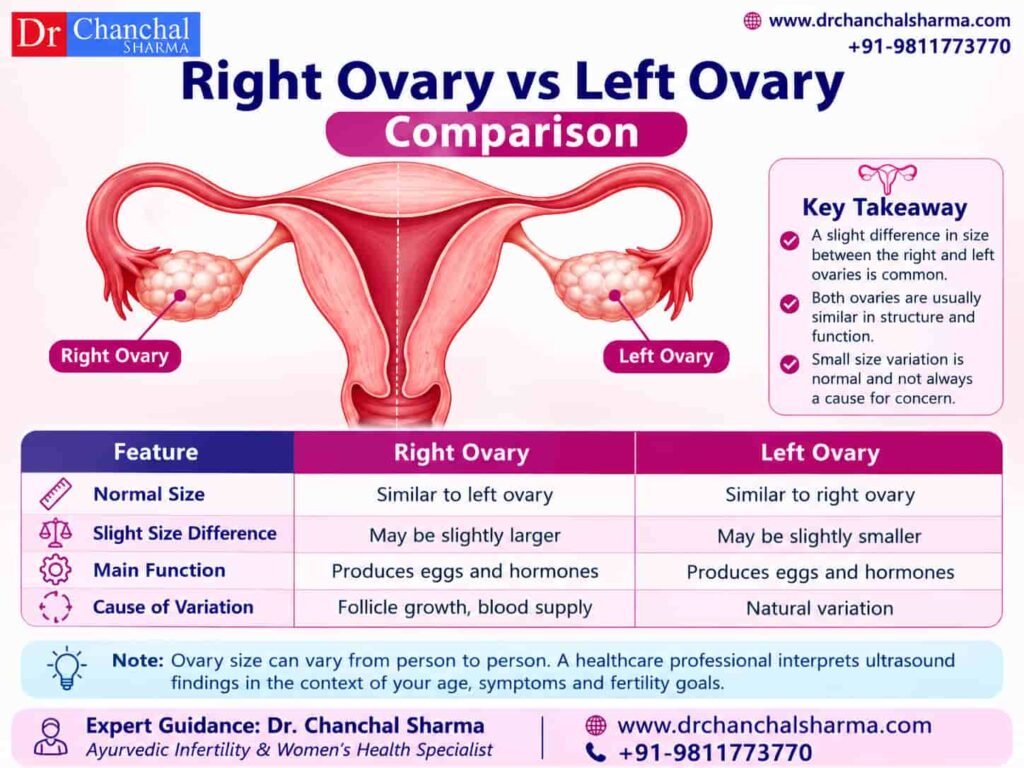
| Feature | Right Ovary | Left Ovary |
| Normal Size | Similar to left ovary | Similar to right ovary |
| Slight Size Difference | May be slightly larger | May be slightly smaller |
| Function | Produces eggs and hormones | Produces eggs and hormones |
| Cause of Variation | Follicle growth, blood supply | Natural variation |
When Is the Difference a Concern?
A healthcare professional may recommend further evaluation if:
- One ovary is significantly enlarged
- An ovarian cyst or mass is detected
- Severe pelvic pain is present
- Ultrasound findings appear abnormal
- There are persistent fertility concerns
In many cases, a small difference between the ovaries is simply a normal variation and does not require treatment.
Normal Ovary Size Chart by Age
The normal ovary size changes throughout a woman’s life. Ovaries are typically largest during the reproductive years and gradually decrease in size as ovarian function declines with age.
Age-Wise Normal Ovary Size
| Age Group | Average Ovary Size | Notes |
| Teenagers | Smaller, developing | Hormonal changes begin after puberty |
| 20–35 Years | Largest and most active | Peak fertility and regular ovulation |
| 35–45 Years | Slightly smaller | Ovarian reserve gradually declines |
| Before Menopause | Continued gradual reduction | Hormonal fluctuations become more common |
| After Menopause | Significantly smaller | Lower hormone production and reduced ovarian activity |
Does Ovary Size Change With Age?
Yes. As women age, the number and quality of eggs naturally decrease, leading to gradual changes in ovarian volume and size. These changes are a normal part of the reproductive aging process and do not necessarily indicate a medical problem.
However, if ultrasound reports show unusually large or unusually small ovaries, especially when accompanied by symptoms, a detailed medical evaluation is recommended.
How Is Ovary Size Measured on Ultrasound?
Doctors usually measure normal ovary size using a pelvic ultrasound or transvaginal ultrasound. These imaging tests provide clear pictures of the ovaries and help evaluate their size, shape, ovarian volume, and the presence of follicles or cysts.
A transvaginal ultrasound is generally preferred for sexually active women because it offers more detailed images of the ovaries.
What Does an Ultrasound Report Include?
An ovary ultrasound report may mention:
- Length, width, and thickness of each ovary
- Ovarian volume
- Number of ovarian follicles
- Presence of ovarian cysts or masses
- Blood flow (if Doppler ultrasound is performed)
- Overall ovarian appearance
How Is Ovarian Volume Calculated?
Doctors calculate ovarian volume using a standard formula:
Ovarian Volume = Length × Width × Thickness × 0.523
Ovarian volume provides additional information about ovarian function and is often evaluated alongside age, symptoms, and fertility goals.
Important: A single ultrasound measurement should never be used to diagnose a condition. Your doctor will also consider your menstrual history, hormone levels, and overall reproductive health.
Does Ovary Size Affect Fertility?
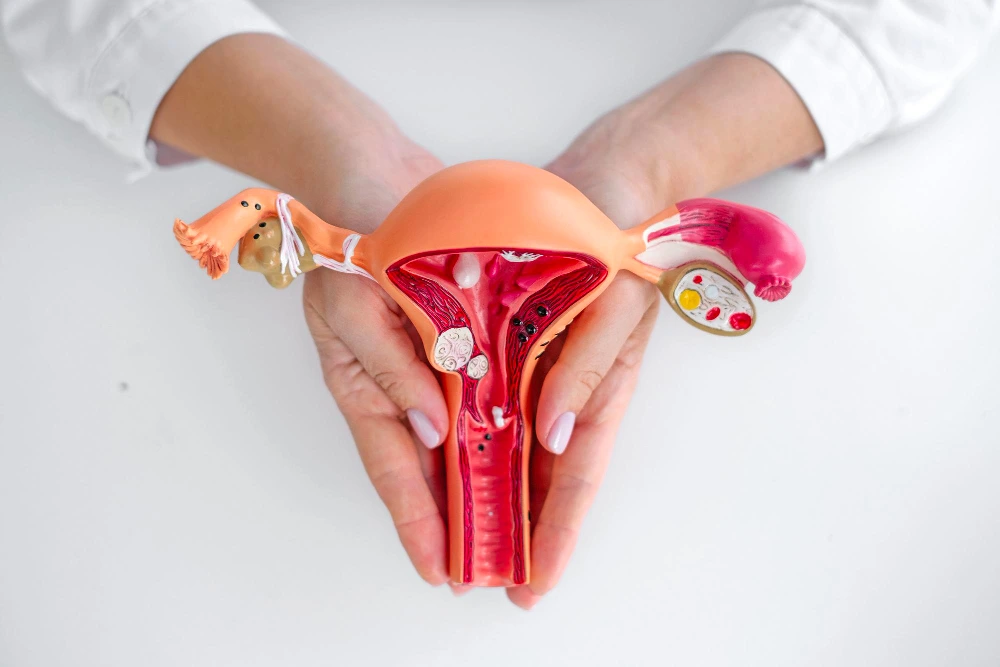
Many women believe that a larger ovary automatically means better fertility, while a smaller ovary means infertility. In reality, ovary size alone does not determine fertility.
Several factors work together to influence fertility, including:
- Ovarian reserve (the number of remaining eggs)
- Egg quality
- Regular ovulation
- Hormonal balance
- Antral Follicle Count (AFC)
- Overall reproductive health
Ovary Size and Fertility: Key Facts
- A normal-sized ovary does not always guarantee normal fertility.
- Smaller ovaries may be seen with reduced ovarian reserve, especially as women age.
- Enlarged ovaries can occur due to PCOS, ovarian cysts, or other conditions.
- Fertility assessment should include ultrasound, hormone tests, and clinical evaluation—not ovary size alone.
Doctors usually assess fertility using a combination of:
- AMH (Anti-Müllerian Hormone)
- AFC (Antral Follicle Count)
- Hormone profile
- Ovulation tracking
- Ultrasound findings
- Medical history
When Should You Consult a Doctor?
A slight variation in ovary size is common and often harmless. However, medical evaluation is important if you experience symptoms or abnormal ultrasound findings.
Consult a doctor if you have:
- Irregular or absent menstrual periods
- Persistent pelvic or lower abdominal pain
- Difficulty conceiving
- Recurrent ovarian cysts
- Enlarged ovaries on ultrasound
- Unexplained bloating or pelvic pressure
- Sudden severe pelvic pain
Early evaluation helps identify conditions such as:
- PCOS (Polycystic Ovary Syndrome)
- Ovarian cysts
- Endometriosis
- Reduced ovarian reserve
- Hormonal imbalances
Prompt diagnosis can improve treatment outcomes and support better reproductive health.
Expert Advice from Dr. Chanchal Sharma
According to Dr. Chanchal Sharma, ovary size should always be interpreted alongside a woman’s age, symptoms, menstrual history, hormonal profile, and fertility goals. A slight difference between the right and left ovary is often normal and does not necessarily indicate a health problem.
If an ultrasound reveals enlarged ovaries, reduced ovarian volume, or other abnormalities, further evaluation may be recommended to determine the underlying cause. Personalized treatment based on a complete assessment is more valuable than relying on ovary size alone.

Dr. Chanchal Sharma
BAMS, MD – Ayurveda | Ayurvedic Gynecologist & Infertility Specialist
Dr. Chanchal Sharma specializes in the Ayurvedic treatment of PCOS, Infertility, Blocked Fallopian Tubes, Endometriosis, Irregular Periods, and Women’s Reproductive Health. She provides personalized treatment plans focused on natural healing and holistic wellness.
📍 J-145, Ground Floor, Rajouri Garden, New Delhi – 110027
Frequently Asked Questions
1. What is the normal size of both ovaries?
In women of reproductive age, the ovaries are generally about 3–5 cm long, 1.5–3 cm wide, and 1–2 cm thick, although normal variations can occur.
2. Is the right ovary bigger than the left ovary?
Yes. In many women, the right ovary may be slightly larger than the left due to normal anatomical and physiological differences. This is usually not a cause for concern.
3. Does ovary size change with age?
Yes. Ovaries are typically larger during the reproductive years and gradually become smaller after menopause as ovarian activity declines.
4. What is the normal ovary size on ultrasound?
A healthy ovary generally measures 3–5 cm in length with an ovarian volume of approximately 5–15 mL, though the exact size can vary depending on age and the menstrual cycle.
5. Can ovary size affect fertility?
Ovary size may provide useful information, but fertility depends on multiple factors such as ovarian reserve, egg quality, ovulation, hormone levels, and overall reproductive health.
6. What does an enlarged ovary indicate?
An enlarged ovary may be associated with conditions such as PCOS, ovarian cysts, endometriosis, or other gynecological disorders. A healthcare professional can determine the exact cause after a thorough evaluation.
Conclusion
Understanding the normal ovary size can help you better interpret ultrasound reports and make informed decisions about your reproductive health. While the right ovary and left ovary may differ slightly in size, these differences are often normal. Age, hormonal changes, and the menstrual cycle all influence ovarian measurements.
Remember, ovary size is only one part of the overall fertility assessment. A comprehensive evaluation that includes ovarian reserve, hormone levels, ultrasound findings, and medical history provides a much clearer picture of reproductive health.
If you have concerns about your ovary size, irregular periods, ovarian cysts, PCOS, or fertility, consult Dr. Chanchal Sharma for a personalized assessment and evidence-based guidance tailored to your reproductive health needs.
Medical Disclaimer: This article is for educational purposes only and should not replace professional medical advice, diagnosis, or treatment. Always consult a qualified healthcare provider for personalized recommendations.
Read Our More Articles on Women’s Ayurvedic Health Care-
- विश्व आयुर्वेद दिवस महिला स्वास्थ्य को समर्पित
- महिलाओं को बार-बार यूरिन इन्फेक्शन क्यों होता है? कारण, लक्षण और बचाव
- जानिए PCOD को आयुर्वेदिक उपचार से कैसे ठीक करें
- International Women’s Day 2026
- How Age Affects Fertility in Men and Women