
How to Increase Fertility in Women Naturally
Infertility affects nearly 15% of couples worldwide, making it far more common than most people realize. Yet, it remains widely misunderstood—often surrounded by myths, quick fixes, and misleading advice. Female fertility is not controlled by a single factor. Instead, it depends on a complex interplay of hormones, ovulation cycles, lifestyle habits, and nutrition.
In this guide, we break down science-backed, realistic ways to improve fertility naturally—without relying on trends or misinformation. From understanding ovulation health to managing stress, sleep, diet, and reproductive wellness, every small step can contribute to better fertility outcomes over time.
Many women experience challenges with conception due to issues such as hormonal imbalance, irregular ovulation, poor egg quality, thyroid disorders, PCOS, endometriosis, or lifestyle-related factors. Identifying the root cause early is essential for improving the chances of pregnancy naturally and safely.
A balanced fertility-supportive lifestyle usually includes:
- Nutrient-rich foods that support hormonal health
- Maintaining a healthy body weight
- Regular physical activity without overtraining
- Stress management and quality sleep
- Avoiding smoking, excessive alcohol, and environmental toxins
- Tracking ovulation cycles accurately
Natural fertility improvement is not about instant results—it is about creating the right internal environment for reproductive health. Consistency, medical guidance, and evidence-based care play an important role in the journey toward conception.
For women looking for a holistic and personalized approach, experts like Dr Chanchal Sharma focus on combining reproductive health awareness with individualized fertility care to support overall wellness and conception goals naturally.
Understanding Female Fertility
Before improving fertility, it’s important to understand how it works.
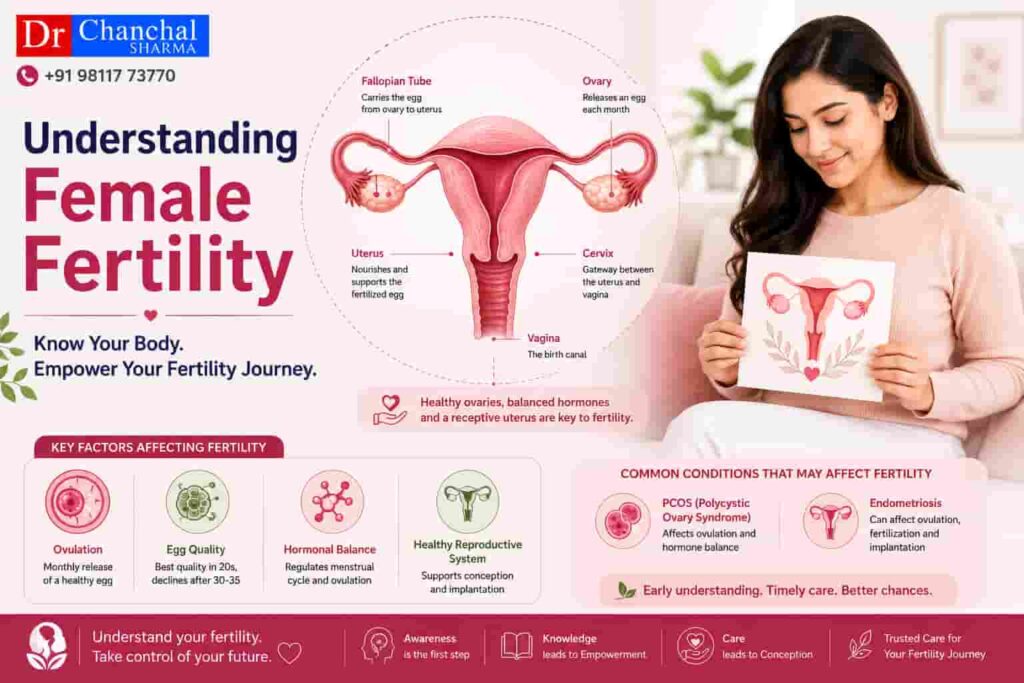
Key Factors Affecting Fertility
- Ovulation – The monthly release of an egg from the ovary
- Egg Quality – Declines with age, especially after 30 – 35
- Hormonal Balance – Regulates the menstrual cycle and ovulation
Common Medical Conditions
- Polycystic Ovary Syndrome (PCOS)
- Endometriosis
These conditions can interfere with ovulation, fertilization, and implantation, making conception more difficult.
Diet & Nutrition (Most Important Factor)
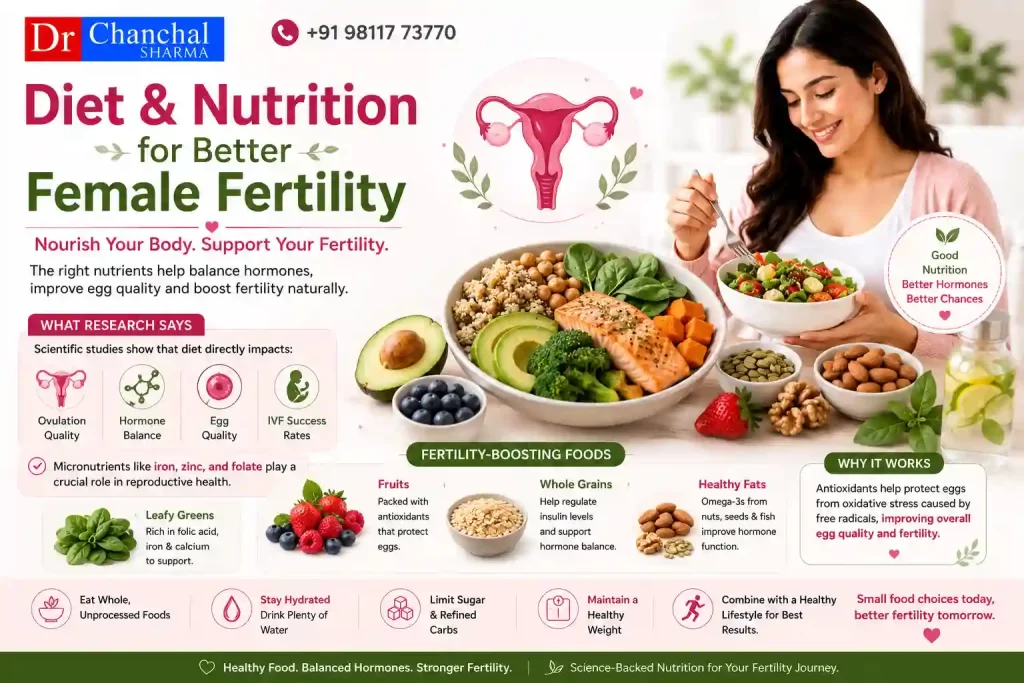
What Research Says
Scientific studies show that diet directly impacts:
- Ovulation quality
- Hormone balance
- IVF success rates
Micronutrients like iron, zinc, and folate play a crucial role in reproductive health.
Fertility-Boosting Foods
- Leafy greens – Rich in folic acid
- Fruits – Packed with antioxidants
- Whole grains – Help regulate insulin levels
- Healthy fats – Omega-3s improve hormone function
Why It Works
Antioxidants help protect eggs from oxidative stress caused by free radicals, improving overall egg quality.
Lifestyle Changes That Matter
Your daily habits have a major impact on fertility.
Evidence-Based Habits
- Maintain a healthy body weight
- Engage in moderate exercise (avoid overtraining)
- Get 7 – 8 hours of quality sleep
Research consistently shows that lifestyle factors like weight, stress, and physical activity significantly influence fertility outcomes.
Stress & Fertility (The Hidden Factor)
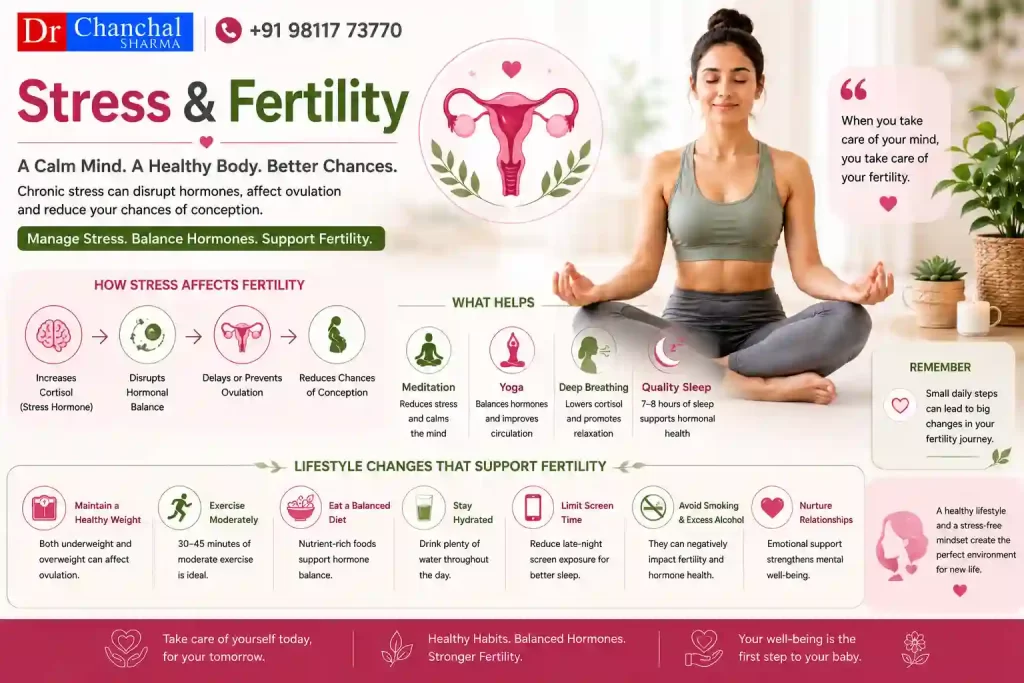
Chronic stress can:
- Disrupt hormonal balance
- Delay or prevent ovulation
What Helps
- Meditation
- Yoga
- Deep breathing exercises
Doctors increasingly emphasize stress management as a foundational part of fertility care – often more effective than quick hacks.
Supplements: What Science Actually Says
While supplements are popular, scientific evidence is still evolving.
Commonly Recommended Nutrients
- Folic acid – Essential for reproductive health
- Vitamin D – Linked to improved fertility outcomes
- Iron – Supports ovulation
- CoQ10 – May improve egg quality in some women
Always consult a healthcare professional before starting any supplement.
When to Seek Medical Help
You should consider consulting a doctor if:
- You’ve been trying to conceive for 6 – 12 months without success
- You have irregular periods
- You have known conditions like PCOS or endometriosis
Treatment Options
- Ovulation-inducing medications
- Assisted techniques like IVF
Early intervention can significantly improve outcomes.
Myths vs Reality
“You can boost fertility instantly”
Reality: Fertility improves gradually with consistent habits
“Only women are responsible”
Reality: Male factors contribute equally
“3-month fertility reset plans work”
Reality: No strong scientific evidence supports quick fixes
Practical Daily Routine

Morning
- Protein-rich, high-fiber breakfast
During the Day
- Balanced meals
- Stay hydrated
Evening
- Light exercise or yoga
Weekly
- Track ovulation cycles
Consistency matters more than perfection.
Conclusion
Improving fertility is not about shortcuts – it’s about sustainable, science-backed changes.
Focus on:
- Balanced nutrition
- Healthy lifestyle habits
- Stress management
- Timely medical guidance
Small, consistent improvements can significantly enhance reproductive health over time.
FAQs
Q: How long does it take to improve fertility?
A: Typically 3 – 6 months of consistent lifestyle changes show noticeable improvements.
Q: What is the best age for pregnancy?
A: Fertility is highest in the 20s and early 30s but varies individually.
Q: Can diet really improve fertility?
A: Yes, research shows diet plays a key role in hormone balance and egg quality.

Dr. Chanchal Sharma
BAMS, MD – Ayurveda | Ayurvedic Gynecologist & Infertility Specialist
Dr. Chanchal Sharma specializes in the Ayurvedic treatment of PCOS, Infertility, Blocked Fallopian Tubes, Endometriosis, Irregular Periods, and Women’s Reproductive Health. She provides personalized treatment plans focused on natural healing and holistic wellness.
📍 J-145, Ground Floor, Rajouri Garden, New Delhi – 110027