
Home › Ayurveda Treatments › Fallopian Tube Blockage
Learn about Ayurvedic Nasya Treatment, including its purpose, procedure, potential benefits, preparation, aftercare and important safety considerations.
✦Personalised Ayurvedic Assessment ✦ Guided Nasya Procedure
✦ Panchakarma-Based Care ✦ Post-Treatment Guidance
Get an Appointment
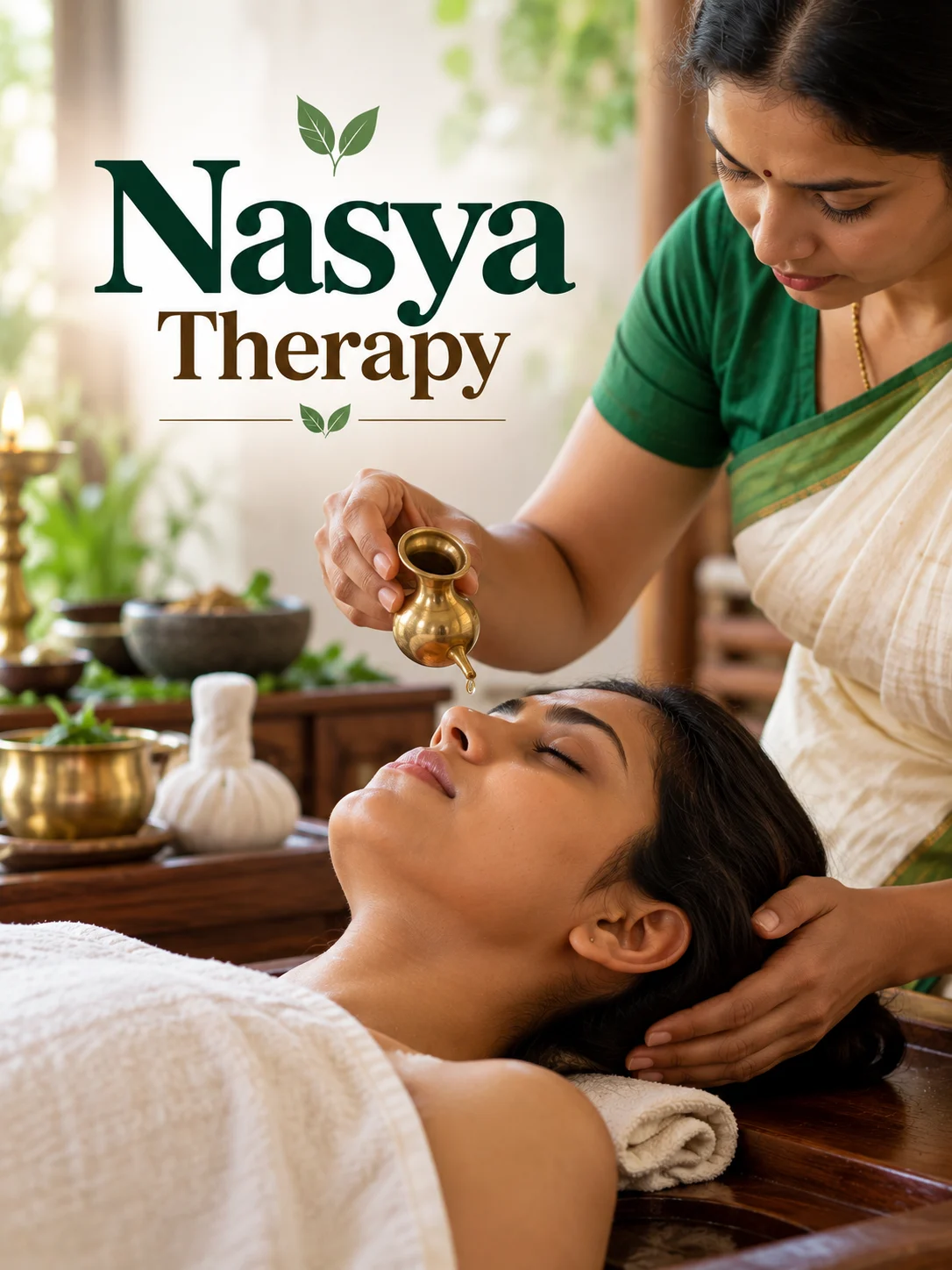
Nasya Treatment in Ayurveda is a traditional therapeutic procedure in which selected Ayurvedic preparations are administered through the nasal passages. Depending on the purpose of treatment, different preparations and methods may be used.
In Ayurvedic practice, Nasya is particularly associated with concerns involving the head, neck and upper respiratory region. The procedure is selected according to the individual’s symptoms, health condition, constitution, age and overall treatment plan.
Nasya should not be considered a single treatment with the same preparation or dosage for everyone. A qualified Ayurvedic practitioner first assesses the individual’s condition before deciding whether Nasya is appropriate.
Nasya Therapy may be included in an Ayurvedic treatment plan when the practitioner considers nasal administration appropriate for a particular concern.
Traditionally, Nasya has been used as part of Ayurvedic care for conditions and symptoms involving areas such as:
The potential benefits depend on the type of Nasya, preparation used, therapeutic purpose and individual response. Evidence for specific medical conditions remains limited for several applications, so Nasya should not be presented as a guaranteed cure or replacement for appropriate medical treatment.
Ayurvedic texts and clinical practice describe different forms of Nasya based on the preparation and therapeutic purpose.
Marsha Nasya involves administering a comparatively larger quantity of medicated oil or another suitable preparation through the nostrils. It is generally performed as a supervised therapeutic procedure
Pratimarsha Nasya uses a smaller quantity and is traditionally described as a gentler form of nasal oil application. Its use and suitability should still be determined according to individual needs.
Shodhana or Virechana Nasya is traditionally intended for a more cleansing-oriented therapeutic approach and uses preparations selected according to Ayurvedic assessment.
Other classifications of Nasya may also include methods such as Pradhamana, Avapeedana and related forms. The specific method should be selected by a qualified practitioner rather than used routinely without assessment.
The exact procedure varies according to the type of Nasya and the individual’s condition. A supervised treatment generally involves three broad stages.
The practitioner first reviews the patient’s health history and treatment requirements. Appropriate preparation may include positioning, gentle facial or head massage and other preparatory measures according to the selected procedure.
Current clinical consensus work on Marsha Nasya also emphasises preparation, the main therapeutic procedure, post-treatment care, dosage and quality assurance as important components of safe practice.
The patient is positioned appropriately, and the selected Ayurvedic preparation is administered through the nostrils in the quantity determined by the practitioner.
The procedure should be performed carefully because nasal administration requires appropriate preparation, dosage and technique.
After administration, the practitioner provides suitable post-treatment instructions. These may include rest, avoiding unnecessary exposure to irritants and following dietary or lifestyle recommendations appropriate to the individual.
The aftercare plan depends on the type of Nasya performed and the person’s overall treatment protocol.
Nasya is traditionally used in Ayurveda as part of personalised care for certain head, neck and nasal concerns.
Depending on the treatment approach, practitioners may use Nasya to support:
However, these potential benefits should not be interpreted as guaranteed outcomes. Clinical evidence varies considerably by condition, and some research on Nasya remains limited or involves small studies. Therefore, treatment expectations should be discussed individually with a qualified practitioner.
Nasya can be an appropriate Ayurvedic procedure when it is selected correctly and performed with suitable preparation, dosage and supervision.
However, it is not appropriate for everyone or for every situation. Before treatment, the practitioner should consider the person’s health history, current medicines, nasal or respiratory concerns and any history of nasal bleeding or other relevant conditions.
Self-administering therapeutic Nasya without appropriate guidance may be unsuitable, particularly when a specific preparation, dosage or therapeutic purpose is involved.
If you experience significant discomfort, persistent irritation, bleeding or any unexpected reaction after nasal administration, seek appropriate medical advice.
Preparation and recovery depend on the type of Nasya being performed.
Your practitioner may advise you to:
There is no single recovery period that applies to every person. Your individual treatment plan should determine what you should do before and after the procedure.
For people looking for Nasya Treatment in Delhi, the important consideration is not simply the availability of the procedure but whether the treatment is appropriate for the individual’s health needs.
At Dr. Chanchal Sharma’s Ayurvedic clinic, Nasya can be considered as part of a personalised Ayurvedic treatment plan after an appropriate assessment.
The treatment approach may vary according to symptoms, medical history, constitution and the purpose for which Nasya is being considered.
Explore personalised Ayurvedic care with Dr. Chanchal Sharma.
Book a consultation to discuss your concerns and understand your options.
Nasya is a traditional Ayurvedic procedure in which selected preparations are administered through the nasal passages. Different forms of Nasya may be used depending on the therapeutic purpose and individual assessment.
Nasya is traditionally used to support certain head, neck and nasal concerns. Potential benefits vary according to the procedure, preparation and individual response, and should not be considered guaranteed.
The patient is positioned appropriately, the required preparation is selected, and it is administered through the nostrils under suitable guidance. Preparation and post-treatment care may also be part of the procedure.
The oil or preparation depends on the purpose of treatment and the practitioner’s Ayurvedic assessment. Different formulations may be selected for different therapeutic requirements, so there is no single oil suitable for everyone.
Some gentle forms of nasal oil application are described in Ayurvedic self-care practices. However, therapeutic Nasya involving specific preparations, dosage or therapeutic intent should not be self-administered without appropriate guidance.
The frequency depends on the type of Nasya, the purpose of treatment and the individual’s health condition. A qualified practitioner should determine the appropriate schedule rather than following a fixed frequency for everyone.
Nasya Treatment in Ayurveda is a traditional nasal therapeutic procedure that should be selected according to individual needs rather than used as a one-size-fits-all treatment.
A proper assessment, appropriate preparation, correct dosage, supervised administration and suitable aftercare are important parts of responsible Nasya practice.
If you are considering Nasya for a particular health concern, discuss your symptoms and medical history with a qualified healthcare professional or Ayurvedic practitioner before beginning treatment.
If you are exploring Panchakarma and related Ayurvedic procedures, you can also learn more about:
These procedures have different purposes, preparation requirements and treatment protocols, so they should be selected according to individual assessment.
Medical Disclaimer: This page provides general health information and is not a substitute for individual medical diagnosis, treatment or professional advice. Nasya should be undertaken only after appropriate assessment and under qualified supervision. If you have a medical condition, take regular medication, are pregnant, have recurrent nasal bleeding or have other health concerns, consult a qualified healthcare professional before starting treatment.