
Home › Ayurveda Treatments › Fallopian Tube Blockage
Personalised Ayurvedic Panchakarma care with guidance on treatment procedures, preparation, diet, recovery and individual treatment needs.
✦ Panchakarma Treatment Planning ✦ Personalised Ayurvedic Assessment
✦ Guided Ayurvedic Therapies ✦ Diet & Post-Treatment Care
Get an Appointment
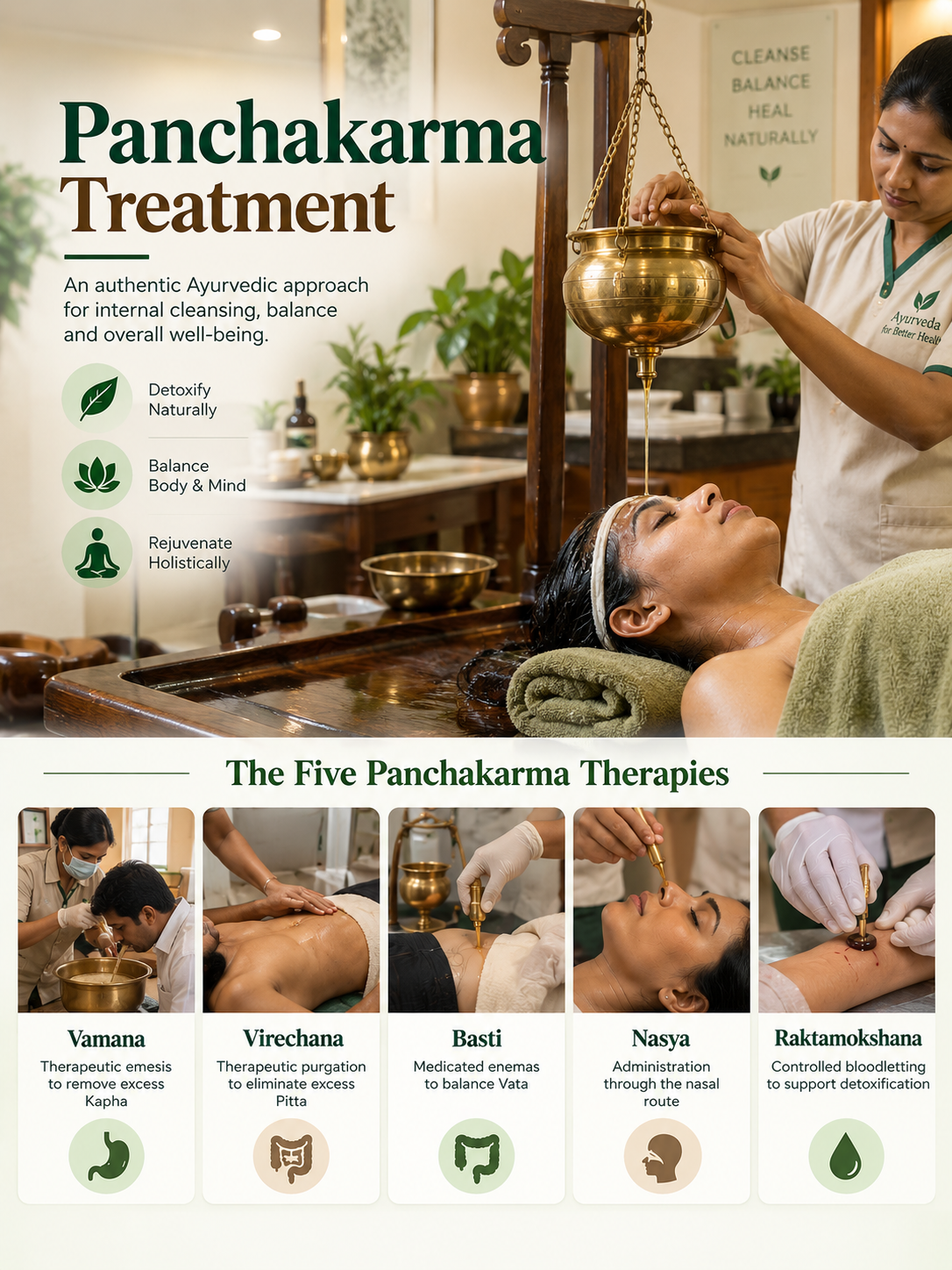
Panchakarma is a traditional Ayurvedic approach involving five therapeutic procedures, selected according to an individual’s health condition and treatment needs. The word Panchakarma refers to “five actions” and traditionally includes Vamana, Virechana, Sneha Basti, Nasya and Raktamokshana. Panchakarma is not a single procedure that is performed in the same way for everyone. An Ayurvedic practitioner may consider factors such as health history, digestion, age, strength and current concerns before recommending a suitable treatment approach.
In Ayurveda, Panchakarma is generally approached as an individualised treatment process rather than a standard package. Depending on the assessment, a practitioner may recommend preparation therapies followed by one or more appropriate procedures.
The purpose, duration and intensity of treatment can therefore vary from person to person. Not everyone requires all five Panchakarma procedures.
Panchakarma treatment is traditionally described through three broad stages:
Purvakarma prepares the body for the main procedure. It may include therapies such as Snehana and Swedana, depending on the individual’s treatment plan.
This is the main therapeutic stage and may involve Vamana, Virechana, Basti, Nasya or Raktamokshana, according to the practitioner’s assessment.
After the main procedure, appropriate diet, rest and lifestyle guidance may be provided to support recovery and a gradual return to regular activities.
Preparation is an important part of Ayurvedic Panchakarma treatment. Depending on the planned procedure, the practitioner may recommend Snehana, which traditionally involves internal or external oleation, and Swedana, a therapeutic heating or sweating procedure.
The exact preparation is not the same for everyone. It should be selected according to the person’s health, treatment needs and the Panchakarma procedure being considered.
Vamana is a traditional therapeutic emesis procedure used in selected Ayurvedic treatment plans. It involves controlled therapeutic vomiting and should only be performed after appropriate assessment and under professional supervision.
Virechana is therapeutic purgation and is traditionally associated with the management of Pitta-related conditions in Ayurveda. It involves a supervised purgative procedure followed by appropriate dietary and recovery guidance.
Basti involves the administration of selected Ayurvedic preparations through the rectal route. It is traditionally considered an important Panchakarma procedure, particularly in Ayurvedic approaches focused on Vata-related concerns. Different forms of Basti may be selected according to individual needs.
Nasya involves administering selected Ayurvedic oils, liquids or powders through the nasal route. It is traditionally used for concerns involving the head, neck and upper respiratory region, depending on the individual’s assessment.
Raktamokshana is a traditional Ayurvedic bloodletting procedure. Because it involves an invasive approach, it requires careful assessment and appropriate professional supervision and is not suitable for everyone.
The Benefits of Panchakarma treatment are traditionally described in Ayurveda in relation to the specific procedure selected and the individual’s condition. People may seek Panchakarma as part of personalised Ayurvedic care for selected health concerns, digestive wellbeing or general therapeutic support.
However, Panchakarma should not be presented as a guaranteed detox, cure or solution for every health condition. Individual outcomes can vary, and treatment should be planned according to the person’s needs.
A typical treatment journey may include:
Consultation → Assessment → Preparation → Selected Panchakarma Procedure → Recovery & Dietary Care
The practitioner first evaluates the individual’s condition and then determines whether Panchakarma is appropriate. The selected procedure, preparation and post-treatment care are adjusted accordingly.
Dietary guidance can be an important part of Panchakarma treatment. Depending on the procedure and stage of care, meals may be kept light and easy to digest, with a gradual return to a regular diet during recovery.
The exact Panchakarma treatment diet should be personalised. Foods, meal timing and hydration requirements may differ according to the individual’s condition and the practitioner’s instructions.
Panchakarma can be considered for both men and women when clinically appropriate. The selected procedure depends on the individual’s health, treatment needs and professional assessment rather than gender alone.
Explore personalised Ayurvedic care with Dr. Chanchal Sharma.
Book a consultation to discuss your concerns and understand your options.
It is a traditional Ayurvedic treatment approach involving five therapeutic procedures, selected according to individual health needs and suitability.
The five traditional procedures are Vamana, Virechana, Basti, Nasya and Raktamokshana.
There is no fixed duration. Treatment length depends on the selected procedure, preparation, individual condition and recovery needs.
Light and easily digestible foods may be recommended, depending on the treatment stage and practitioner’s dietary instructions.
Panchakarma should not be self-administered at home. Appropriate assessment, preparation and professional supervision are important for safe treatment.
No. Suitability depends on individual health, medications, hydration, digestion and other relevant medical factors.
Ayurvedic Panchakarma Treatment is a personalised therapeutic approach that may involve preparation, a selected Panchakarma procedure and post-treatment care. Not everyone needs all five procedures, and treatment should be planned according to individual health and treatment needs.
If you are considering Panchakarma, consult a qualified Ayurvedic practitioner before choosing a procedure or starting treatment.
Medical Disclaimer: This page provides general health information and is not a substitute for individual medical diagnosis, treatment, or professional advice. Panchakarma should be undertaken only after appropriate assessment and under qualified supervision. If you have a medical condition, take regular medication, are pregnant, or have health concerns, consult a qualified healthcare professional before starting treatment.