
How to Get Pregnant with PCOS Naturally: Complete Fertility Guide
If you have been diagnosed with Polycystic Ovary Syndrome (PCOS), one of the biggest questions on your mind may be: “Can I get pregnant with PCOS?” The answer is yes — many women with PCOS conceive naturally and go on to have healthy pregnancies.
PCOS is one of the most common hormonal disorders affecting women of reproductive age. It can interfere with ovulation, hormone balance, insulin levels, and menstrual cycles, which may make conception more difficult. However, difficulty does not mean impossibility.
With the right lifestyle changes, fertility-focused nutrition, ovulation tracking, stress management, medical guidance, and timely treatment from Dr. Chanchal Sharma, many women with PCOS successfully improve their chances of pregnancy.
This detailed guide explains:
- How PCOS affects fertility
- Whether natural pregnancy is possible
- Signs of ovulation with PCOS
- Best fertility tips for PCOS
- Foods and supplements that support conception
- Fertility treatments for PCOS
- When to see a fertility specialist
- Common myths about PCOS and pregnancy
Whether you are just starting your fertility journey or have been trying to conceive for some time, this guide will help you understand your body and make informed decisions.
What Is PCOS and How Does It Affect Fertility?
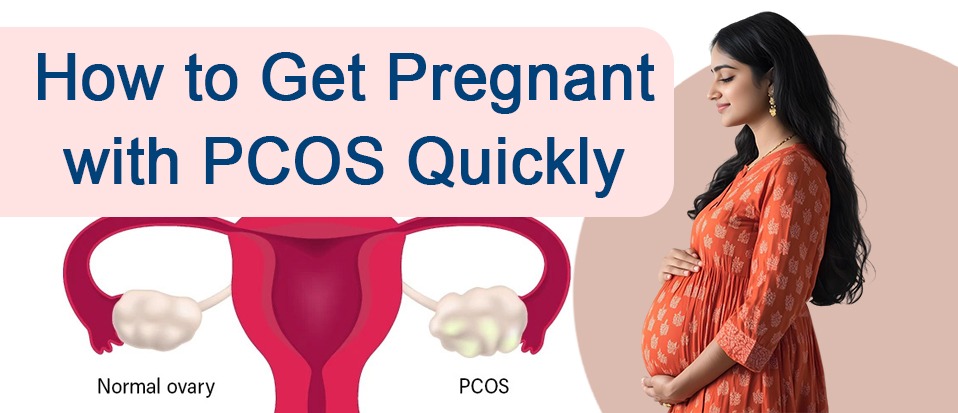
Polycystic Ovary Syndrome (PCOS) is a hormonal and metabolic condition that affects how the ovaries function.
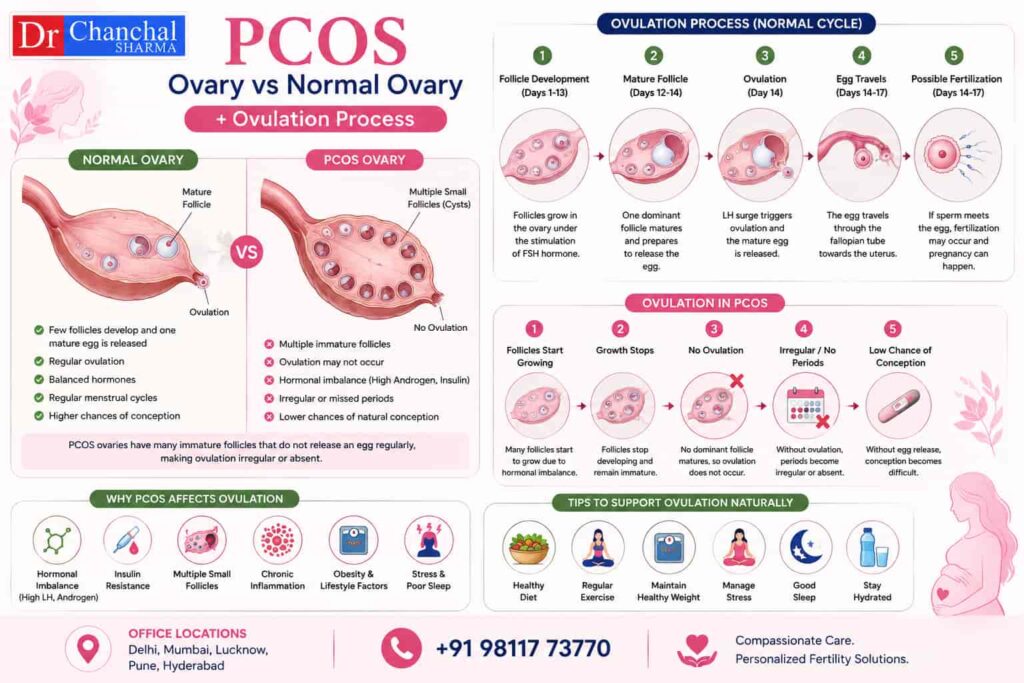
Women with PCOS often have:
- Irregular ovulation
- Higher androgen levels (male hormones)
- Insulin resistance
- Irregular or missed periods
- Multiple small follicles in the ovaries
Ovulation is essential for pregnancy because an egg must be released for fertilization to occur. In PCOS, hormonal imbalance can disrupt this process.
PCOS affects fertility mainly by causing irregular ovulation or no ovulation at all. Without regular egg release, it becomes harder to conceive naturally.
How Ovulation Normally Works
In a healthy menstrual cycle:
- Hormones stimulate the ovaries.
- An egg matures inside a follicle.
- Ovulation occurs.
- The egg travels through the fallopian tube.
- Fertilization may happen if sperm meets the egg.
In women with PCOS, this hormonal communication may not work properly.
Hormones Involved in PCOS
Several hormones play a role in fertility:
- Insulin
- Luteinizing hormone (LH)
- Follicle-stimulating hormone (FSH)
- Estrogen
- Progesterone
- Testosterone
When these hormones become imbalanced, ovulation may become irregular.
Can You Get Pregnant Naturally with PCOS?
Yes, many women with PCOS get pregnant naturally.
Some women ovulate occasionally, while others may ovulate regularly despite having PCOS. Others may need medical support to trigger ovulation.
Your chances of natural pregnancy depend on factors such as:
- Age
- Weight
- Insulin resistance
- Lifestyle habits
- Egg quality
- Frequency of ovulation
- Partner fertility
Important Reality
PCOS does not automatically mean infertility.
Many women with PCOS:
- conceive naturally
- conceive after lifestyle changes
- conceive with ovulation medicines
- conceive through IVF or IUI
The key is identifying what is interfering with ovulation and addressing it early.
Common Symptoms of PCOS
PCOS symptoms can vary from woman to woman.
Common Signs Include:
- Irregular periods
- Missed periods
- Acne
- Excess facial or body hair
- Weight gain
- Hair thinning
- Difficulty getting pregnant
- Mood changes
- Fatigue
- Dark skin patches around neck or underarms
Some women with PCOS still have regular periods. Others may have very few cycles per year.
Why Women with PCOS May Struggle to Conceive
Several fertility-related factors may contribute to delayed conception in PCOS.
1. Irregular Ovulation
Ovulation may happen infrequently or not at all.
Without ovulation, pregnancy cannot occur naturally.
2. Insulin Resistance
Many women with PCOS have insulin resistance.
This means the body does not respond properly to insulin, causing higher insulin levels.
High insulin can:
- increase androgen production
- worsen hormonal imbalance
- interfere with ovulation
- contribute to weight gain
3. Inflammation
Chronic low-grade inflammation is common in PCOS.
Inflammation may affect:
- egg quality
- ovulation
- hormone balance
- implantation
4. Weight Gain and Obesity
Excess body fat can worsen insulin resistance and hormonal imbalance.
Even a small amount of weight loss may improve fertility.
5. Thyroid Problems
Thyroid disorders are common in women with PCOS.
An underactive thyroid may affect:
- ovulation
- menstrual cycles
- implantation
- pregnancy health
6. Stress and Cortisol
Stress can affect fertility hormones.
High cortisol levels may disrupt:
- ovulation
- sleep
- reproductive hormones
- menstrual cycles
Mental health also plays an important role during fertility treatment.
Signs You May Still Be Ovulating with PCOS
Many women think they are not ovulating at all because they have PCOS. However, ovulation may still occur.
Signs of Ovulation Include:
- Clear stretchy cervical mucus
- Mild pelvic pain
- Increased libido
- Breast tenderness
- Positive ovulation predictor kit
- Rise in basal body temperature
Important Note
Ovulation in PCOS may happen later than expected. Tracking your cycle carefully can help identify fertile days.
Best Time to Get Pregnant with PCOS
The best time to try for pregnancy is during your fertile window.
The fertile window usually includes:
- five days before ovulation
- ovulation day
Sperm can survive in the female reproductive tract for up to five days.
The egg survives for around 12 to 24 hours after ovulation.
Fertility Timing Table
| Sign | Meaning |
| Clear stretchy mucus | High fertility |
| Positive LH test | Ovulation likely in 24–36 hours |
| Slight temperature rise | Ovulation may have occurred |
| Mild pelvic pain | Possible ovulation |
How to Improve Fertility Naturally with PCOS
Lifestyle changes often improve fertility significantly.
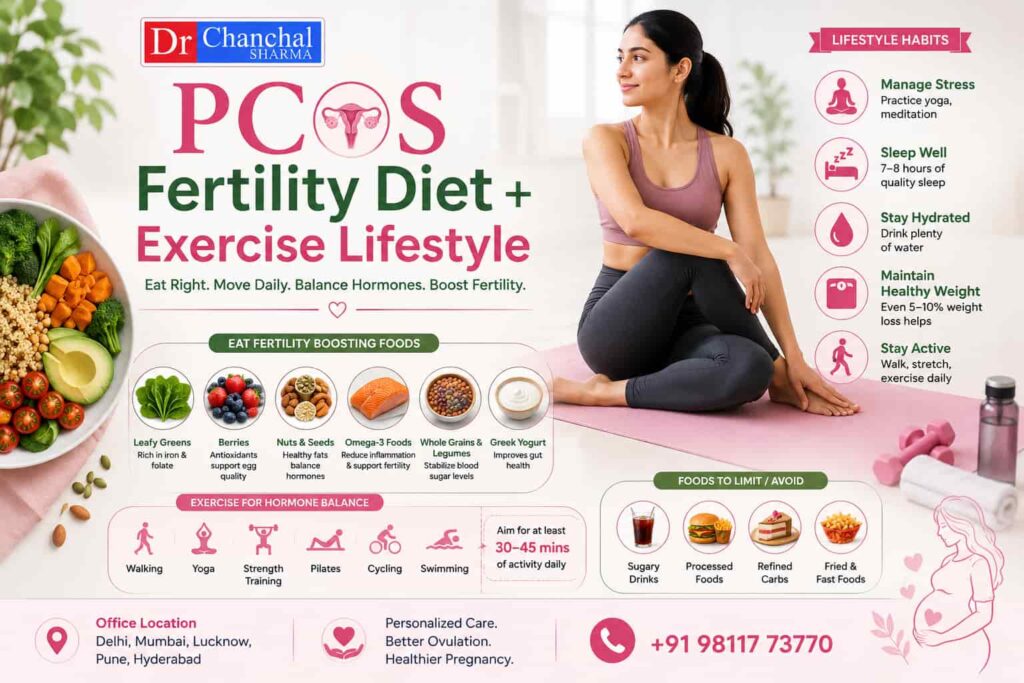
For many women, restoring ovulation begins with improving metabolic and hormonal health.
1. Maintain a Healthy Weight
Losing just 5–10% of excess body weight may:
- improve ovulation
- regulate periods
- reduce insulin resistance
- improve egg quality
- increase pregnancy chances
Weight loss does not need to be extreme.
Slow and sustainable changes work best.
Helpful Tips
- Eat balanced meals
- Avoid crash dieting
- Increase daily movement
- Focus on consistency
- Prioritize sleep
2. Follow a PCOS Fertility Diet
Diet plays a major role in hormone balance.
A fertility-supportive diet helps:
- reduce inflammation
- stabilize insulin
- improve ovulation
- support egg quality
Best Foods for PCOS Fertility
| Eat More | Limit |
| Leafy vegetables | Sugary drinks |
| Berries | Refined carbs |
| Whole grains | Processed snacks |
| Eggs | Fast food |
| Fish | Excess sugar |
| Nuts and seeds | Trans fats |
| Lentils and beans | Packaged desserts |
Indian Diet Tips for PCOS
Women in India often consume high refined carbohydrates.
Try to:
- reduce white bread and sugary tea
- increase protein intake
- include healthy fats
- eat fiber-rich foods
- avoid frequent junk food
Fertility-Friendly Foods
- Spinach
- Broccoli
- Pumpkin seeds
- Chia seeds
- Greek yogurt
- Paneer in moderation
- Salmon
- Walnuts
- Avocado
- Quinoa
3. Exercise Regularly
Exercise improves:
- insulin sensitivity
- blood circulation
- hormone balance
- ovulation
- mental health
Best Exercises for PCOS
- Walking
- Strength training
- Yoga
- Swimming
- Pilates
- Cycling
Aim for at least 150 minutes of moderate activity weekly.
Avoid excessive overtraining because intense exercise may negatively affect hormones.
4. Improve Sleep Quality
Poor sleep can worsen:
- insulin resistance
- cravings
- cortisol levels
- hormonal imbalance
Healthy Sleep Habits
- Sleep 7–8 hours daily
- Reduce screen time before bed
- Sleep at consistent times
- Avoid caffeine late at night
- Create a calming nighttime routine
5. Reduce Stress Naturally
Stress management is often overlooked in fertility care.
Chronic stress may disrupt reproductive hormones.
Helpful Stress Management Techniques
- Meditation
- Deep breathing
- Journaling
- Therapy
- Yoga
- Nature walks
- Talking to supportive people
Your emotional health matters during fertility treatment and throughout your PCOD treatment journey.
6. Track Ovulation Properly
Ovulation tracking improves your chances of timing intercourse correctly.
Ways to Track Ovulation
- Ovulation predictor kits
- Basal body temperature charting
- Cervical mucus tracking
- Ultrasound monitoring
- Fertility tracking apps
Women with irregular cycles may benefit from ultrasound follicular monitoring.
Best Supplements for PCOS Fertility
Certain supplements may support hormone balance and ovulation.
Always consult your doctor before starting supplements.
1. Folic Acid
Folic acid supports:
- healthy fetal development
- early pregnancy
- neural tube prevention
Most doctors recommend starting folic acid before conception.
2. Vitamin D
Vitamin D deficiency is common in PCOS.
Low vitamin D may affect:
- ovulation
- insulin sensitivity
- hormone balance
3. Inositol
Inositol may help improve:
- insulin resistance
- menstrual regularity
- ovulation
- egg quality
4. Omega-3 Fatty Acids
Omega-3 may reduce inflammation and support hormone balance.
5. CoQ10
CoQ10 may support mitochondrial function and egg quality.
Can PCOS Cause Infertility Permanently?
No.
PCOS does not usually cause permanent infertility.
Most women can improve fertility with:
- lifestyle changes
- ovulation medicines
- hormonal treatment
- fertility procedures
Early diagnosis improves long-term outcomes.
Medical Fertility Treatments for PCOS
If natural methods do not work, fertility treatments may help.
1. Ovulation-Inducing Medicines
Doctors commonly prescribe:
- Letrozole
- Clomiphene citrate
These medicines stimulate ovulation.
Letrozole is now commonly preferred in many PCOS cases.
2. Metformin
Metformin helps improve insulin sensitivity.
It may help:
- regulate periods
- improve ovulation
- support weight management
Metformin is especially helpful in women with insulin resistance.
3. Hormonal Injections
Some women may require fertility hormone injections.
These medications stimulate follicle growth in the ovaries.
Ultrasound monitoring is usually required.
4. IUI (Intrauterine Insemination)
IUI involves placing prepared sperm directly into the uterus during ovulation.
This may improve pregnancy chances in certain couples.
5. IVF (In Vitro Fertilization)
IVF may be recommended when:
- ovulation treatments fail
- age becomes a factor
- male infertility exists
- fallopian tubes are blocked
- severe PCOS-related infertility occurs
IVF success rates are often good in women with PCOS because many produce multiple eggs.
When Should You See a Fertility Specialist?
You should consult a fertility expert if:
- You are under 35 and trying for 12 months without success
- You are over 35 and trying for 6 months
- Your periods are absent
- You rarely ovulate
- You have recurrent miscarriages
- You have severe PCOS symptoms
- You have thyroid or endometriosis issues
Early fertility evaluation may prevent unnecessary delays.
Important Fertility Tests for Women with PCOS
A fertility specialist PCOS Doctor in Delhi may recommend:
Blood Tests
- AMH
- FSH
- LH
- Thyroid profile
- Prolactin
- Testosterone
- Insulin levels
- Progesterone
Imaging Tests
- Pelvic ultrasound
- Follicular monitoring
Other Evaluations
- Semen analysis
- HSG test for fallopian tubes
These tests help identify the root cause of delayed conception.
PCOS and Egg Quality
Many women wonder whether PCOS affects egg quality.
PCOS mainly affects ovulation, but inflammation, insulin resistance, and age may also influence egg quality.
Ways to Support Egg Health
- Healthy diet
- Exercise
- Sleep optimization
- Reducing inflammation
- Managing insulin
- Avoiding smoking
- Limiting alcohol
Age also plays a major role in egg quality.
PCOS Fertility After Age 30
Fertility naturally declines with age.
Women over 30 with PCOS should avoid delaying fertility evaluation unnecessarily.
After age 35:
- egg quality declines faster
- miscarriage risk increases
- ovarian reserve may decrease
Early planning improves pregnancy outcomes.
Pregnancy Risks Associated with PCOS
Women with PCOS may have slightly higher risks of:
- gestational diabetes
- high blood pressure
- preeclampsia
- miscarriage
- preterm birth
However, healthy pregnancies are very common with proper prenatal care.
Reduce Pregnancy Risks By:
- maintaining healthy weight
- controlling blood sugar
- taking prenatal vitamins
- attending regular checkups
- following medical advice
Myths About PCOS and Pregnancy
Myth 1: Women with PCOS Cannot Get Pregnant
Fact: Many women with PCOS conceive naturally or with treatment.
Myth 2: IVF Is Always Necessary
Fact: Many women conceive with lifestyle changes or ovulation medicines.
Myth 3: Only Overweight Women Get PCOS
Fact: Lean women can also have PCOS.
Myth 4: Irregular Periods Mean Pregnancy Is Impossible
Fact: Irregular ovulation lowers fertility but does not eliminate pregnancy chances.
Myth 5: Weight Loss Alone Cures PCOS
Fact: Weight loss may improve symptoms, but PCOS management often requires a long-term approach.
Emotional Health and PCOS Fertility
Trying to conceive with PCOS can feel emotionally exhausting.
Many women experience:
- anxiety
- frustration
- guilt
- sadness
- fear about infertility
These feelings are valid.
Seeking emotional support can help improve mental well-being during fertility treatment.
Helpful Sources of Support
- counseling
- support groups
- fertility coaches
- trusted family members
- mental health professionals
Remember that fertility journeys are different for everyone.
Realistic Fertility Timeline with PCOS
Many women ask:
“How long does it take to get pregnant with PCOS?”
The answer varies.
Some women conceive within months.
Others may require fertility treatment.
Important factors include:
- age
- ovulation frequency
- sperm quality
- insulin resistance
- weight
- egg quality
- treatment timing
Early intervention usually improves success rates.
Expert Fertility Advice for Women with PCOS
If you are trying to conceive with PCOS:
- Track ovulation carefully
- Maintain healthy body weight
- Improve sleep quality
- Manage insulin resistance
- Reduce stress levels
- Follow a fertility-supportive diet
- Seek medical help early if needed
- Stay consistent with treatment
Most importantly, do not lose hope.
PCOS may make conception more challenging, but pregnancy is still very possible.
Frequently Asked Questions (FAQs)
Can women with PCOS get pregnant naturally?
Yes. Many women with PCOS conceive naturally, especially after improving ovulation through lifestyle changes.
Does PCOS always cause infertility?
No. PCOS may reduce fertility, but it does not automatically cause permanent infertility.
Can weight loss improve fertility in PCOS?
Yes. Losing even 5–10% of excess weight may improve ovulation and conception chances.
Which exercise is best for PCOS fertility?
Walking, strength training, yoga, swimming, and moderate cardio are beneficial.
Is IVF necessary for all women with PCOS?
No. Many women conceive naturally or with ovulation medicines before needing IVF.
Can women with regular periods still have PCOS?
Yes. Some women with PCOS still have regular periods and ovulation.
Does stress worsen PCOS?
Yes. Chronic stress may affect hormones and menstrual regularity.
Which vitamin is important for PCOS fertility?
Folic acid, vitamin D, omega-3, and inositol are commonly recommended.
Can PCOS increase miscarriage risk?
PCOS may slightly increase miscarriage risk, especially when insulin resistance is uncontrolled.
What is the best age to get pregnant with PCOS?
Fertility is generally higher before age 35.
Final Thoughts
PCOS can affect ovulation and fertility, but it does not mean you cannot become a mother.
Understanding your body, improving your lifestyle, managing insulin resistance, tracking ovulation, and seeking timely medical care can significantly improve your chances of pregnancy.
Every woman’s fertility journey is different.
Some conceive naturally.
Some need ovulation medicines.
Some require IVF.
The important thing is not to delay seeking help if pregnancy is not happening.
With the right guidance, support, and treatment plan from Dr. Chanchal Sharma, many women with PCOS successfully achieve healthy pregnancies and build the family they dream of.