
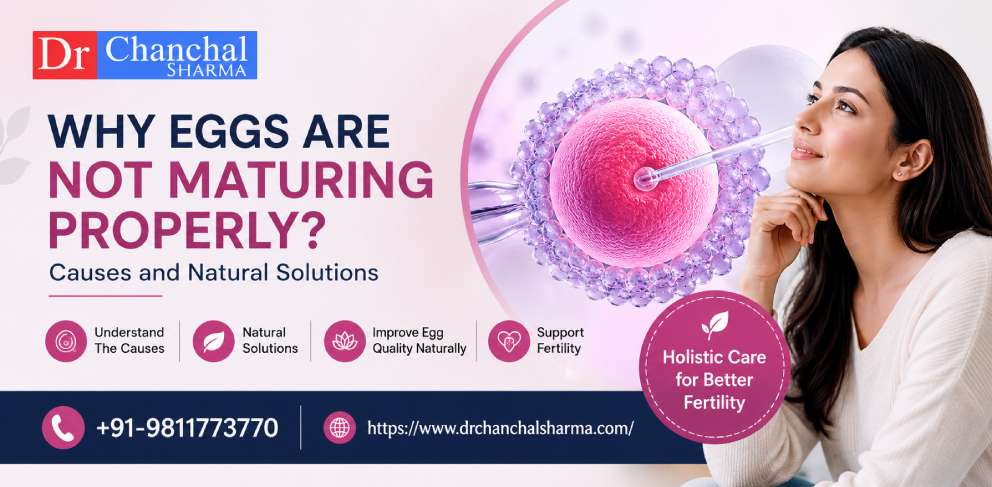
Egg maturation is a crucial part of female fertility. Every month, the ovaries develop several follicles, but usually only one becomes a dominant follicle that releases a mature egg during ovulation. When eggs do not mature properly, pregnancy can become difficult because immature eggs cannot be fertilized successfully. Common causes include hormonal imbalance, PCOS, thyroid disorders, poor ovarian reserve, chronic stress, nutritional deficiencies, and age-related changes. Depending on the underlying cause, lifestyle improvements, balanced nutrition, medical treatment, and personalized fertility care may help support healthy egg development.
What Is Egg Maturation?
Egg maturation is the natural process through which an immature egg develops inside the ovaries until it becomes ready for ovulation and fertilization. This process, known as folliculogenesis, takes place within small sacs called ovarian follicles.
During each menstrual cycle, several follicles begin to grow. As reproductive hormones work together, one follicle usually becomes the dominant follicle, while the others stop developing. The dominant follicle contains the healthiest egg, which undergoes oocyte maturation before being released during ovulation.
Healthy egg maturation is essential for successful conception because only a mature egg has the ability to be fertilized by sperm. Problems in ovarian follicle development or hormonal regulation can interfere with this process, leading to immature eggs, irregular ovulation, or difficulty becoming pregnant.
How Does a Healthy Egg Develop?
The journey of an egg begins long before ovulation. Each stage of follicle development plays an important role in preparing the egg for fertilization.
| Stage | What Happens |
| Primordial Follicle | The immature egg remains dormant inside the ovary. |
| Antral Follicle | Hormones stimulate the follicle to grow. |
| Dominant Follicle | One follicle grows faster than the others and becomes dominant. |
| Mature Egg | The fully developed egg is released during ovulation. |
A healthy menstrual cycle depends on proper ovarian function, balanced hormone levels, and normal follicle maturation. Any disruption during these stages may prevent the egg from reaching maturity.
What Causes Eggs Not to Mature?
Egg maturation is influenced by hormones, ovarian health, nutrition, and overall well-being. When one or more of these factors are affected, the follicles may stop developing before reaching maturity.
Hormonal Imbalance
Hormones such as FSH (Follicle-Stimulating Hormone), LH (Luteinizing Hormone), estrogen, and progesterone regulate the egg maturation process.
If these hormones are too high, too low, or not released at the right time, follicles may fail to mature, resulting in delayed or missed ovulation.
PCOS (Polycystic Ovary Syndrome)
PCOS is one of the most common reasons why eggs fail to mature properly.
Women with PCOS often develop multiple small follicles, but these follicles may not become dominant. As a result, ovulation may not occur regularly, making conception more challenging.
PCOS is also commonly associated with:
- Insulin resistance
- Hormonal imbalance
- Irregular menstrual cycles
- Anovulation
Diminished Ovarian Reserve
As women age, both the quantity and quality of eggs naturally decline.
A reduced ovarian reserve means fewer healthy follicles are available for development. This may lead to poor egg maturation, lower egg viability, and reduced fertility, especially after the age of 35.
Thyroid Disorders
The thyroid gland plays an important role in reproductive health.
Both hypothyroidism and hyperthyroidism can interfere with reproductive hormones, affecting follicle growth, ovulation, and menstrual regularity. Treating thyroid disorders may help improve ovarian function in some women.
Premature Ovarian Insufficiency
Premature ovarian insufficiency (POI) occurs when ovarian function declines before the age of 40.
Women with POI may experience:
- Irregular periods
- Low estrogen levels
- Reduced ovarian reserve
- Difficulty producing mature eggs
Although less common, early diagnosis is important for fertility planning.
Chronic Stress
Long-term stress increases cortisol levels, which can disrupt the communication between the brain and ovaries.
Stress-related hormonal changes may contribute to:
- Delayed ovulation
- Missed ovulation
- Poor follicle maturation
- Irregular menstrual cycles
Managing stress through healthy lifestyle habits may support normal reproductive hormone function.
Nutritional Deficiencies
Egg development requires adequate nutrition.
Low levels of important nutrients may negatively affect ovarian health, including:
- Vitamin D
- Zinc
- Selenium
- Folate
- Antioxidants
A balanced diet rich in fruits, vegetables, healthy fats, and lean proteins supports overall reproductive health.
Obesity or Being Underweight
Maintaining a healthy body weight is important for hormone balance.
Both obesity and being underweight can interfere with ovulation and follicle development by altering estrogen production and insulin sensitivity.
Women who achieve a healthy weight often experience improvements in menstrual regularity and ovulation.
Endometriosis
Endometriosis may affect ovarian function by increasing inflammation and oxidative stress.
In some women, ovarian cysts associated with endometriosis can reduce egg quality and interfere with normal follicle maturation.
Common Causes and Their Effects
| Cause | How It Affects Egg Maturation |
| PCOS | Prevents follicles from reaching maturity |
| Hormonal imbalance | Disrupts ovulation |
| Thyroid disorders | Delays follicle growth |
| Aging | Reduces egg quality and ovarian reserve |
| Nutritional deficiencies | Impairs healthy follicle development |
| Chronic stress | Alters reproductive hormone balance |
| Endometriosis | Affects ovarian health through inflammation |
Symptoms of Poor Egg Maturation
Poor egg maturation does not always cause obvious symptoms. Many women discover the problem only during a fertility evaluation. However, certain signs may indicate that the ovaries are not producing mature eggs consistently.
Common Symptoms
- Irregular menstrual periods
- Delayed ovulation
- Missed ovulation (anovulation)
- Difficulty conceiving
- Poor ovarian response during fertility treatment
- Menstrual irregularities
- Changes in cycle length
- Recurrent unsuccessful pregnancy attempts
If you experience any of these symptoms for several months, consult a fertility specialist for a proper evaluation instead of relying on self-diagnosis.
How Is Egg Maturation Diagnosed?
Diagnosing poor egg maturation involves understanding your menstrual history, hormone levels, and ovarian function. A fertility specialist may recommend several tests to identify the underlying cause and develop an appropriate treatment plan.
Common Diagnostic Tests
| Test | Purpose |
| AMH (Anti-Müllerian Hormone) | Measures ovarian reserve |
| FSH Test | Evaluates ovarian response and hormone balance |
| LH Test | Assesses ovulation-related hormone levels |
| Estradiol Test | Checks estrogen levels that support follicle growth |
| Progesterone Test | Confirms whether ovulation has occurred |
| Ultrasound Follicle Monitoring | Tracks follicle growth and egg maturation during the menstrual cycle |
These tests help determine whether egg maturation problems are related to hormonal imbalance, PCOS, diminished ovarian reserve, thyroid disorders, or other reproductive conditions.
Natural Ways to Improve Egg Maturation
Although every woman is different, healthy lifestyle habits may support ovarian function and improve overall reproductive health. Always consult your healthcare provider before making significant changes or starting any supplement.
Follow a Fertility-Friendly Diet
A balanced diet rich in antioxidants, healthy fats, whole grains, fruits, vegetables, and lean protein may help protect eggs from oxidative stress.
Many fertility specialists recommend a Mediterranean-style diet, which includes:
- Fresh vegetables and fruits
- Whole grains
- Nuts and seeds
- Olive oil
- Fish rich in omega-3 fatty acids
- Lean protein
Maintain a Healthy Weight
Both obesity and being underweight can affect reproductive hormones and ovulation.
Achieving a healthy Body Mass Index (BMI) may improve hormone balance and support healthy follicle development.
Manage Stress
Chronic stress may interfere with reproductive hormones.
Healthy stress-management techniques include:
- Meditation
- Deep breathing exercises
- Yoga
- Walking
- Spending time outdoors
- Mindfulness practices
Exercise Regularly
Moderate physical activity improves blood circulation, supports hormone balance, and contributes to overall reproductive health.
Aim for approximately 150 minutes of moderate exercise per week, unless advised otherwise by your doctor.
Prioritize Quality Sleep
Poor sleep may negatively affect hormone production.
Try to:
- Sleep 7–9 hours each night.
- Maintain a consistent sleep schedule.
- Limit screen time before bedtime.
Stay Hydrated
Proper hydration supports overall health, including normal cellular function and metabolism. Drinking enough water is a simple but important part of a fertility-friendly lifestyle.
Healthy Lifestyle Tips
- Eat antioxidant-rich foods daily
- Choose healthy fats instead of processed fats
- Include adequate protein in every meal
- Reduce processed sugar intake
- Stay physically active
- Practice stress management
- Get enough sleep every night
Best Foods for Healthy Egg Development
Nutrition plays an important role in supporting ovarian health and egg quality.
| Food | Potential Benefit |
| Eggs | High-quality protein and choline |
| Salmon | Omega-3 fatty acids |
| Spinach | Folate and iron |
| Berries | Rich in antioxidants |
| Walnuts | Healthy fats |
| Pumpkin Seeds | Zinc |
| Avocado | Vitamin E and healthy fats |
A balanced diet works best when combined with a healthy lifestyle and appropriate medical care.
Supplements That May Support Egg Quality
Some supplements are commonly discussed for supporting reproductive health. However, evidence varies, and they should only be used under medical supervision.
Commonly discussed supplements include:
- CoQ10
- Omega-3 Fatty Acids
- Folic Acid
- Vitamin D
- Myo-Inositol
- D-Chiro-Inositol
- N-Acetyl Cysteine (NAC)
- Zinc
- Selenium
- Vitamin C
- Vitamin E
Medical Disclaimer: Do not start fertility supplements without consulting a qualified fertility specialist, as individual needs and medical conditions vary.
Medical Treatments for Poor Egg Maturation
When lifestyle changes alone are not enough, medical treatment may be recommended depending on the underlying cause.
Treatment options may include:
- Ovulation induction medications
- Hormone therapy
- Fertility medications
- Ovarian stimulation
- Intrauterine Insemination (IUI)
- In Vitro Fertilization (IVF)
- Assisted Reproductive Technology (ART)
The most suitable treatment depends on factors such as age, ovarian reserve, hormone levels, and the specific cause of poor egg maturation. A personalized fertility evaluation helps determine the best approach.
When Should You See a Fertility Specialist?
You should consider consulting a fertility specialist if you:
- Have been trying to conceive for 12 months without success (or 6 months if you are over 35 years old).
- Experience irregular or absent ovulation.
- Have PCOS, thyroid disorders, or endometriosis.
- Have been diagnosed with low AMH or diminished ovarian reserve.
- Have experienced repeated unsuccessful fertility treatments.
- Notice persistent menstrual irregularities.
Early evaluation may help identify treatable causes and improve your reproductive health.
Why Choose Dr. Chanchal Sharma?
At Dr. Chanchal Sharma, women’s reproductive health is approached with personalized care and a focus on identifying the underlying causes of fertility challenges.
Patients benefit from:
- Personalized fertility assessment
- Comprehensive evaluation of ovarian health
- Evidence-informed Ayurvedic support alongside lifestyle guidance
- Individualized nutrition and wellness recommendations
- Patient-centered care with ongoing support
If you are experiencing difficulty conceiving or have concerns about egg maturation, scheduling a consultation can help you better understand your fertility health and explore suitable treatment options.
Frequently Asked Questions
What causes eggs not to mature?
Common causes include hormonal imbalance, PCOS, thyroid disorders, diminished ovarian reserve, chronic stress, nutritional deficiencies, and age-related decline in ovarian function.
Can PCOS prevent eggs from maturing?
Yes. In many women with PCOS, follicles begin developing but do not mature enough to release an egg, leading to irregular or absent ovulation.
Can stress affect egg maturation?
Chronic stress may disrupt hormone balance and interfere with ovulation, although it is usually one of several contributing factors rather than the sole cause.
Which vitamins improve egg quality?
Vitamin D, folic acid, vitamin C, vitamin E, zinc, and selenium are commonly associated with reproductive health. Your doctor can advise whether supplementation is appropriate.
Can immature eggs become healthy?
If the underlying cause is identified and managed, some women may experience improved follicle development in future menstrual cycles. Outcomes vary depending on the individual condition.
How long does egg maturation take?
The complete process of follicle development begins several months before ovulation, while the final stage of maturation occurs during the menstrual cycle leading up to ovulation.
What foods support ovarian health?
A diet including leafy greens, berries, salmon, eggs, nuts, seeds, whole grains, and healthy fats may support overall ovarian health as part of a balanced lifestyle.
Can hormonal imbalance delay ovulation?
Yes. Hormonal imbalance can interfere with follicle growth and delay or prevent ovulation.
When should I see a fertility specialist?
Seek professional evaluation if you have difficulty conceiving, irregular menstrual cycles, or known reproductive health conditions affecting ovulation or ovarian function.
Conclusion
Healthy egg maturation is essential for successful ovulation and natural conception. Conditions such as hormonal imbalance, PCOS, thyroid disorders, diminished ovarian reserve, and lifestyle factors can interfere with this process. Early diagnosis, appropriate medical evaluation, balanced nutrition, regular exercise, stress management, and personalized treatment may help support ovarian health and fertility.
If you are concerned about eggs not maturing properly or are experiencing difficulty conceiving, consult Dr. Chanchal Sharma for a comprehensive fertility assessment and individualized guidance tailored to your reproductive health needs.