

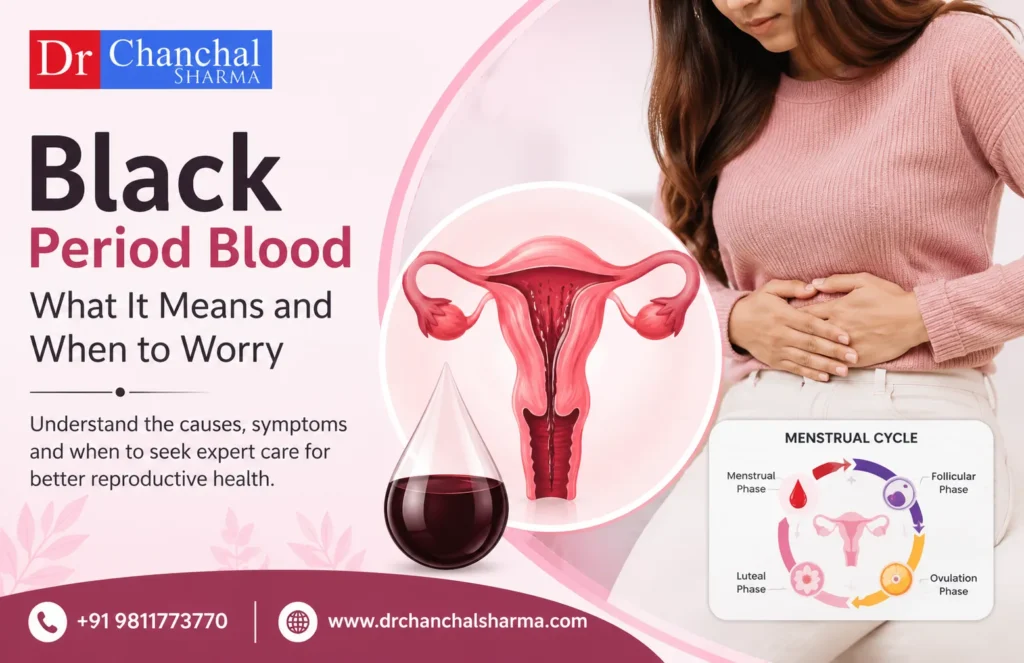
Menstrual blood can vary in color, texture, and flow throughout your cycle. While bright red blood is considered typical during menstruation, many women become concerned when they notice black period blood. Seeing black or very dark menstrual blood can be alarming, especially if it happens unexpectedly.
The good news is that black period blood is often harmless and usually indicates older blood that has taken longer to leave the uterus. However, in some cases, black blood during a period may be associated with hormonal imbalances, reproductive health conditions, infections, or menstrual irregularities that require medical attention.
As a fertility and women’s health specialist, Dr. Chanchal Sharma frequently counsels women who become anxious after noticing changes in menstrual blood color. Understanding the possible causes of black period blood, knowing when it is normal, and recognizing warning signs can help women make informed decisions about their reproductive health.
What Is Black Period Blood?
Black period blood is menstrual blood that appears dark brown, deep brown, or almost black in color. This typically occurs when blood remains in the uterus or vaginal canal longer than usual before leaving the body.
When blood is exposed to oxygen, it undergoes oxidation. Fresh blood appears bright red, while older blood gradually darkens and may eventually appear brown or black.
For this reason, black period blood is commonly seen:
- At the beginning of a period
- At the end of a period
- During light menstrual flow
- After a delayed period
- During irregular menstrual cycles
In most cases, black blood simply represents older blood being expelled from the reproductive tract.
Is Black Period Blood Normal?
Many women notice black or dark brown blood during the first or last day of their menstrual cycle. Because the blood flow is slower during these stages, the blood remains inside the uterus longer and becomes darker before being expelled.
Black blood is usually not a cause for concern when:
- It occurs occasionally
- There is no foul odor
- There is no severe pain
- The menstrual cycle remains relatively regular
- No unusual symptoms are present
However, if black blood is accompanied by severe cramps, abnormal discharge, fever, dizziness, or heavy bleeding, medical evaluation may be necessary.
Why Is My Period Blood Black and Thick?
One of the most common questions women ask is, “Why is my period blood black and thick?”
Thick menstrual blood often contains a mixture of blood, uterine tissue, and cervical mucus. When blood remains in the uterus longer than usual, it may become darker and thicker before being expelled.
Several factors may contribute to black and thick period blood:
Delayed Menstrual Flow
Blood that leaves the uterus slowly has more time to oxidize, resulting in a darker appearance.
Hormonal Imbalances
Hormonal fluctuations can affect how the uterine lining is shed. Women diagnosed with PCOS often experience delayed or irregular periods, which can increase the likelihood of darker menstrual blood.
End of Menstruation
At the end of the menstrual cycle, blood flow slows significantly. This often causes blood to appear dark brown or black.
Irregular Cycles
Women who skip periods or experience long gaps between cycles may notice darker blood because the uterine lining remains inside the body longer than usual.
Black Blood at the Beginning vs End of a Period
Understanding when black blood appears can help identify whether it is likely to be normal.
Black Blood at the Beginning of a Period
Black blood at the start of menstruation usually consists of blood left behind from the previous cycle. Since it has remained in the uterus for a longer period, it appears darker.
This is generally considered normal.
Black Blood at the End of a Period
Many women notice black or dark brown blood during the last one or two days of menstruation.
This occurs because menstrual flow slows down significantly, allowing blood to oxidize before leaving the body.
Again, this is usually a normal part of the menstrual cycle.
Common Causes of Black Period Blood

1. Old Blood
The most common reason for black period blood is old blood.
When blood remains inside the uterus longer than usual, oxidation causes it to darken and eventually appear black.
2. Irregular Menstrual Cycles
Women who experience irregular cycles may notice darker menstrual blood because the uterine lining takes longer to shed.
Hormonal disorders such as PCOS can contribute to irregular periods, delayed ovulation, and changes in menstrual blood color.
3. Hormonal Imbalance
Changes in estrogen and progesterone levels can affect menstrual flow and the way the uterine lining is shed.
Hormonal imbalances may lead to:
- Delayed periods
- Heavy periods
- Spotting between periods
- Black or dark brown blood
4. Postpartum Bleeding
Following childbirth, the uterus sheds tissue and blood through a process called lochia.
This discharge may begin as bright red and gradually become brown or black as healing progresses.
5. Retained Foreign Objects
In rare situations, a forgotten tampon or menstrual product can cause infection and abnormal discharge.
If black discharge is accompanied by a strong odor, pelvic pain, or fever, immediate medical evaluation is recommended.
Can PCOS Cause Black Period Blood?
Women suffering from PCOS often experience hormonal imbalances that affect ovulation and menstrual regularity.
When ovulation becomes irregular, periods may occur less frequently. As a result, the uterine lining remains inside the body longer, causing menstrual blood to become darker.
Women with PCOS may also experience:
- Irregular periods
- Acne
- Weight gain
- Excess facial hair
- Difficulty conceiving
- Dark or thick menstrual blood
Because PCOS affects both hormonal health and fertility, tracking menstrual changes is extremely important.
Can Endometriosis Cause Black Period Blood?
Women diagnosed with Endometriosis frequently report painful periods, heavy bleeding, pelvic discomfort, and menstrual irregularities.
Although black blood alone does not confirm endometriosis, dark menstrual blood accompanied by severe pelvic pain or heavy bleeding may warrant further evaluation.
Symptoms commonly associated with endometriosis include:
- Painful periods
- Chronic pelvic pain
- Pain during intercourse
- Infertility
- Irregular bleeding
Early diagnosis can help improve symptom management and reproductive health outcomes.
Black Period Blood After a Missed Period
Missing a period and then experiencing black blood can be confusing.
In many cases, a missed period allows the uterine lining to remain inside the uterus longer than usual. When menstruation eventually occurs, older blood may appear black or very dark brown.
Possible causes include:
- Hormonal imbalance
- Stress
- PCOS
- Thyroid disorders
- Sudden weight changes
- Certain medications
Women who experience frequent missed periods should discuss their symptoms with a healthcare provider.
Can Black Period Blood Affect Fertility?
Black period blood itself does not usually cause infertility.
However, recurring black blood combined with menstrual irregularities may indicate an underlying reproductive condition.
Women struggling with infertility should pay attention to symptoms such as:
- Missed periods
- Very irregular cycles
- Severe menstrual pain
- Heavy bleeding
- Abnormal discharge
Conditions affecting the female infertility journey often first appear through changes in menstrual patterns.
Persistent abnormalities should not be ignored, especially if you are trying to conceive.
Conditions That May Cause Black Period Blood
Cervical Stenosis
Cervical stenosis occurs when the cervical opening becomes unusually narrow.
This may slow menstrual flow and cause blood to remain inside the uterus longer, resulting in darker blood.
Pelvic Inflammatory Disease (PID)
Pelvic inflammatory disease is an infection affecting the reproductive organs.
If left untreated, PID can damage the fallopian tubes and contribute to long-term reproductive complications.
Symptoms may include:
- Pelvic pain
- Fever
- Abnormal discharge
- Pain during intercourse
- Irregular bleeding
Hydrosalpinx
Chronic infections affecting the reproductive tract may contribute to Hydrosalpinx, a condition in which fluid accumulates within the fallopian tubes.
Hydrosalpinx can affect fertility and may require specialized treatment.
Miscarriage or Ectopic Pregnancy
Women who may be pregnant should never ignore black bleeding.
Black or dark brown bleeding accompanied by:
- Severe pain
- Dizziness
- Heavy bleeding
- Shoulder pain
may indicate miscarriage or ectopic pregnancy and requires immediate medical attention.
Period Blood Color Chart: What Different Colors Mean
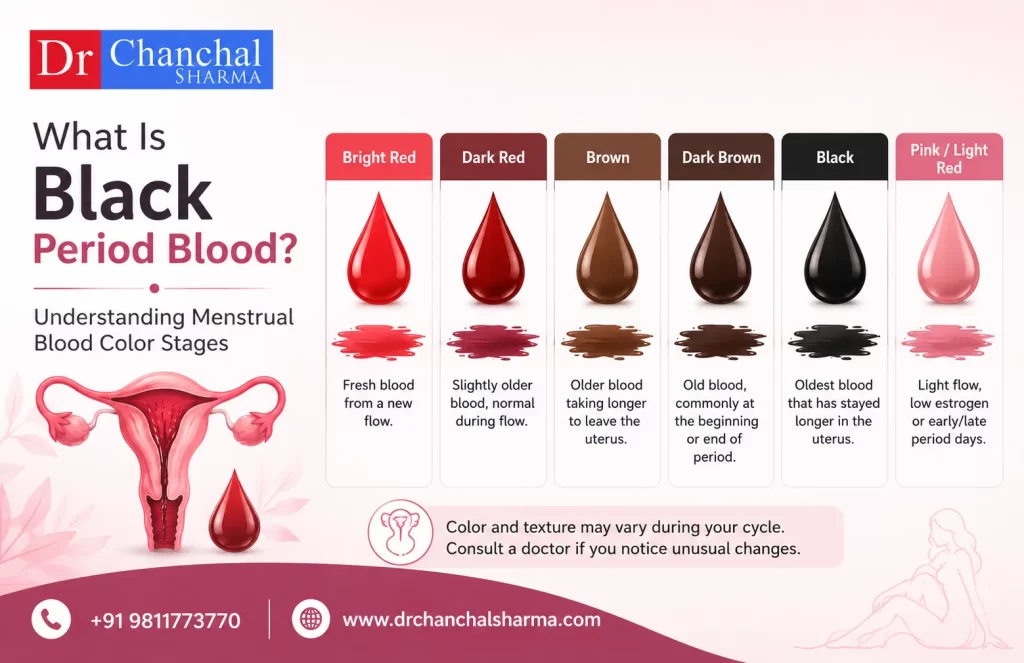
| Blood Color | Possible Meaning |
| Bright Red | Fresh blood and active flow |
| Dark Red | Older blood leaving the uterus |
| Brown | Oxidized blood |
| Black | Blood retained longer in the uterus |
| Pink | Low estrogen levels or light flow |
| Orange | Possible infection mixed with cervical mucus |
| Grey | Infection requiring medical evaluation |
Color changes alone do not always indicate a problem, but they can provide useful clues about reproductive health.
Black Period Blood and Stress
Physical stress, emotional stress, poor sleep, excessive exercise, and sudden weight changes can disrupt hormone production and ovulation.
As a result, women may experience:
- Delayed periods
- Lighter periods
- Darker blood
- Spotting
- Irregular cycles
Managing stress through proper sleep, exercise, and relaxation techniques may help improve menstrual regularity.
When Should You Worry About Black Period Blood?

Although black period blood is often harmless, certain symptoms should never be ignored.
Seek medical advice if you experience:
- Black discharge lasting several days
- Foul-smelling discharge
- Fever
- Severe pelvic pain
- Heavy bleeding
- Large blood clots
- Bleeding after menopause
- Persistent menstrual irregularities
Women experiencing ongoing reproductive concerns should seek evaluation because untreated conditions may affect overall reproductive health and fertility.
How Doctors Diagnose the Cause
To determine the underlying cause of abnormal menstrual blood, a healthcare provider may recommend:
Medical History
Reviewing:
- Menstrual patterns
- Pain symptoms
- Pregnancy history
- Hormonal conditions
Pelvic Examination
To assess reproductive health and identify possible infections or abnormalities.
Ultrasound
Ultrasound imaging can evaluate:
- Uterus
- Ovaries
- Endometrial lining
- Fibroids
- Ovarian cysts
Hormone Testing
Blood tests may help identify hormonal imbalances contributing to menstrual irregularities.

Ayurvedic Perspective on Black Period Blood
According to Ayurveda, menstrual health reflects the balance of the body’s natural systems and reproductive tissues.
Lifestyle factors such as:
- Stress
- Poor digestion
- Inadequate nutrition
- Hormonal imbalance
may contribute to menstrual irregularities and changes in blood flow.
Many women experiencing menstrual concerns, fertility challenges, hormonal disorders, or reproductive health issues seek personalized Ayurvedic fertility care to support overall reproductive wellness naturally.
Expert Advice from Dr. Chanchal Sharma
According to Dr. Chanchal Sharma:
“Occasional black period blood is usually not a cause for concern and often represents older blood leaving the body naturally. However, persistent menstrual irregularities, severe pain, unusual discharge, or fertility concerns should always be evaluated by a specialist.”
Women experiencing symptoms related to PCOS, endometriosis, hormonal imbalance, or infertility may benefit from individualized assessment and treatment planning.
Conclusion
Black period blood is usually a normal part of the menstrual cycle and often represents older blood leaving the uterus. It is particularly common at the beginning or end of a period and may occur when menstrual flow is slower than usual.
However, black menstrual blood accompanied by pain, foul-smelling discharge, fever, heavy bleeding, or persistent irregular cycles should not be ignored.
Understanding your menstrual cycle, recognizing unusual symptoms, and seeking timely medical advice can help protect your reproductive health. Many women facing hormonal imbalances, menstrual disorders, or fertility concerns have successfully improved their reproductive wellness through early diagnosis and personalized care. You can also explore patient success stories to learn how specialized fertility treatment has helped many women achieve better reproductive health outcomes.
Frequently Asked Questions
1. Is black period blood normal?
Yes. In most cases, black period blood simply represents older blood that has taken longer to leave the uterus.
2. Why is my period blood black and thick?
Black and thick blood often occurs when menstrual blood remains in the uterus longer and becomes oxidized.
3. Can PCOS cause black period blood?
Yes. PCOS can lead to irregular periods and delayed shedding of the uterine lining, resulting in darker menstrual blood.
4. Can endometriosis cause black period blood?
Some women with endometriosis experience changes in menstrual flow and blood color, especially when symptoms are accompanied by pelvic pain.
5. Is black blood at the beginning of a period normal?
Yes. It usually represents blood left over from the previous menstrual cycle.
6. Is black blood at the end of a period normal?
Yes. Slower blood flow near the end of menstruation often causes blood to darken.
7. Can stress cause black period blood?
Yes. Stress can affect hormone levels and contribute to delayed or irregular periods.
8. Does black period blood affect fertility?
Black blood itself does not usually affect fertility, but underlying reproductive conditions may require evaluation.
9. When should I see a doctor?
Seek medical attention if black blood is accompanied by severe pain, fever, heavy bleeding, or foul-smelling discharge.
10. Can black period blood be a sign of pregnancy complications?
In pregnant women, black bleeding accompanied by pain or heavy bleeding should be evaluated immediately.

Dr. Chanchal Sharma
BAMS, MD – Ayurveda | Ayurvedic Gynecologist & Infertility Specialist
Dr. Chanchal Sharma specializes in the Ayurvedic treatment of PCOS, Infertility, Blocked Fallopian Tubes, Endometriosis, Irregular Periods, and Women’s Reproductive Health. She provides personalized treatment plans focused on natural healing and holistic wellness.
📍 J-145, Ground Floor, Rajouri Garden, New Delhi – 110027