

How Many Days After Ovulation Can You Get Pregnant?
Pregnancy is most likely during the fertile window — specifically 1–2 days before ovulation and within 12–24 hours after ovulation. The egg survives only about 12–24 hours after release, while sperm can survive inside the female reproductive tract for up to 5 days. This short overlap is what makes precise ovulation tracking so important for couples trying to conceive.
Many couples believe that timing intercourse on the day of ovulation is sufficient. In reality, by the time ovulation is confirmed, the ideal window may already be closing. Understanding the biology behind conception timing can significantly improve pregnancy chances — without unnecessary stress or guesswork.
This guide explains the complete ovulation-to-conception timeline, including:
- The best days to conceive naturally
- Pregnancy chances before and after ovulation, broken down by day
- A full fertility timeline chart
- Ovulation symptoms to watch for
- When to take a pregnancy test
- When to consult a fertility specialist
Dr Chanchal Sharma, a leading fertility and reproductive health specialist in Delhi, recommends that couples trying to conceive build a clear understanding of their individual ovulation patterns rather than relying solely on generalised calendar methods.
Understanding Ovulation and the Fertile Window
What Is Ovulation?
Ovulation is the process in which a mature egg (oocyte) is released from the ovary into the fallopian tube, where it becomes available for fertilisation. This event is triggered by a surge in luteinising hormone (LH), typically occurring around the middle of a menstrual cycle — though the exact timing varies from person to person.
The hypothalamus, pituitary gland, and ovaries work together in a delicate hormonal sequence to prepare and release one dominant follicle each cycle. When fertilised by a sperm, this egg can result in a successful pregnancy. If it is not fertilised within its brief survival window, it dissolves and the uterine lining sheds during the next menstrual period.
What Is the Fertile Window?
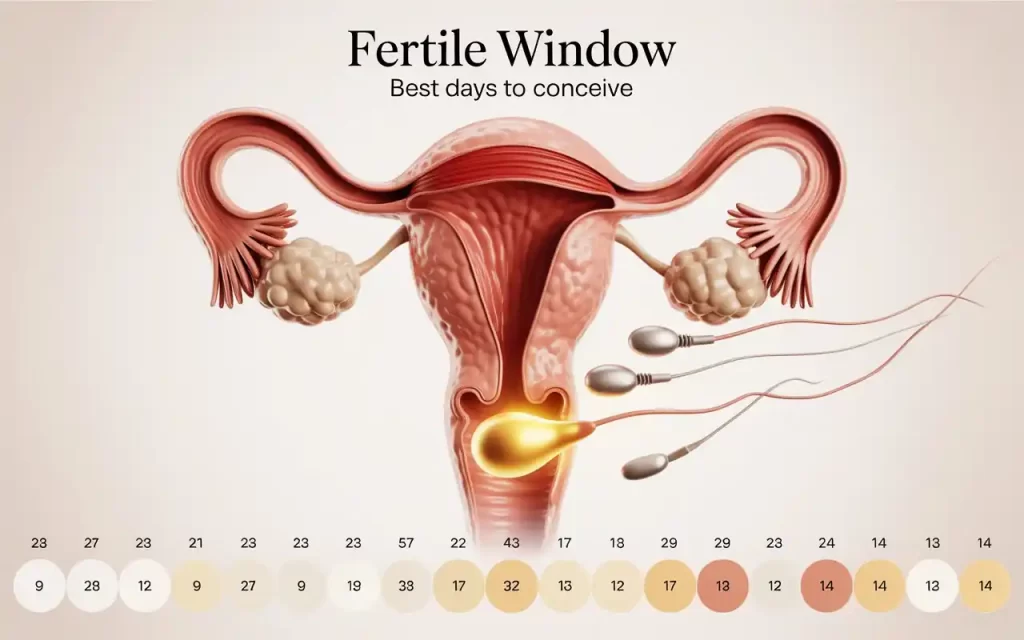
The fertile window is the span of days during a menstrual cycle when intercourse can result in pregnancy. It spans approximately 5 days before ovulation through the day of ovulation itself — a total of around 6 days.
The reason this window extends before ovulation is that sperm can survive inside the female reproductive tract for 3 to 5 days under optimal conditions. This means sperm deposited several days before the egg is released can still be viable when ovulation occurs.
How Long Does the Egg Survive After Ovulation?
Once released, the egg remains viable for only 12 to 24 hours. If sperm are not already present in the fallopian tube, or do not reach the egg within this narrow period, fertilisation cannot occur.
This short lifespan is why pregnancy chances drop sharply the day after ovulation and become extremely unlikely beyond 24 hours. Unlike sperm — which are robust, motile cells that travel actively — the egg is a large, passive cell that depends entirely on sperm reaching it in time.
Why Ovulation Timing Is Important for Pregnancy
Missing the fertile window by even one or two days can result in a failed conception attempt for that entire cycle. Since most couples trying to conceive naturally are working on a 28–35 day cycle, each missed window adds weeks to the process.
Accurate ovulation tracking allows couples to time intercourse strategically, maximising the probability of fertilisation during each cycle. For women with irregular cycles, PCOS , or unexplained infertility, identifying the actual ovulation day becomes even more critical.
Chances of Getting Pregnant Before Ovulation (Most Fertile Days)
Can You Get Pregnant 6 Days Before Ovulation?
The probability of conception 6 days before ovulation is very low, but not zero. Research suggests that sperm rarely survive a full 6 days in the female reproductive tract, meaning fertilisation at this distance from ovulation is uncommon. However, in women with particularly favourable cervical mucus conditions, it remains a biological possibility.
Can You Get Pregnant 5 Days Before Ovulation?
This is considered the official start of the fertile window. At 5 days before ovulation, pregnancy is possible but the probability remains low to moderate — roughly 5–10% per cycle. Sperm deposited on this day would need to survive until ovulation occurs, which is possible but less certain.
Can You Get Pregnant 4 Days Before Ovulation?
Fertility is increasing. At 4 days before ovulation, conception chances are moderate — estimated around 10–14%. The quality of cervical mucus plays an important role here; egg-white consistency mucus helps sperm survive and travel effectively.
Can You Get Pregnant 3 Days Before Ovulation?
At 3 days before ovulation, pregnancy chances rise significantly to approximately 16–20%. Sperm deposited on this day have a reasonable chance of surviving to fertilise the egg when it is released.
Can You Get Pregnant 2 Days Before Ovulation?
This is one of the two peak conception days. Studies consistently show that the probability of pregnancy is highest 1–2 days before ovulation. At 2 days before ovulation, conception chances are approximately 25–30%. Couples actively trying to conceive should prioritise intercourse on this day.
Can You Get Pregnant 1 Day Before Ovulation?
The day before ovulation offers the highest fertility probability — estimated at 30–35% per cycle. Sperm deposited now can be waiting in the fallopian tubes when the egg is released within the next 12–24 hours, giving the best possible fertilisation opportunity.
Can You Get Pregnant on Ovulation Day?
Pregnancy Chances on Ovulation Day
Yes, conception is definitely possible on ovulation day. When the egg is freshly released, it remains viable for up to 24 hours. Pregnancy chances on ovulation day are estimated at 25–30% — slightly lower than the day before, because sperm deposited on this day must travel and reach the egg while it is still viable, rather than being already present.
Is It Better to Conceive Before or During Ovulation?
Most fertility specialists, including Dr Chanchal Sharma, recommend that couples aim for intercourse in the 2–3 days leading up to ovulation rather than waiting for ovulation day itself. The advantage of conceiving before ovulation is that sperm are already positioned in the fallopian tube when the egg arrives, maximising the chance of fertilisation before the egg degrades.
Waiting until ovulation day — especially if ovulation is only confirmed retrospectively — risks missing the egg’s viable window entirely.
How Many Days After Ovulation Can You Get Pregnant?
This is the most frequently asked question — and the honest answer is that pregnancy becomes unlikely very quickly after ovulation.
Can You Get Pregnant 1 Day After Ovulation?
At 1 day past ovulation (1 DPO), pregnancy is still theoretically possible if the egg was released late in the previous day and is still viable. However, chances are low — below 12% and dropping rapidly. If the egg has already degraded, no amount of sperm can fertilise it.
Can You Get Pregnant 2 Days After Ovulation?
At 2 DPO, the egg is almost certainly no longer viable. Pregnancy chances are very low — below 5%. The fertile window is effectively closed for most women.
Can You Get Pregnant 3 Days After Ovulation?
By 3 DPO, natural conception is extremely unlikely. The egg has dissolved, and there is no viable target for sperm to fertilise. In rare edge cases involving late or prolonged ovulation, a marginal possibility might exist, but this should not be relied upon.
Can You Get Pregnant 4–5 Days After Ovulation?
At 4–5 DPO, natural pregnancy is not considered possible. The fertile window is definitively closed. Sperm that arrive now have no egg to fertilise. Common myths about late post-ovulatory pregnancy typically arise from cycle miscalculations — the ovulation date was simply later than estimated.
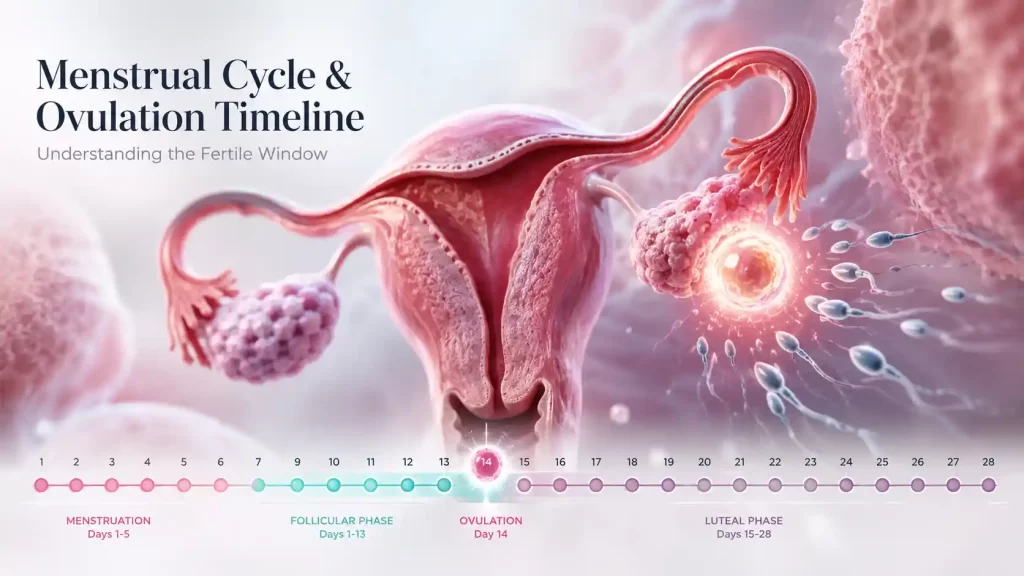
Fertility Timeline Chart: Best Days to Conceive
| Timing | Pregnancy Chance | Fertility Level |
| 6 days before ovulation | Very low (~2%) | Outside fertile peak |
| 5 days before ovulation | Low to moderate (~5–10%) | Fertile window begins |
| 4 days before ovulation | Moderate (~10–14%) | Fertility increasing |
| 3 days before ovulation | High (~16–20%) | Strong conception chances |
| 2 days before ovulation | Very high (~25–30%) | Peak fertile day |
| 1 day before ovulation | Highest (~30–35%) | Best conception timing |
| Ovulation day | Very high (~25–30%) | Egg available |
| 1 DPO | Low (~12%) | Egg may still survive |
| 2 DPO | Very low (~5%) | Egg viability drops |
| 3+ DPO | Extremely unlikely (<1%) | Fertility window closed |
Why Pregnancy Is More Likely Before Ovulation Than After
Sperm Lives Longer Than the Egg
The fundamental biological asymmetry of conception is this: sperm can survive 3–5 days, while the egg survives only 12–24 hours. This creates a one-sided window. Depositing sperm before ovulation allows them to wait in the reproductive tract for the egg. Waiting until after ovulation means sperm arrive too late.
Why Fertility Specialists Recommend Intercourse Before Ovulation
Rather than targeting ovulation day precisely, specialists recommend beginning intercourse 2–3 days before expected ovulation and continuing through ovulation day. This approach increases the probability that viable sperm will be present throughout the egg’s entire survival window, without putting pressure on pinpointing an exact single day.
What Happens After Fertilisation?
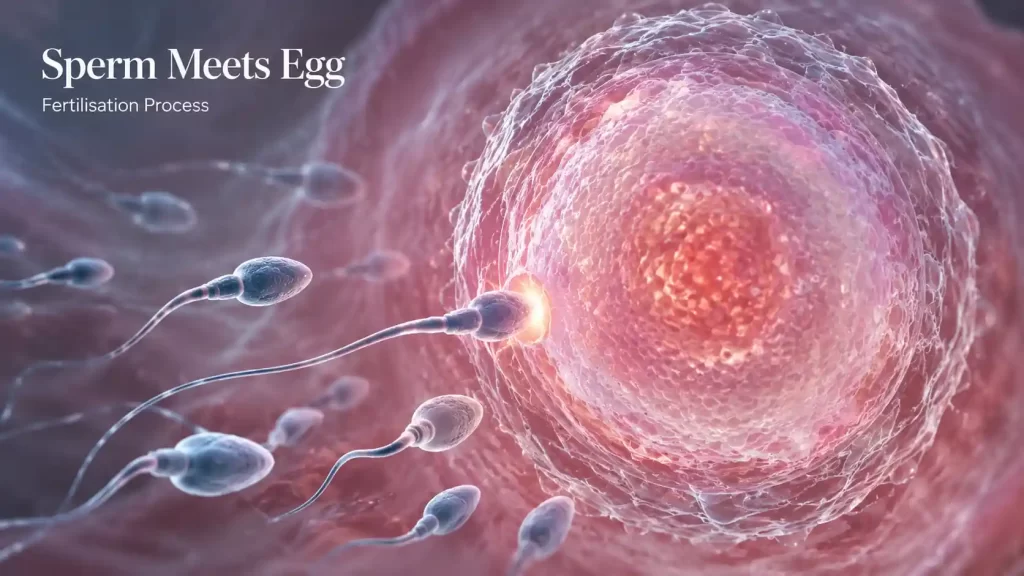
The Fertilisation Process
When a sperm successfully penetrates the egg — typically in the ampullary region of the fallopian tube — fertilisation occurs. The combined genetic material forms a zygote, which begins dividing as it travels down the fallopian tube toward the uterus. This journey takes approximately 3–4 days.
Implantation Timeline
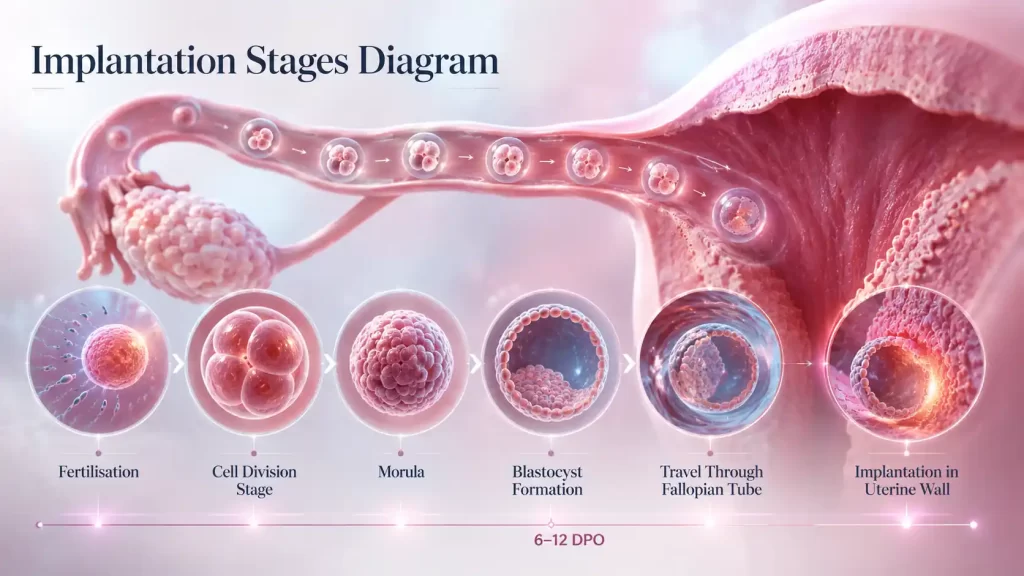
The developing embryo reaches the uterus and begins implanting into the uterine lining approximately 6–12 days after ovulation, most commonly around days 8–10. Implantation is not guaranteed — a significant proportion of fertilised eggs fail to implant successfully, often due to chromosomal abnormalities or uterine environment factors.
Difference Between Ovulation, Fertilisation, and Implantation
These three events are frequently confused:
- Ovulation: The egg is released from the ovary
- Fertilisation: Sperm meets egg in the fallopian tube
- Implantation: Embryo embeds in the uterine lining (6–12 days post-ovulation)
A woman is not technically “pregnant” until implantation is complete and hCG hormone begins to be produced. This is why pregnancy tests cannot detect pregnancy until at least 10–14 days past ovulation.
Early Pregnancy Symptoms After Ovulation
Symptoms in the Early Days Past Ovulation (DPO)
In the days immediately following ovulation, the body shifts to a progesterone-dominant state regardless of whether fertilisation has occurred. Early symptoms — if they appear — are often subtle and overlap with normal luteal phase changes:
- Mild abdominal bloating
- Fatigue or low energy
- Breast tenderness or fullness
- Mood changes
These symptoms alone cannot confirm pregnancy and are caused by post-ovulatory progesterone rise, not hCG.
Implantation Symptoms
Around 6–12 DPO, some women experience implantation-related symptoms:
- Implantation bleeding: Light pink or brown spotting lasting 1–2 days
- Mild cramping: Subtle uterine cramping, often milder than period pain
- Breast tenderness: Continuing or increasing sensitivity
Not all women experience noticeable implantation symptoms. Their absence does not mean implantation has not occurred.
Symptoms After Implantation
Once implantation is complete and hCG begins rising (typically 10–14 DPO and beyond), more recognisable early pregnancy symptoms may appear:
- Missed menstrual period
- Nausea (morning sickness)
- Increased urinary frequency
- Food aversions or cravings
- Heightened sense of smell
- Fatigue
When Should You Take a Pregnancy Test After Ovulation?
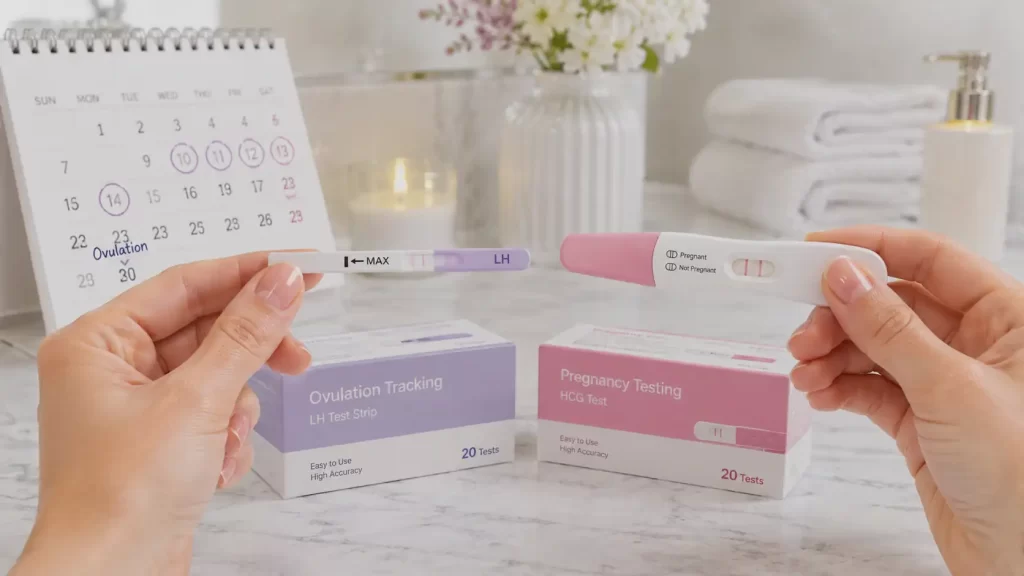
Earliest Time to Test
The earliest a home pregnancy test can produce a positive result is approximately 10 DPO, as hCG levels may be detectable by sensitive tests at this stage. However, many pregnancies will not produce detectable hCG levels this early.
Best Time for Accurate Results
The most reliable time to test is 14 DPO, which corresponds approximately to the day of a missed period in a regular 28-day cycle. Testing at this point gives hCG levels sufficient time to rise to consistently detectable levels.
Why Early Testing Can Show False Negatives
Testing before 14 DPO risks a false negative because hCG levels may simply be too low to register. Repeating the test at 14 DPO or after a missed period gives a far more accurate result.
How to Know If You Have Ovulated Correctly
Common Ovulation Symptoms
Physical signs that ovulation may be occurring or about to occur include:
- Egg-white cervical mucus (EWCM)
- Mild pelvic pain (Mittelschmerz)
- Increased libido
- LH surge detection through ovulation predictor kits
Ovulation Tracking Methods
Several approaches exist for identifying ovulation:
- Ovulation predictor kits (OPKs): Detect the LH surge that typically precedes ovulation by 24–36 hours
- Basal body temperature (BBT) charting: Confirms ovulation retrospectively
- Menstrual cycle tracking apps: Useful for identifying cycle patterns
- Cervical mucus monitoring: Tracks changes in discharge consistency
Most Accurate Ovulation Monitoring Method
Follicular monitoring via transvaginal ultrasound is the gold standard for ovulation tracking. This method allows direct visualisation of developing follicles, confirmation of follicle rupture, and assessment of uterine lining thickness.
Why Accurate Ovulation Tracking Matters for Fertility Health
Ovulation and Reproductive Health
Consistent, regular ovulation is one of the clearest indicators of reproductive health. Anovulation or infrequent ovulation is among the most common causes of female infertility.
Hormones That Affect Pregnancy Chances
Several hormones govern ovulation and fertility:
- Oestrogen
- Progesterone
- LH (Luteinising Hormone)
- FSH (Follicle Stimulating Hormone)
- Thyroid hormones
- AMH (Anti-Müllerian Hormone)
Lifestyle Factors That Influence Fertility
Everyday habits significantly affect ovulation regularity and egg quality:
- Stress management
- Sleep quality
- Balanced nutrition
- Weight management
- Moderate exercise
Common Conditions Affecting Ovulation
- PCOS (Polycystic Ovary Syndrome)
- Endometriosis
- Low AMH
- Thyroid disorders
- Tubal blockage
Factors That Affect Pregnancy Chances
Age and Egg Quality
Female fertility declines with age — most significantly after 35. Both the number of available eggs and their chromosomal quality reduce over time.
Irregular Ovulation
Women who do not ovulate regularly face a reduced number of conception opportunities per year.
PCOS and Hormonal Imbalance
PCOS is the leading cause of anovulatory infertility and requires appropriate management to restore ovulation.
Male Fertility Factors
Approximately 40–50% of infertility cases involve a male factor, including sperm count, motility, and morphology issues.
Lifestyle and Stress
Smoking, alcohol consumption, excessive caffeine intake, and high stress negatively impact fertility in both men and women.
Common Mistakes Couples Make While Trying to Conceive
Waiting Until Ovulation Day Only
Intercourse should begin 2–3 days before expected ovulation.
Miscalculating the Fertile Window
Not all women ovulate on day 14. Ovulation timing varies significantly.
Depending Only on Mobile Apps
Apps cannot account for real-time hormonal changes.
Ignoring Irregular Cycles
Irregular periods often indicate hormonal imbalance or ovulation problems.
Testing Too Early
Testing before 14 DPO commonly leads to unnecessary anxiety and false negatives.
When Pregnancy Delays May Need Medical Attention
Signs You Should Consult a Fertility Specialist
Consider seeking a fertility evaluation if:
- You have been trying to conceive for more than 12 months
- You are over 35 and have tried for 6 months without success
- Your periods are irregular or absent
- You experience recurrent miscarriages
- You have severe pelvic pain or suspected endometriosis
Importance of Early Fertility Evaluation
A standard fertility evaluation may include:
- Hormonal blood tests
- Ovulation assessment
- Pelvic ultrasound
- Semen analysis
Why Self-Diagnosis Can Delay Proper Treatment
Incorrect self-assessment and internet myths can delay accurate diagnosis and treatment.
Fertility Consultation and Ovulation Guidance in Delhi
Personalised Fertility Support for Couples
Every couple’s fertility picture is unique. Personalised fertility support may include:
- Ovulation tracking and cycle analysis
- Fertility counselling
- Reproductive health evaluation
Fertility Care at Dr Chanchal Sharma Clinic
Dr Chanchal Sharma provides evidence-based, patient-centred fertility care in Delhi with a focus on:
- Hormonal and reproductive health assessment
- Natural conception support
- PCOS and irregular cycle management
- Medically supervised ovulation monitoring
When to Seek Expert Fertility Advice
Consider booking a consultation if you are experiencing:
- Difficulty conceiving naturally
- Irregular ovulation
- PCOS-related infertility
- Repeated failed conception attempts
People Also Ask
How many days after ovulation can pregnancy occur?
Pregnancy can technically occur up to 24 hours after ovulation while the egg is still viable.
Can you get pregnant 2 days after ovulation?
It is very unlikely because the egg is usually no longer viable by this time.
Is pregnancy possible 5 days after ovulation?
No. The fertile window is generally closed by this point.
Which day has the highest pregnancy chance?
The day before ovulation consistently shows the highest conception probability.
How long does sperm survive inside the female body?
Sperm can survive for 3–5 days under optimal conditions.
Is it better to conceive before ovulation?
Yes. Conception rates are highest 1–2 days before ovulation.
How long does the egg survive after ovulation?
The egg survives approximately 12–24 hours after release.
Book Expert Fertility Guidance for Personalised Care
If you are struggling to understand your fertile window or facing difficulty conceiving naturally, professional fertility guidance can help identify the right ovulation timing and assess any possible underlying concerns.
At Dr Chanchal Sharma Clinic, fertility consultations focus on:
- Ovulation tracking and cycle assessment
- Hormonal health evaluation
- Natural conception support and optimisation
- PCOS and irregular period management
- Female reproductive wellness
- Early fertility evaluation for couples trying to conceive
Early fertility evaluation can improve conception chances and support better reproductive health decisions.
Book a consultation today and take the first step towards understanding your fertility with expert guidance from one of Delhi’s trusted reproductive health specialists.
Conclusion
Understanding the ovulation-to-conception timeline is one of the most practical things a couple can do to improve natural pregnancy chances:
- Pregnancy is most likely 1–2 days before ovulation
- The egg survives only 12–24 hours after release
- Sperm can survive 3–5 days in the female reproductive tract
- Accurate ovulation tracking improves conception timing
- Professional fertility guidance may help identify underlying reproductive health concerns
With the right information and, where needed, the right medical support, most couples can significantly improve their chances of natural conception.

Dr. Chanchal Sharma
BAMS, MD – Ayurveda | Ayurvedic Gynecologist & Infertility Specialist
Dr. Chanchal Sharma specializes in the Ayurvedic treatment of PCOS, Infertility, Blocked Fallopian Tubes, Endometriosis, Irregular Periods, and Women’s Reproductive Health. She provides personalized treatment plans focused on natural healing and holistic wellness.
📍 J-145, Ground Floor, Rajouri Garden, New Delhi – 110027