
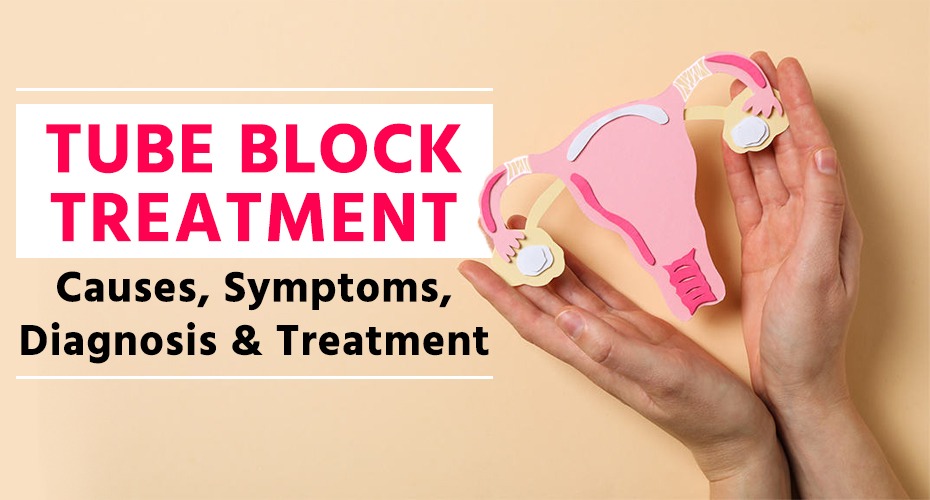
What is a tubal blockage?
It is a condition in females in which the fallopian tubes become blocked by scar tissue, infection, or fluid, obstructing the pathway connecting the uterus and ovaries. Therefore, the egg cannot meet the sperm for fertilization, leading to female infertility.
What are the causes of Tubal Blockage?
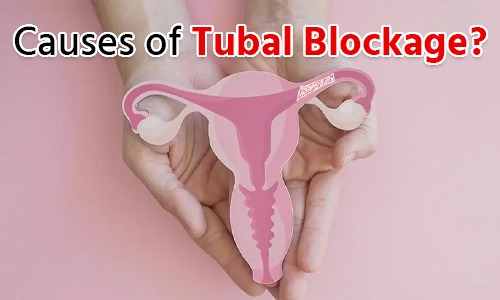
The blockage in the tubes does not occur suddenly; it happens because of some minor issues that were ignored earlier.
These can be as follows:
- Pelvic inflammatory disease (PID): It’s an infection in your lower pelvic area. When it reaches the tubes, they get swollen and stick together.
- Endometriosis: The tissue from the uterine lining grows outside where it’s not supposed to, such as the fallopian tubes. It bleeds in those areas, leading to blockages. This condition causes pain and complications because of the bleeding.
- Hydrosalpinx: This occurs when the end of the fallopian tube gets blocked, swells up, and fills with fluid.
- Past surgeries: Some women have had issues with their fallopian tubes because of past surgeries, whether it’s in the abdomen or directly on the tubes.
- Ectopic pregnancy: This occurs when a fertilized egg gets stuck and damages the tube.
Symptoms of tubal blockage
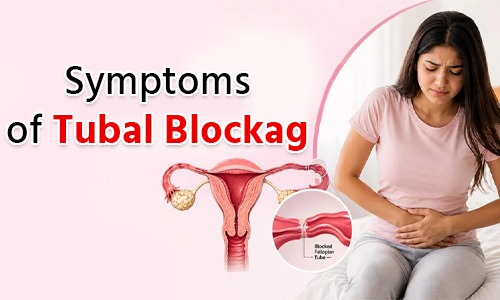
You need to understand that there are “No” visible symptoms of tubal blockage. If you don’t encounter the causes mentioned above, there is no other way to know that. This is because it is an internal issue; you can’t feel anything even if your tubes are blocked.
Here, Dr. Chanchal Sharma (Fertility specialist at Aasha Ayurveda) recommends an HSG Test to uncover the real cause of female infertility.
What is the HSG test?
HSG, or Hysterosalpingogram, is a specialised fertility test that’s a unique X-ray that checks your uterus and fallopian tubes to make sure everything’s okay in there.
How does it work?
- Step 1: A doctor or radiologist gently inserts a small tube, or cannula, through the cervix.
- Step 2: A liquid contrast dye containing iodine is injected, which fills the uterine cavity and flows into the fallopian tubes.
- Step 3: A series of X-ray images called Fluoroscopy is taken to see how the dye moves. This reveals whether everything is functioning correctly.
What does the HSG test show?
- If the tubes are open or blocked. If they’re open, the dye flows through and spills into the pelvic cavity.
- If they are blocked, the dye stops where the tube is obstructed.
- It also highlights any abnormalities, such as fibroids, polyps, or scarring, in the uterus.
An HSG usually takes 15 to 30 minutes and is typically done a few days after your period ends before you ovulate. Many women feel cramps when the dye is injected, similar to strong menstrual cramps. But the discomfort usually goes away quickly after the test.
Tube block treatment
Now you know the disease, the cause, and how it is diagnosed. Coming to the solution, the Tubal blockage treatment, let’s get to know about the renowned Ayurvedic Uttar Basti Therapy.
The Ayurvedic Uttar Basti Therapy
Uttar Basti is a specialized Ayurvedic Panchakarma therapy in which warm medicated oil or herbal decoctions are administered directly into the urinary bladder or reproductive organs via the urethra or vagina. It is primarily used to treat serious conditions related to the genitourinary system, hormones, and fertility.
Even if you take medications according to your suitability, it is not necessary that they will work. The reason is that your body has toxins stored in it, which lead to female infertility issues. If you don’t flush out these toxins from your body, no medication or treatment would work. Specialized therapies like Panchakarma therapy gently cleanse the body of built-up toxins (ama), restoring energy and strengthening your natural defenses.
FAQ:
Ans: Generally, blocked Fallopian tubes do not open on their own. If the blockage is caused by scar tissue, past infections, or adhesions, medical or surgical treatment is required. However, if the obstruction is temporary—due to minor inflammation or a mucus plug—it may resolve on its own, though this is rare.
Ans: Dr. Chanchal Sharma, at Aasha Ayurveda fertility centre, believes in holistic and natural development rather than temporary treatment. For infertility treatment, Ayurveda works best because it doesn’t involve any heavy medication that comes along with side effects. Ayurveda incorporates natural alternatives that can heal your body, not only for a healthy conception but also to keep it healthy afterwards.
Ayurveda works miraculously and may even produce astonishing results, that is— your natural pregnancy!
Ans: Understanding your Hysterosalpingogram (HSG) report helps identify the exact nature and location of the blockage:
Unilateral Blockage (One-sided blockage): Only one fallopian tube is blocked; natural conception is still possible through the open side.
Bilateral Blockage (Blockage on both sides): Both tubes are blocked, completely blocking the pathway for fertilization.
Cornual (Proximal) Blockage: The blockage occurs near the uterine opening, often caused by muscle spasms, a mucus plug, or scarring.
Fimbrial (Distal) Blockage: This occurs at the outer end near the ovary, preventing the tube from capturing the released egg.
Hydrosalpinx: A type of distal blockage where the tube becomes swollen and filled with fluid.
Free Spillage vs. No Spillage: “Free spillage” indicates that the tubes are open, whereas “no spillage” confirms an active blockage.
Ayurvedic Uttar Basti therapy helps treat the tube blockage and restore the natural health of the tubes without surgery.
REAL PATIENT REVIEW
–Pushpa kumari (bihar)
“I told my husband to get another wife”
This is not a movie script, it’s the actual statement of one of our patients, who conceived naturally after 13 years of suffering from tubal blockage.
–Sunidhi (Nagpur)
“I lost every ounce of hope; I was completely shattered to my core”
When all hope was lost in the midst of this depression, she got a recommendation for consultation with the expert fertility specialist at Aasha Ayurveda.
Dr. Chanchal Sharma brought her something that expensive treatment couldn’t: the belief that she could conceive, despite tubal blockage. The lost hope was regained, and now she’s 5 months into her pregnancy, sharing her journey with us.
This is not just the story of Pushpa, but of more than 50,000+ women like her, who conceived naturally with the help of our specialised ayurvedic therapies and 15+ years of excellent experience in Ayurveda.
–Rekha (Gujrat)
“This child is a boon for my mother-in-law”
She also shared that her mother-in-law, who was her close companion in this journey, isn’t alive to see this baby. But she was fortunate enough to get the good news that her daughter-in-law could finally conceive, that too naturally.
“Aasha Ayurveda is a blessing for me. When I thought I lost everything, Aasha Ayurveda gave me the greatest happiness of my life. I am very grateful”
So don’t lose hope in yourself, because we believe in you
Don’t let tubal blockage force you into expensive surgeries or IVF.
Consult Dr. Chanchal Sharma at Aasha Ayurveda for a personalized, non-surgical treatment plan.
📞 Call / WhatsApp: +91 9811773770
📍 Centres: Delhi | Mumbai | Pune | Lucknow | Hyderabad