
Planning everyday meals when you have PCOD can feel confusing. Should you stop eating rice? Are roti and potatoes allowed? What can you have for breakfast, and do you need a separate diet for weight management?
The good news is that a PCOD-friendly eating pattern does not have to be expensive, restrictive or completely different from your family’s regular meals. A practical approach is to build balanced meals using familiar Indian foods, include a variety of nutrients and choose eating habits that you can maintain over time.
This guide explains how to plan a daily PCOD diet chart, choose suitable foods and make realistic changes to your regular meals.
Please note: PCOD is commonly used to refer to polycystic ovary syndrome (PCOS). Individual nutritional needs vary, so use the meal plan below as a general example rather than a personalised medical diet.
Daily PCOD Diet Chart: An Indian Meal Plan
A useful diet chart should fit your routine, food preferences and appetite. You do not need to follow every meal at an exact time or eat foods you dislike.
The following sample plan shows how a day of balanced Indian meals could look.
| Meal | Sample food options |
| Breakfast | Vegetable poha with peanuts, vegetable dalia, besan chilla or eggs with whole-wheat toast |
| Mid-morning | One serving of fruit, such as an apple, orange, guava or pear |
| Lunch | Roti or rice, dal or another protein source, cooked vegetables and salad |
| Evening snack | Roasted chana, unsweetened yoghurt, a small handful of nuts or a homemade snack |
| Dinner | Roti with vegetables and dal, vegetable khichdi with curd, or a balanced meal with paneer, tofu, fish or chicken |
| If hungry later | Choose a suitable snack based on your hunger and individual dietary needs |
The portions should be adjusted according to your hunger, activity level, medical needs and overall nutritional requirements. This is a sample meal structure, not a fixed calorie prescription.
How to Build a Balanced Lunch or Dinner
Instead of preparing a separate meal every day, try to balance the foods already available at home.
For example, a regular lunch of roti and sabzi can be made more balanced by adding dal, curd, beans, paneer or another suitable protein source. If you prefer rice, pair it with protein-rich foods and vegetables rather than relying on rice alone.
A balanced meal can include:
- Protein: Dal, beans, chickpeas, paneer, tofu, eggs, fish or chicken.
- Vegetables: Choose a variety of seasonal vegetables, prepared in ways you enjoy.
- Carbohydrates: Roti, rice, oats, dalia, millets or other grains in suitable portions.
- Healthy fats: Nuts, seeds and appropriate amounts of cooking oils.
There is no need to eliminate an entire food group simply because you have PCOD. The overall pattern of eating matters more than labelling individual foods as completely good or bad.
PCOD Diet Chart for Weight Loss
If you have PCOD and want to manage your weight, focus on balanced meals rather than following an extreme weight-loss diet. Your food choices should provide enough protein, fibre and other essential nutrients while fitting your daily routine.
Here is a sample Indian meal plan you can adapt to your preferences:
| Meal | Food options |
|---|---|
| Breakfast | Besan chilla with curd, vegetable oats or eggs with whole-wheat toast |
| Mid-morning | One serving of whole fruit |
| Lunch | Roti or rice with dal, vegetables and curd |
| Evening snack | Roasted chana, a small handful of nuts or unsweetened yoghurt |
| Dinner | Dal with roti and vegetables, or paneer/tofu with a balanced portion of grains |
Tips for Weight Management with PCOD
- Include a protein source in your main meals.
- Choose vegetables, whole fruits, pulses and whole grains regularly.
- Limit frequent sugary drinks and highly processed snacks.
- Stay physically active according to your ability and health needs.
- Prioritise adequate sleep and sustainable daily habits.
Remember: Weight loss is not necessary for every person with PCOD. If weight management is your goal, your nutritional needs and appropriate portion sizes should be considered individually. A general diet chart cannot guarantee a particular amount of weight loss.
Diet Chart for a PCOD Patient
A diet chart for a PCOD patient should be practical, nutritionally balanced and easy to follow over time. You do not necessarily need separate meals from the rest of your family. Traditional Indian foods can be included by combining different food groups throughout the day.
| Meal | Example foods |
|---|---|
| Early morning | Water; breakfast can follow according to your routine and appetite |
| Breakfast | Vegetable poha with peanuts, besan chilla or dalia |
| Mid-morning | Seasonal fruit |
| Lunch | Roti or rice, dal or beans, cooked vegetables and salad |
| Evening snack | Roasted chana, nuts or curd |
| Dinner | Roti with sabzi and dal, or vegetable khichdi with a suitable protein source |
How to Personalise Your PCOD Diet Chart
- For vegetarians: Include dal, chickpeas, beans, paneer, tofu, curd and other suitable protein sources.
- For non-vegetarians: Eggs, fish or lean meat can be included if they fit your preferences.
- For busy schedules: Prepare simple meals using ingredients available at home instead of relying on restrictive diet plans.
- For specific health conditions: Seek individual advice if you have diabetes, food intolerances or other medical or nutritional needs.
There is no single diet chart that works equally well for every PCOD patient. Your age, activity level, symptoms, food preferences and medical history can all influence your nutritional requirements. Consult a qualified healthcare professional or registered dietitian if you need a personalised plan.
Foods to Include in a PCOD Diet
A varied diet can help you meet your nutritional needs while making everyday meal planning easier. The following foods can be included according to your preferences, availability and tolerance.
1. Protein-Rich Foods
Protein sources can make meals more satisfying and help you meet your daily nutritional requirements.
Options include:
- Moong dal, masoor dal and other pulses
- Chickpeas, kidney beans and black chana
- Paneer and tofu
- Eggs
- Fish and lean meat, if you eat them
- Milk, curd and other suitable dairy products
Try adding a protein source to your main meals instead of eating only tea and biscuits for breakfast or having a meal made up mostly of refined carbohydrates.
2. Fibre-Rich Foods
Vegetables, whole grains, pulses and whole fruits provide fibre and other useful nutrients.
You can include:
- Oats and whole-grain dalia
- Whole-wheat roti
- Beans, lentils and chickpeas
- Seasonal vegetables
- Whole fruits
- Nuts and seeds
Increase fibre gradually if you are not used to eating much of it, and drink enough fluids according to your needs.
3. Whole Fruits
You do not automatically need to avoid fruit because you have PCOD. Whole fruits provide fibre, vitamins and minerals.
Suitable options may include apples, guavas, oranges, pears, papaya and other seasonal fruits. Choose whole fruit more often than juice because juice is easier to consume quickly and usually provides less fibre per serving.
The best fruit choice also depends on your preferences, portion size, medical conditions and overall meal pattern.
4. Nuts, Seeds and Healthy Fats
Almonds, walnuts, flaxseeds, chia seeds and other nuts or seeds can add variety and nutrients to your diet.
Use them in practical ways, such as adding seeds to oats or curd, or having a small handful of nuts as a snack. You do not need to consume large quantities or buy expensive specialty foods to follow a balanced eating pattern.
Foods to Limit When Planning a PCOD Diet
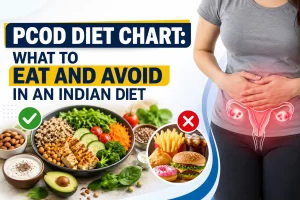
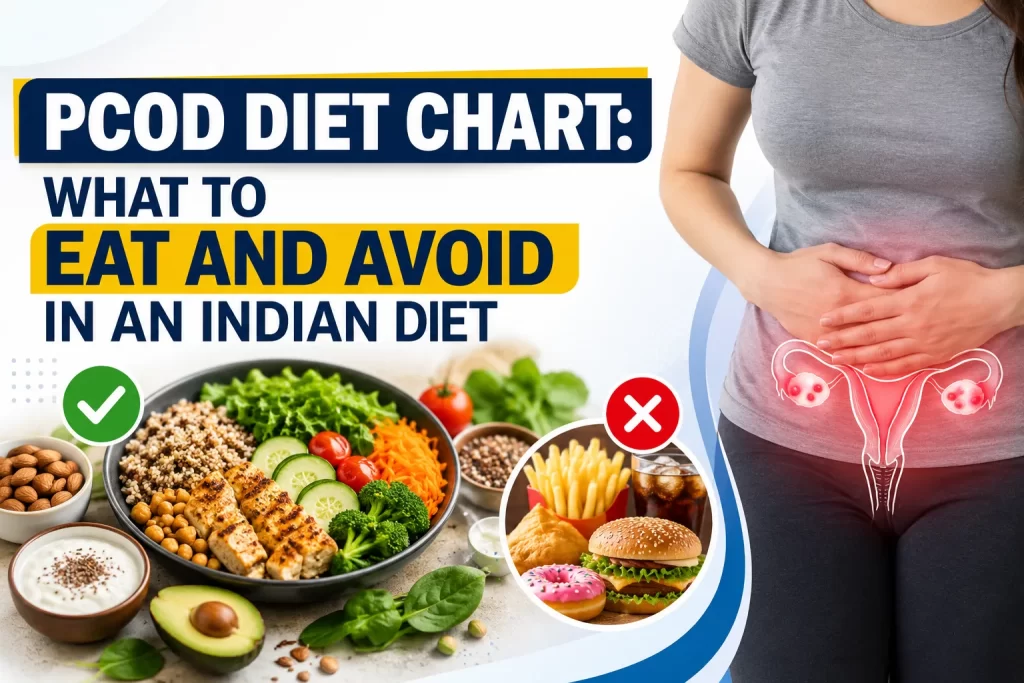
A PCOD diet does not require a universal list of forbidden foods. However, regularly consuming large amounts of added sugar or relying heavily on highly processed snacks may make it harder to maintain a balanced diet.
Consider reducing the frequency or quantity of the following:
Sugary Drinks and Frequent Added Sugar
Soft drinks, sweetened beverages and heavily sweetened tea or coffee can add substantial sugar without providing much nutritional value.
If you enjoy sweetened tea, you could gradually reduce the sugar rather than feeling that you must stop drinking tea altogether.
Refined and Highly Processed Snacks
Chips, packaged sweets, biscuits, pastries and similar foods can fit occasionally into an overall balanced diet, but they should not routinely replace more nourishing meals.
Try keeping convenient alternatives available, such as roasted chana, fruit, nuts or homemade snacks that suit your nutritional needs.
Frequently Fried Foods
Samosas, pakoras, puris and other fried foods do not need to be permanently banned. Consider how often you eat them, the portion size and what the rest of your diet looks like.
Choose cooking methods such as steaming, grilling, roasting or using less oil when convenient, without making your food choices unnecessarily restrictive.
Do You Need to Stop Eating Rice, Roti or Potatoes?
Not necessarily. Rice, roti and potatoes can be part of a balanced diet.
The more useful question is how you combine them with other foods. For instance, pair rice with dal, vegetables and a protein source, or eat roti with sabzi and curd or another suitable source of protein.
Avoid making drastic dietary changes without considering your nutritional needs, preferences and any medical advice you have received.
A Vegetarian PCOD Diet Chart
If you follow a vegetarian diet, you can still build balanced meals with familiar ingredients.
| Meal | Vegetarian options |
| Breakfast | Besan chilla with curd, vegetable dalia or oats |
| Mid-morning | A serving of whole fruit |
| Lunch | Roti, dal, seasonal sabzi and salad |
| Evening snack | Roasted chana, nuts or unsweetened curd |
| Dinner | Paneer or tofu with vegetables and roti, or dal with rice and vegetables |
Vegetarian meals can vary significantly in their protein content. Include different protein sources throughout the day, and seek advice from a qualified dietitian if you have difficulty meeting your nutritional needs.
PCOD Diet for Weight Management
Weight management is a personal goal, not a requirement for every person with PCOD. Healthy eating and physical activity can support overall health even when weight does not change.
If weight management is one of your goals, focus on habits that are realistic enough to maintain.
Make Changes You Can Continue
- Eat regular, balanced meals that suit your schedule and appetite.
- Include protein and vegetables in your main meals.
- Choose whole grains and fibre-rich foods regularly.
- Pay attention to portions without following extreme restrictions.
- Stay physically active in a way that suits your abilities and preferences.
- Avoid crash diets and unverified products promising rapid hormonal balance or weight loss.
There is no single PCOD diet that guarantees weight loss or works equally well for everyone. International guidance recommends sustainable dietary changes tailored to individual preferences and goals. A personalised calorie target, if needed, should be based on your individual requirements rather than copied from a generic online chart.
Practical Tips for Following Your Diet Chart
A diet plan is more useful when it works with your everyday routine.
Plan meals around familiar foods. You can use dal, roti, rice, seasonal vegetables, curd, eggs or other foods that are already part of your household meals.
Keep convenient options available. Boiled eggs, roasted chana, fruit, nuts or other suitable snacks can help when you are busy.
Avoid all-or-nothing thinking. One meal or snack does not determine the quality of your overall diet. Return to your usual balanced eating pattern at the next meal.
Adjust the plan to your needs. Your requirements may differ depending on your age, activity level, food preferences, medical history and whether you have other conditions that affect your diet.
Ask for professional guidance when necessary. A qualified healthcare professional or registered dietitian can help tailor a plan to your circumstances, particularly if you have additional medical conditions or need help meeting your nutritional requirements.
Frequently Asked Questions
1. Which diet is best for PCOD?
There is no single diet composition proven to be best for every person with PCOS. A balanced, sustainable eating pattern tailored to your preferences and nutritional needs is a sensible starting point.
2. Can I eat rice if I have PCOD?
Yes, rice can be included in a balanced diet. Consider the portion that suits you and combine it with vegetables and protein-rich foods such as dal, beans, paneer, tofu, eggs, fish or chicken.
3. Should I completely avoid sugar?
You do not necessarily need to eliminate every source of sugar. Limiting frequent sugary drinks and excessive added sugar can help you maintain a balanced eating pattern. Your individual needs may differ if you have another condition, such as diabetes.
4. Is fruit suitable for a PCOD diet?
Whole fruit can be part of a balanced diet. Choose a variety of fruits you enjoy and consider your overall food intake and any individual medical advice you have received.
5. Can a PCOD diet chart help with weight management?
A balanced eating pattern may support weight management, but results vary. A general diet chart cannot guarantee a particular amount of weight loss or a specific timeline.
6. Do I need to follow a strict diet every day?
A highly restrictive plan is not necessary for everyone. Consistent, sustainable habits are generally more practical than trying to follow a perfect diet every day.
7. Is a diet chart enough to manage PCOD?
Diet is one part of overall PCOS care. Depending on your symptoms and medical history, you may also need clinical assessment, physical activity guidance, medication or other treatment. Do not stop prescribed treatment because of dietary changes.
Final Thoughts
A practical PCOD diet chart should help you make everyday food decisions without unnecessary restrictions. Start with balanced meals, include a variety of protein sources and vegetables, choose whole fruits and grains regularly, and make changes that fit your routine.
You do not need an expensive meal plan or a completely separate kitchen menu to eat well. If you need a diet tailored to your symptoms, nutritional needs or medical history, consult a qualified healthcare professional.
Medical disclaimer: This article provides general educational information and is not a substitute for individual medical advice, diagnosis or treatment.