
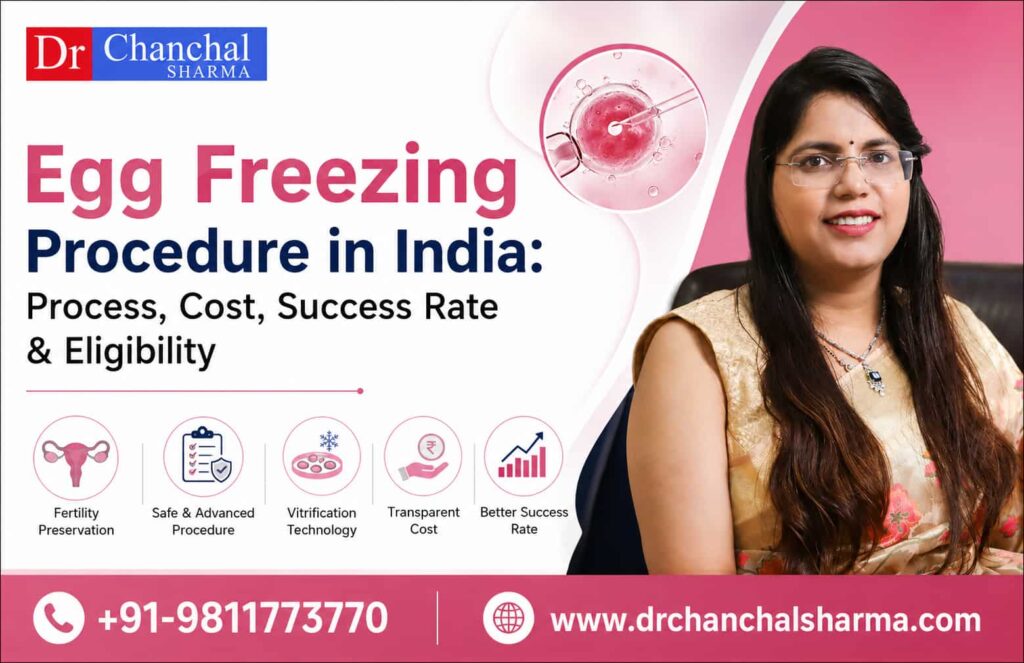
Egg freezing procedure in India is a fertility preservation technique that allows women to freeze healthy eggs for future pregnancy. The process involves fertility evaluation, ovarian stimulation, egg retrieval, and egg cryopreservation. It is commonly chosen by women delaying pregnancy, undergoing medical treatments, or planning their reproductive future. Consulting an experienced fertility specialist helps determine whether egg freezing is the right option based on age, ovarian reserve, and overall reproductive health.
What Is Egg Freezing?
Egg freezing, also known as oocyte freezing or egg cryopreservation, is an advanced fertility preservation method in which a woman’s healthy eggs are collected, frozen, and stored for future use. When she is ready to conceive, the frozen eggs can be thawed, fertilized through IVF, and transferred to the uterus.
In recent years, the egg freezing procedure in India has become increasingly popular among women who wish to preserve their fertility without immediately planning a pregnancy. Advances in reproductive medicine have made this procedure safer, more effective, and more accessible.
Why Do Women Choose Egg Freezing?
Women may consider egg freezing for several reasons, including:
- Delaying pregnancy for career or personal goals
- Planning for future family building
- Preserving fertility before cancer treatment
- Low ovarian reserve or declining egg quality
- Family history of early menopause
- Medical conditions that may affect fertility
What is egg freezing?
Egg freezing is a fertility preservation procedure in which mature eggs are collected, frozen using advanced cryopreservation techniques, and stored for future pregnancy. It allows women to preserve their reproductive potential while delaying parenthood for medical or personal reasons.
Who Should Consider Egg Freezing?
Not every woman needs fertility preservation, but it can be a valuable option for those who want greater flexibility in planning pregnancy.
You may consider egg freezing in India if you:
- Are between 25 and 35 years of age and wish to delay pregnancy.
- Are focusing on education, career, or personal goals.
- Are diagnosed with cancer and need chemotherapy or radiation.
- Have low ovarian reserve or are at risk of premature menopause.
- Have a family history of early menopause.
- Want to preserve fertility before certain medical treatments.
Every woman has unique fertility needs, so a consultation with an experienced fertility specialist is essential before making a decision.
Step-by-Step Egg Freezing Procedure in India
Understanding the process helps reduce anxiety and prepares you for each stage of treatment.
Step 1: Fertility Consultation
The journey begins with a detailed consultation at a fertility clinic. Your doctor will review your medical history, menstrual cycle, reproductive goals, and lifestyle factors to determine whether egg freezing is appropriate for you.
During this visit, you can discuss:
- Pregnancy plans
- Medical conditions
- Previous fertility history
- Treatment expectations
Step 2: Fertility Assessment & Tests
Before starting treatment, several tests are performed to evaluate your reproductive health and ovarian reserve.
These may include:
- AMH (Anti-Müllerian Hormone) Test
- Antral Follicle Count (AFC)
- Pelvic ultrasound
- Hormone profile
- Routine blood investigations
These assessments help estimate the number and quality of eggs that may be retrieved.
Step 3: Ovarian Stimulation
Once the evaluation is complete, fertility medications are prescribed for around 10–12 days to stimulate the ovaries and encourage multiple eggs to mature in a single cycle.
During this period, your fertility specialist monitors progress through regular ultrasound scans and blood tests to ensure healthy follicle development and determine the right time for egg retrieval.
Step 4: Egg Retrieval
When the eggs are fully mature, a trigger injection is given to prepare them for collection.
Egg retrieval is a short, minimally invasive procedure performed under light sedation. Using ultrasound guidance, the doctor collects mature eggs from the ovaries. Most women can return home the same day and resume normal activities within a short period after medical advice.
Step 5: Egg Cryopreservation & Storage
The retrieved mature eggs are carefully examined in a specialized IVF laboratory. Healthy eggs are frozen using vitrification, an advanced rapid-freezing technique that helps protect egg quality during long-term storage.
These frozen eggs remain safely stored until you decide to use them for future pregnancy through IVF treatment.
Medical Insight – Dr. Chanchal Sharma
Egg freezing offers women an opportunity to preserve fertility before age-related decline or medical treatments. However, success depends on factors such as age, ovarian reserve, and overall reproductive health. A personalized fertility assessment is essential before planning treatment.
Benefits, Cost, Success Rate, Risks & FAQs
Benefits of Egg Freezing
Choosing the egg freezing procedure in India can provide women with greater control over their reproductive future. While it does not guarantee pregnancy, it offers the opportunity to preserve healthy eggs at a younger age, when egg quality is generally better.
Key Benefits
- Preserves fertility for the future by storing healthy eggs.
- Supports family planning for women delaying pregnancy.
- Useful before cancer treatment or other medical therapies that may affect fertility.
- May improve future pregnancy options when eggs are frozen at a younger age.
- Provides peace of mind for women planning their personal or professional goals.
Egg Freezing Cost & Success Rate in India
The cost of the egg freezing procedure in India varies depending on factors such as the fertility clinic, city, medications, investigations, and storage duration. Similarly, success rates are influenced by the woman’s age, ovarian reserve, and egg quality rather than the freezing process alone.
Quick Overview
| Factor | Information |
| Average Treatment Duration | Approximately 2–3 weeks |
| Best Age for Egg Freezing | 25–35 years |
| Egg Storage | Long-term under controlled laboratory conditions |
| Success Depends On | Age, ovarian reserve, egg quality, and IVF outcomes |
| Cost Factors | Fertility tests, medications, egg retrieval, freezing, and annual storage charges |
What is the best age for egg freezing?
Fertility specialists generally recommend considering egg freezing between 25 and 35 years, as egg quality and quantity are usually higher during this period.
Risks & Side Effects of Egg Freezing
The egg freezing procedure is generally considered safe when performed by experienced fertility specialists. However, like any medical procedure, it may involve some temporary side effects and uncommon risks.
Possible Side Effects
- Mild bloating
- Temporary abdominal discomfort
- Injection-site soreness
- Mild pelvic cramps after egg retrieval
- Fatigue for a short period
Rare Risks
- Ovarian Hyperstimulation Syndrome (OHSS)
- Minor bleeding or infection after egg retrieval
- Reactions to medications or anesthesia
Is egg freezing safe?
Yes. Egg freezing is generally a safe and well-established fertility preservation procedure. Choosing a qualified fertility specialist and following medical advice can help minimize potential risks.
Frequently Asked Questions (FAQs)
1. What is the egg freezing procedure in India?
The procedure includes fertility evaluation, ovarian stimulation, egg retrieval, and freezing mature eggs using advanced cryopreservation techniques for future pregnancy.
2. Who is eligible for egg freezing?
Women delaying pregnancy, those undergoing cancer treatment, women with low ovarian reserve, or individuals planning future parenthood may be suitable candidates after fertility assessment.
3. How long does the egg freezing procedure take?
A complete treatment cycle generally takes around 2–3 weeks, including fertility testing, ovarian stimulation, egg retrieval, and freezing.
4. Is egg freezing painful?
Most women experience only mild discomfort. Egg retrieval is usually performed under sedation, making the procedure comfortable for most patients.
5. Can unmarried women freeze their eggs in India?
Yes. Depending on applicable medical guidelines and legal regulations, unmarried women may choose egg freezing for fertility preservation after consulting a qualified fertility specialist.
Conclusion
The egg freezing procedure in India has become an important fertility preservation option for women who wish to plan pregnancy at a later stage of life or need to protect their fertility before certain medical treatments. Understanding the procedure, benefits, possible risks, and expected outcomes can help you make an informed decision.
Since every woman’s fertility journey is unique, personalized evaluation is essential before proceeding with treatment. Consulting an experienced fertility expert can help determine the right time and approach based on your age, ovarian reserve, and reproductive goals.
Dr. Chanchal Sharma provides evidence-based fertility guidance and personalized consultations to help women explore suitable fertility preservation options with confidence and informed medical support.