
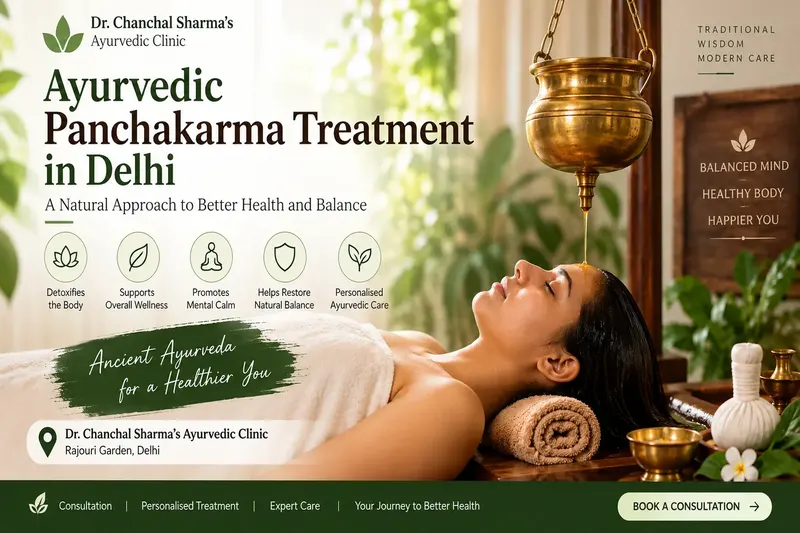
Panchakarma is a specialised Ayurvedic approach that combines selected therapeutic procedures based on an individual’s health condition and overall needs. It may involve preparation, specific therapies and post-treatment care rather than being a single massage or therapy.
At Dr. Chanchal Sharma’s Ayurvedic clinic in Rajouri Garden, Delhi, treatment is personalised according to your health concerns, medical history and Ayurvedic assessment. If you are considering Ayurvedic Panchakarma treatment in Delhi, a consultation can help determine the right approach.
When choosing a Panchakarma centre in Delhi, consider the practitioner’s qualifications, treatment planning, hygiene and professional supervision.
What Is Panchakarma in Ayurveda?
Panchakarma is a traditional Ayurvedic therapeutic approach involving a group of classical procedures. The five procedures commonly associated with Panchakarma are Vamana, Virechana, Basti, Nasya and Raktamokshana.
This does not mean that every person undergoing Panchakarma treatment needs all five procedures.
An Ayurvedic practitioner first evaluates the individual and decides which procedures, if any, are appropriate. Preparatory therapies such as Snehana and Swedana may also be used before selected procedures, followed by appropriate post-treatment care.
The All India Institute of Ayurveda describes Panchakarma through stages that include preparatory procedures, selected main procedures and post-treatment care.
This structured approach is important because Panchakarma is not something that should be selected from a general list of therapies without professional assessment.
How Is Ayurvedic Panchakarma Treatment Planned?
There is no single Panchakarma treatment plan that is suitable for everyone.
An Ayurvedic practitioner may consider factors such as:
- Your current health concerns
- Age and general health
- Digestion and appetite
- Physical strength and tolerance
- Medical history
- Previous treatments
- Current medicines
- Lifestyle and daily routine
- Ayurvedic assessment
- The reason for considering Panchakarma
This individualised approach helps determine which Ayurvedic Panchakarma therapy may be appropriate and whether treatment should be started at that particular time.
For this reason, Panchakarma should not be approached as a fixed detox programme where everyone receives the same procedures.
Panchakarma Procedures and Therapies
The procedures included in a Panchakarma programme depend on the individual assessment. A person may receive selected procedures rather than all five.
Vamana:
Vamana is a classical Ayurvedic therapeutic procedure involving controlled therapeutic emesis. Because it requires appropriate preparation, patient selection and supervision, it should only be undertaken under the guidance of a qualified practitioner.
Virechana:
Virechana refers to therapeutic purgation within an Ayurvedic treatment plan. Its suitability, preparation and method depend on the individual and should be decided during consultation.
Basti:
Basti involves administering an Ayurvedic preparation through the rectal route. Different forms of Basti may be considered according to the individual’s condition and treatment objectives.
Nasya:
Nasya involves administering an appropriate preparation through the nasal route. It may be included when considered suitable as part of an individual Ayurvedic treatment plan.
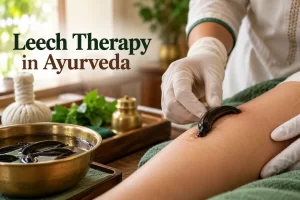
Raktamokshana:
Raktamokshana is a traditional Ayurvedic procedure involving controlled bloodletting techniques in selected circumstances. It requires proper assessment and professional supervision.
The choice, sequence and duration of these procedures should be decided by the treating practitioner rather than based only on information found online.
Panchakarma Preparation: Snehana and Swedana
Preparation can be an important part of Panchakarma therapy.
Two commonly used preparatory approaches are Snehana, or oleation, and Swedana, which involves therapeutic sweating or fomentation.
Depending on the individual’s treatment plan, other preparatory measures may also be recommended.
The purpose of preparation is to get the individual ready for the selected therapeutic procedure. AIIA’s Panchakarma protocol also distinguishes preparatory procedures from the main procedures and post-treatment care.
What Happens During Panchakarma Treatment?
If you are considering Panchakarma for the first time, knowing what to expect can make the process easier to understand.
1. Initial Ayurvedic Consultation:
The practitioner discusses your health concerns, symptoms, lifestyle, previous treatments and relevant medical history.
2. Individual Assessment
Your overall condition is assessed to determine whether Panchakarma is appropriate and which procedures may be considered.
3. Preparation
If required, preparatory therapies such as Snehana or Swedana may be recommended.
4. Selected Panchakarma Procedures
Only the procedures considered appropriate for your treatment plan are carried out.
5. Post-Treatment Care
Depending on the procedure, you may receive guidance related to diet, rest, daily routine and follow-up.
The exact sequence and duration can vary considerably between individuals.
Who May Consider Panchakarma Treatment?
Panchakarma may be considered as part of an Ayurvedic care plan for selected health and wellness concerns.
Depending on individual assessment, people may seek Ayurvedic consultation for concerns related to:
- Digestive health
- Lifestyle-related concerns
- Musculoskeletal discomfort
- Stress and general wellbeing
- Certain metabolic concerns
- Women’s health
- Selected fertility-related concerns
- General Ayurvedic wellness
However, Panchakarma is not automatically appropriate for every condition or every person.
The reason for considering treatment should first be discussed with a qualified practitioner rather than assuming that Panchakarma is suitable simply because a particular symptom is present.
Panchakarma for Women’s Health and Fertility
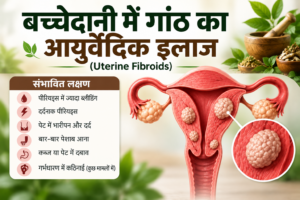
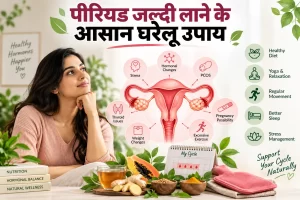
Panchakarma may sometimes form part of an individualised Ayurvedic plan for women’s health or fertility-related concerns.
The approach should consider reproductive history, menstrual health, symptoms and existing medical evaluation.
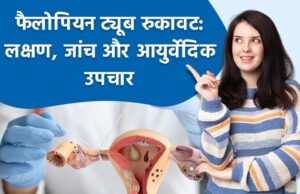
For conditions such as PCOS, endometriosis, low AMH, female infertility or fallopian tube-related concerns, Panchakarma should not be presented as a universal treatment or as a substitute for appropriate medical evaluation.
Where appropriate, Ayurvedic care can be planned alongside ongoing medical care.
For condition-specific information, you can also read about Ayurvedic PCOS treatment in Delhi, Ayurvedic endometriosis treatment in Delhi, Ayurvedic female infertility treatment in Delhi and Ayurvedic treatment for blocked fallopian tubes.
Is Panchakarma Suitable for Everyone?
No. The suitability of Panchakarma depends on the individual, the procedure being considered and the person’s health status.
Pregnancy, acute illness, significant weakness and certain medical conditions may require particular procedures to be avoided, postponed or modified.
This is why professional assessment matters before beginning treatment.
A properly supervised Ayurvedic Panchakarma treatment should include appropriate patient instructions, hygiene, procedure supervision and post-treatment guidance. Institutional Panchakarma facilities in Delhi also emphasise trained therapists, supervision and specific patient care during therapy.
How to Choose the Right Panchakarma Centre in Delhi
If you are searching for Panchakarma treatment in Delhi, the closest clinic is not necessarily the right choice.
Before booking a consultation, consider:
- Is the Ayurvedic practitioner appropriately qualified?
- Is there an individual assessment before treatment?
- Are procedures selected according to the patient’s needs?
- Are therapists trained and properly supervised?
- Are hygiene and procedure protocols followed?
- Are pre-treatment instructions clearly explained?
- Is post-treatment care discussed?
- Does the clinic communicate realistically about what Panchakarma can and cannot do?
- Are existing medical conditions and medicines taken into consideration?
Delhi has an established AYUSH network that includes Panchakarma services at government and institutional facilities. The Delhi Directorate of AYUSH lists Panchakarma facilities, while NDMC also operates Panchakarma centres and Ayurvedic services.
Ayurvedic Panchakarma Treatment in Rajouri Garden, Delhi
Dr. Chanchal Sharma provides Ayurvedic consultation and Panchakarma-related care in Rajouri Garden, New Delhi.
The consultation focuses on understanding your health concerns, medical history and individual requirements before deciding whether Panchakarma is appropriate.
For people living in West Delhi, Rajouri Garden is also a convenient location for consultation, with the clinic located near Rajouri Garden Metro Station.
If you are researching an Ayurvedic Panchakarma centre in Delhi, an initial consultation can help you understand the treatment process and whether a particular Panchakarma approach is suitable for you.
What Should You Bring to Your Panchakarma Consultation?
If you have previous investigations or treatment records, bring them to your consultation whenever possible.
Useful documents may include:
- Previous medical reports
- Blood test reports
- Ultrasound or imaging reports
- Previous prescriptions
- Current medicine details
- Relevant surgical or hospital records
- A brief history of your symptoms
Having this information available can help the practitioner understand your health history before planning Ayurvedic care.
Your Panchakarma Treatment Journey
Although every treatment plan is different, the overall process may look like:
Consultation → Assessment → Personalised Plan → Preparation → Selected Procedures → Post-Treatment Care → Follow-Up
The duration, number of sessions and therapies depend on the individual treatment plan.
The purpose is not to complete a fixed checklist of procedures. Instead, the focus is on selecting an appropriate Ayurvedic approach based on the person’s assessment and needs.
Panchakarma Treatment Near You in Delhi
People searching online may use terms such as “Panchakarma near me”, “Panchakarma centre near me” or “Ayurvedic Panchakarma near me” when looking for a nearby clinic.
Location is certainly useful, particularly if your treatment involves multiple visits, but it should not be the only consideration.
Check the practitioner’s qualifications, consultation process, treatment planning, supervision, hygiene and follow-up care before choosing a centre.
For patients from West Delhi and nearby areas, Rajouri Garden provides a convenient location for an Ayurvedic Panchakarma consultation.
Panchakarma in Delhi NCR
People travelling from surrounding areas may also search for Panchakarma treatment in Delhi NCR or an Ayurvedic Panchakarma centre in Delhi NCR.
Delhi has several established Ayurvedic and AYUSH facilities offering Panchakarma-related services.
If you are travelling from outside Delhi, it is useful to discuss the expected number of visits, treatment duration and follow-up requirements during your initial consultation so that you can plan accordingly.
Related Ayurvedic Treatments and Therapies
Panchakarma may form part of a broader Ayurvedic treatment plan when appropriate. Depending on your health concerns, other therapies or condition-specific treatment may also be considered.
You can learn more about:
- Panchakarma Therapy. * Virechanam
- Vaman Therapy * Nasya Treatment
- Sneha Basti * Kashaya Basti
- Raktamokshana * Ayurvedic Female Infertility Treatment
- Ayurvedic PCOS Treatment * Ayurvedic Endometriosis Treatment
- Ayurvedic Treatment for Blocked Fallopian Tubes
These should be linked contextually from relevant sentences rather than using the same keyword repeatedly throughout the page.
Frequently Asked Questions
1. What is Panchakarma treatment in Ayurveda?
Panchakarma is a group of classical Ayurvedic therapeutic procedures. The appropriate procedures are selected according to the individual’s health condition and Ayurvedic assessment rather than applying the same treatment to everyone.
2. Is Panchakarma treatment available in Delhi?
Yes. Panchakarma services are available through various Ayurvedic and AYUSH facilities in Delhi, including government and institutional centres.
3. Is Ayurvedic Panchakarma treatment safe?
The suitability and safety of a procedure depend on the individual’s health, the procedure selected and appropriate professional supervision. Panchakarma should therefore be planned by a qualified Ayurvedic practitioner.
4. How long does Panchakarma treatment take?
There is no single duration for everyone. The treatment period can depend on the selected procedures, preparation required and individual treatment plan.
5. Can Panchakarma be used for fertility-related concerns?
Panchakarma may sometimes form part of an individualised Ayurvedic plan for women’s health or fertility-related concerns. However, fertility problems can have many causes, so appropriate evaluation remains important.
6. How do I choose the best Panchakarma centre in Delhi?
Rather than choosing a centre simply because it calls itself the “best”, look at practitioner qualifications, individual assessment, treatment planning, supervision, hygiene and post-treatment guidance.
7. Is Panchakarma only for detox or wellness?
No single purpose applies to every Panchakarma programme. It is a structured Ayurvedic therapeutic approach in which procedures are selected according to the individual’s assessment and treatment needs.
8. Do I need a consultation before Panchakarma?
A consultation is important because Panchakarma procedures are not suitable for everyone and the appropriate procedure can differ from person to person.
Key Takeaways
- Panchakarma is a structured Ayurvedic therapeutic approach rather than simply a massage or wellness session.
- Not everyone requires all five classical Panchakarma procedures.
- Treatment planning should be individualised.
- Preparation and post-treatment care may be important parts of the process.
- Professional assessment and supervision are important.
- Panchakarma may form part of broader Ayurvedic care for selected health concerns.
- If you are considering Ayurvedic Panchakarma treatment in Delhi, an initial consultation can help determine whether it is appropriate for your individual needs.
Medical Disclaimer
This content is intended for general educational purposes and should not be considered a substitute for individual medical advice, diagnosis or treatment. Panchakarma procedures should be undertaken only after appropriate assessment by a qualified Ayurvedic practitioner. If you are pregnant, have an acute illness, take regular medicines or have a significant medical condition, discuss your suitability for Panchakarma with your healthcare professional before starting treatment.