
If your doctor has told you that you have a uterine polyp, the first thing you probably wondered is, “Do I need surgery?” The answer is not always yes. Many women search for uterine polyps treatment without surgery, and in some cases, with proper diagnosis and monitoring, a natural and Ayurvedic approach can be considered.
In this guide, you will learn what uterine polyps are, why they form, how to recognise them, when surgery is truly necessary, and how Ayurveda looks at this condition.
What Are Uterine Polyps?
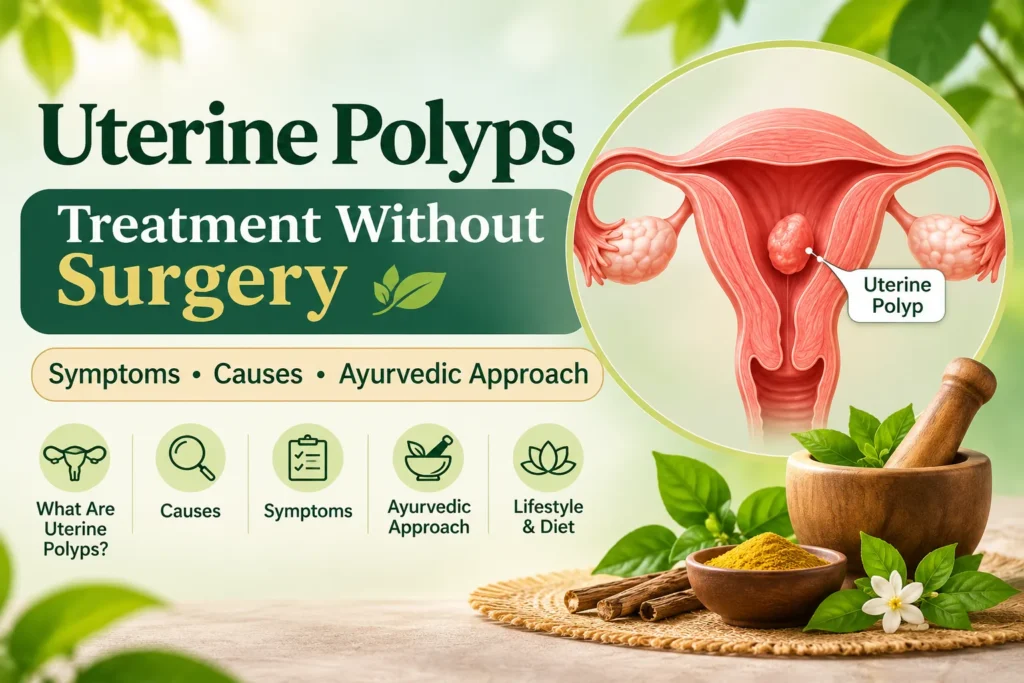
Uterine polyps (also called endometrial polyps) are soft growths that develop from the inner lining of the uterus, called the endometrium. They can be as small as a sesame seed or as large as a golf ball. You may have one polyp or several.
Most uterine polyps are non-cancerous (benign). A small number can show abnormal cells, which is why every polyp should be properly evaluated by a doctor.
Common Symptoms of Uterine Polyps
Many women have no symptoms at all, and the polyp is found by chance during an ultrasound. When symptoms do appear, they include:
- Irregular periods or unpredictable cycles
- Heavy menstrual bleeding
- Spotting between periods
- Bleeding after intercourse
- Bleeding after menopause (this always needs a medical check-up)
- Difficulty in conceiving or repeated pregnancy loss
Why Do Uterine Polyps Form?
The exact cause is not fully known, but these factors are commonly linked:
- Hormonal imbalance, PCOS treatment in Ayurveda especially excess estrogen
- PCOS or PCOD
- Obesity
- Chronic inflammation or infection of the uterus
- Long-term use of certain medicines such as tamoxifen
- Age, as polyps are more common in the 30s to 50s
- Stress and an irregular lifestyle, which disturb hormone balance
How Are Uterine Polyps Diagnosed?
Before choosing any treatment, a correct diagnosis is essential. Your doctor may advise:
- Transvaginal ultrasound (TVS) to see the uterine lining
- Saline infusion sonography (SIS) for a clearer picture of the cavity
- Hysteroscopy, where a thin camera looks inside the uterus
- Endometrial biopsy if abnormal bleeding or high-risk factors are present
Do All Uterine Polyps Need Surgery?
No. Small polyps without symptoms are sometimes only monitored, because a few can shrink or disappear on their own.
Surgery (hysteroscopic polypectomy) is usually advised when:
- The polyp is large or keeps growing
- Bleeding is heavy or does not stop
- Polyps are linked with infertility or repeated miscarriage
- Bleeding occurs after menopause
- Tests show abnormal or suspicious cells
Important: If your doctor suspects anything serious, do not delay or replace the recommended treatment with home remedies.
Ayurvedic View of Uterine Polyps
In Ayurveda, polyp-like growths are understood in terms of Granthi or Arbuda (abnormal tissue growth). They are linked mainly with an imbalance of Kapha dosha along with Vata, which obstructs the normal flow of the reproductive channels (Artavavaha Srotas). Accumulation of Ama (toxins) and disturbed hormonal balance are also considered contributing factors.
Ayurvedic treatment therefore focuses on:
- Balancing the doshas
- Clearing toxins from the body
- Regulating hormones and the menstrual cycle
- Reducing inflammation in the uterine lining
- Supporting overall reproductive health
Ayurvedic Treatment Options for Uterine Polyps
Treatment is always personalised according to your body constitution (Prakriti), symptoms and reports.
1. Panchakarma Therapies
- Virechana (medicated cleansing) helps remove excess Pitta and toxins
- Basti (medicated enema) is considered the main therapy for Vata and the reproductive system
- Uttarbasti may be used to nourish and cleanse the uterine environment
2. Herbal Medicines
Ayurvedic physicians often use herbs traditionally known for hormonal and gynaecological balance, such as Kanchanar Guggulu, Lodhra, Ashoka, Shatavari and Triphala. These should be taken only under the guidance of a qualified Ayurvedic doctor, in the right dose and combination.
3. Diet (Pathya Ahara)
- Eat fresh, warm, home-cooked meals
- Include green vegetables, fibre-rich foods, seasonal fruits and whole grains
- Reduce sugar, refined flour, fried and processed foods
- Limit cold, heavy and excessively oily food
4. Lifestyle Changes
- Maintain a healthy weight
- Exercise regularly, with walking and yoga
- Manage stress through pranayama and meditation
- Sleep on time and avoid late nights
Helpful Yoga Asanas
Gentle practices like Baddha Konasana, Malasana, Setu Bandhasana and Bhujangasana, along with Anulom Vilom, may support pelvic circulation and hormonal balance. Avoid strenuous poses during heavy bleeding.
How Long Does Ayurvedic Treatment Take?
There is no fixed timeline. It depends on the size and number of polyps, your hormonal health, your age and how regularly you follow the plan. Most women need a few months of consistent treatment with follow-up ultrasounds to track progress. Results vary from person to person and cannot be guaranteed.
When Should You See a Doctor?
Consult a doctor without delay if you have:
- Very heavy bleeding or bleeding for many days
- Bleeding after menopause
- Severe pain
- Trouble conceiving
- A polyp that has been diagnosed but you are unsure about the next step
Consult Dr. Chanchal Sharma
Dr. Chanchal Sharma is an Ayurvedic physician (BAMS, DGO, MD-AM) with 15+ years of experience in women’s reproductive health, based in Rajouri Garden, New Delhi. She creates a personalised plan after studying your reports, and online consultation is also available.
Call: +91 98117 73770
Book Your Consultation
Disclaimer: This article is for general awareness only and is not a substitute for medical advice. Please get a proper diagnosis before starting any treatment.
Frequently Asked Questions
Can uterine polyps go away on their own?
Some small polyps may shrink or disappear, especially in younger women, but this is not guaranteed. Regular monitoring is advised.
Can uterine polyps be cured without surgery?
Small or mild polyps can sometimes be managed with medicines, Ayurveda and monitoring. Large, symptomatic or suspicious polyps may still need removal.
Can uterine polyps cause infertility?
Yes, they can interfere with implantation and are linked with difficulty in conceiving.
Are uterine polyps cancerous?
Most are benign, but a small percentage can contain abnormal cells, so evaluation is important.
Can polyps come back after treatment?
Yes, they can recur if the underlying hormonal imbalance is not corrected, which is why root-cause treatment and lifestyle changes matter.
Hindi FAQ (Quick Answers)
Uterine polyps bina surgery ke thik ho sakte hain kya?
Chhote aur kam symptoms wale polyps me medicine, Ayurveda aur monitoring se kabhi-kabhi aaram mil sakta hai. Bade ya suspicious polyps me doctor surgery ki salah de sakte hain.
Uterine polyps ke lakshan kya hote hain?
Heavy bleeding, periods ke beech spotting, irregular periods aur pregnancy me dikkat inke aam lakshan hain.
Kya Ayurveda se uterine polyps ka ilaj possible hai?
Ayurveda me Panchakarma, herbs, diet aur lifestyle ke zariye hormonal balance aur root cause par kaam kiya jata hai. Treatment hamesha jaanch aur doctor ki salah ke baad shuru karein.
Uterine polyps me kya khana chahiye?
Fresh, ghar ka bana khana, hari sabziyan aur fibre. Sugar, maida aur junk food kam karein.