
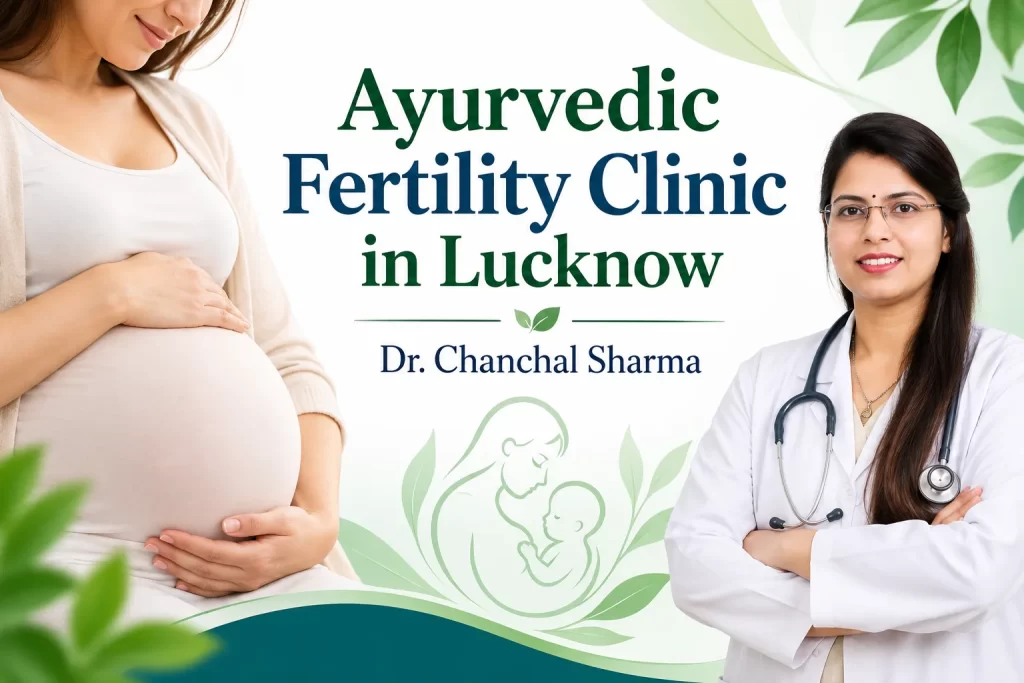
Fertility concerns can affect both women and men, and understanding the possible causes is an important step towards making informed healthcare decisions. Whether you are experiencing irregular periods, difficulty conceiving, concerns about sperm health, or other reproductive health issues, a proper evaluation can help identify the next steps.
Dr. Chanchal Sharma provides healthcare guidance related to fertility and Ayurvedic care. The appropriate approach depends on an individual’s health history, symptoms, diagnostic findings, and consultation needs.
If you are looking for a fertility doctor in Lucknow, it is important to understand the available consultation options, the qualifications of the healthcare professional, and whether specialist investigations or assisted reproductive treatments are required.
Understanding Fertility and Infertility
Fertility refers to the ability to achieve a pregnancy. Infertility is a reproductive health condition that may involve female factors, male factors, a combination of both, or unexplained causes.
For many couples, the first step is a fertility evaluation rather than immediately choosing a particular treatment. Medical history, age, menstrual patterns, duration of trying to conceive, previous pregnancies, and relevant investigations can help guide the assessment.
A fertility consultation may help individuals understand their concerns, identify appropriate investigations, and determine whether referral to a reproductive medicine specialist is needed.
Female Fertility Treatment in Lucknow
Female fertility can be influenced by ovulation, hormonal function, the condition of the fallopian tubes, uterine health, age, and other medical factors.
Women experiencing difficulty conceiving may benefit from an assessment based on their symptoms and reproductive history. The appropriate investigations and treatment depend on the suspected cause.
Common Causes of Female Infertility
- Ovulation disorders
Ovulation occurs when an ovary releases an egg. Irregular or absent ovulation can make conception more difficult. Menstrual irregularities may indicate the need for further evaluation.
- Polycystic Ovary Syndrome (PCOS)
PCOS can affect hormonal balance and ovulation. Some women with PCOS experience irregular periods or difficulty conceiving. Management depends on individual symptoms, fertility goals, and medical assessment.
- Fallopian tube-related problems
Blocked or damaged fallopian tubes can interfere with the movement of the egg and sperm. A qualified healthcare professional may recommend appropriate investigations when this is suspected.
- Endometriosis
Endometriosis may affect reproductive health and can be associated with pelvic pain, painful periods, and difficulty conceiving. Assessment depends on symptoms and clinical findings.
- Age-related changes in fertility
Female fertility generally declines with age, particularly as ovarian reserve and egg quality change. Age is an important consideration when deciding how soon to seek evaluation.
- Other reproductive health factors
Uterine conditions, certain hormonal disorders, previous pelvic infections, and other health issues may contribute to fertility difficulties.
When Should Women Seek a Fertility Evaluation?
Consider speaking with a qualified healthcare professional if:
- You have been trying to conceive for 12 months without success and are under 35.
- You have been trying for 6 months without success and are aged 35 or older.
- You are over 40 and planning a pregnancy.
- You experience irregular or absent periods, known reproductive health conditions, or other concerns that may affect fertility.
An earlier assessment may be appropriate when there are known risk factors or relevant symptoms.
Understanding Female Fertility Assessment
Depending on the individual’s circumstances, an evaluation may include:
- Review of menstrual history and previous pregnancies.
- Assessment of relevant medical conditions and medications.
- Hormonal testing when clinically indicated.
- Pelvic ultrasound or other investigations when appropriate.
- Assessment of the fallopian tubes when indicated.
Not every person needs every test. A qualified clinician should recommend investigations based on the individual’s history and symptoms.
Male Fertility Treatment in Lucknow
Male reproductive health is an important part of fertility assessment. Male factors contribute to a proportion of infertility cases, and evaluating both partners can help avoid unnecessary delays.
Men experiencing difficulty conceiving should not assume that fertility problems are caused only by their partner. A medical assessment can help identify possible contributing factors and appropriate next steps.
Common Causes of Male Infertility
- Low sperm count
A lower-than-expected sperm concentration may reduce the likelihood of conception. The result should be interpreted alongside other semen parameters and the clinical history.
- Reduced sperm motility
Sperm motility describes how sperm move. Reduced movement may affect the ability of sperm to reach and fertilise an egg.
- Abnormal sperm morphology
Sperm morphology refers to sperm shape. It is one of several parameters assessed in a semen analysis and should not be interpreted in isolation.
- Hormonal factors
Hormonal disorders can affect sperm production and reproductive function. Further assessment may be needed when symptoms or test results suggest a hormonal cause.
- Varicocele and reproductive tract conditions
A varicocele and certain other reproductive tract conditions may affect male fertility in some individuals. Evaluation by a qualified clinician can help determine whether treatment is appropriate.
- Lifestyle and medical factors
Smoking, heavy alcohol use, certain medications, previous infections, heat exposure, and some chronic health conditions may affect reproductive health. The impact varies between individuals.
Male Fertility Tests and Evaluation
A male fertility evaluation may include:
- Medical and reproductive history.
- Semen analysis to assess sperm concentration, movement, and morphology.
- Hormonal investigations when indicated.
- Physical examination by an appropriately qualified clinician.
- Further investigations or referral when required.
Semen analysis is a common initial investigation, but one result does not always provide a complete picture of fertility. A healthcare professional may recommend repeat testing or additional assessment depending on the findings.
When to Consult a Male Fertility Specialist
Consider seeking an evaluation if you and your partner have been unable to conceive, if a semen analysis is abnormal, or if you have a history of testicular problems, reproductive surgery, hormonal conditions, or other relevant medical concerns.
A qualified urologist, andrologist, or reproductive medicine specialist may be appropriate depending on the suspected cause.
Fertility Consultation for Couples
Fertility concerns can involve one partner or both. Assessing both partners, when appropriate, helps build a clearer picture of the factors that may be affecting conception.
A consultation may focus on:
- Understanding the duration of trying to conceive.
- Reviewing previous investigations and treatments.
- Identifying relevant medical history and symptoms.
- Discussing which additional tests may be appropriate.
- Explaining possible next steps and specialist referrals.
The purpose of an evaluation is to guide informed decisions. No single approach is suitable for every couple, and individual outcomes cannot be guaranteed.
Ayurvedic Care and Fertility-Related Concerns
Some individuals explore Ayurveda as part of their broader healthcare journey. Any Ayurvedic approach should be individualised and should take into account the person’s health history, current medication, fertility goals, and ongoing medical care.
It is important to understand that evidence for Ayurvedic interventions varies by treatment and condition. Ayurvedic care should not be presented as a proven substitute for necessary infertility investigations or established fertility treatments.
Before using herbal preparations or supplements, discuss them with a qualified healthcare professional. Some products can interact with medicines or contain ingredients that may not be suitable during pregnancy or while trying to conceive.
If assisted reproductive treatment is indicated, timely evaluation by a qualified reproductive medicine specialist is important. Do not delay necessary investigations while trying an alternative approach.
IVF and Other Assisted Reproductive Treatments
IVF, or in vitro fertilisation, is an assisted reproductive treatment in which eggs are fertilised with sperm in a laboratory. Other options may include intrauterine insemination (IUI), intracytoplasmic sperm injection (ICSI), or fertility surgery in selected circumstances.
The appropriate option depends on the cause of infertility, age, investigation results, medical history, and other clinical considerations.
A fertility consultation does not automatically mean that IVF is required. Some individuals may need further investigations or treatment for an underlying condition, while others may benefit from assessment at a specialist fertility centre.
Important: Confirm which services Dr. Chanchal Sharma personally provides before listing IVF, IUI, ICSI, fertility surgery, or other procedures as available services. If these procedures are provided by a separate fertility centre, identify that centre accurately rather than implying that it is Dr. Chanchal Sharma’s own clinic.
How to Choose a Fertility Doctor in Lucknow
When comparing fertility doctors in Lucknow, consider the following factors:
1. Qualifications and relevant experience
Check the doctor’s recognised qualifications, professional registration where applicable, and experience relevant to your fertility concerns.
2. Appropriate diagnostic evaluation
A suitable provider should explain which investigations may be needed and why. Be cautious of recommendations that promise a diagnosis or outcome without an appropriate assessment.
3. Clear information about available services
Confirm whether the provider offers consultations, diagnostic assessments, medical treatment, or assisted reproductive procedures. These services are not interchangeable.
4. Transparent communication
You should receive clear explanations of possible benefits, limitations, risks, costs, and alternative options.
5. Coordinated specialist care
Some fertility concerns require input from a gynaecologist, reproductive medicine specialist, urologist, andrologist, or another qualified professional. Appropriate referral is an important part of care.
Fertility Consultation Availability in Lucknow
If you are searching online for a fertility doctor in Lucknow, confirm the consultation location and appointment process before travelling or booking.
Consultation details
- Doctor: Dr. Chanchal Sharma
- Consultation location: 3/45, Patrakarpuram Crossing Rd, Viram Khand, Viram Khand-3, Gomti Nagar, Lucknow, Uttar Pradesh 226010
- Online consultation: Contact us
If consultation is offered remotely, explain how appointments are arranged and whether in-person examination or local diagnostic testing may be required.
If a physical clinic or consultation service is not available in Lucknow, this page should clearly state the actual service location and any verified online consultation option. Do not describe a Delhi practice as a Lucknow clinic.
Frequently Asked Questions
1. How do I choose a fertility doctor in Lucknow?
Review the doctor’s qualifications, relevant experience, available services, approach to diagnosis, and referral arrangements. Confirm the clinic location and consultation availability before booking.
2. What are the common causes of female infertility?
Possible causes include ovulation disorders, PCOS, fallopian tube problems, endometriosis, age-related changes, and certain uterine or hormonal conditions. An appropriate evaluation is needed to identify the likely cause.
3. What are the common causes of male infertility?
Male fertility may be affected by sperm production, sperm movement, reproductive tract conditions, hormonal factors, previous infections, certain medications, and other health or lifestyle factors.
4. Which tests are used to evaluate male fertility?
Semen analysis is a common initial test. Depending on the results and medical history, a clinician may recommend hormonal testing, examination, repeat semen analysis, or further investigations.
5. When should a couple seek medical advice for difficulty conceiving?
Generally, an evaluation is recommended after 12 months of trying to conceive if the female partner is under 35, after 6 months at ages 35–39, and sooner after age 40. Known risk factors or relevant symptoms may justify earlier assessment.
6. Does every couple with infertility need IVF?
No. The appropriate treatment depends on the cause of infertility, the age and medical history of both partners, and investigation results. A qualified fertility specialist can discuss suitable options.
7. Is Ayurvedic treatment a substitute for IVF?
Ayurvedic care should not be presented as a proven replacement for indicated fertility treatment. Evidence varies by intervention, and couples should seek appropriate medical evaluation without delaying time-sensitive care.
8. Can male and female fertility be evaluated together?
Yes. When appropriate, evaluating both partners helps identify possible contributing factors and supports more informed decisions about further testing and treatment.
9. How can I book a consultation with Dr. Chanchal Sharma?
Use the verified contact details or booking link on the official website. Confirm the consultation mode, location, availability, and services before booking.
10. Is a fertility consultation in Lucknow available with Dr. Chanchal Sharma?
Please confirm the current consultation location and service availability through the official contact details. Only verified in-person or online services should be listed on this page.
Conclusion
Fertility concerns can involve a range of female, male, or combined factors. Understanding the possible causes and seeking an appropriate evaluation can help individuals and couples make informed healthcare decisions.
If you are looking for fertility doctor in Lucknow, review the provider’s qualifications, available services, consultation arrangements, and approach to diagnosis. The most appropriate next step depends on your individual circumstances and may include further investigations or referral to a qualified fertility specialist.
Medical Disclaimer: This content is for general educational purposes only and does not replace individual medical advice, diagnosis, or treatment. Fertility investigations and treatment decisions should be made with appropriately qualified healthcare professionals.