

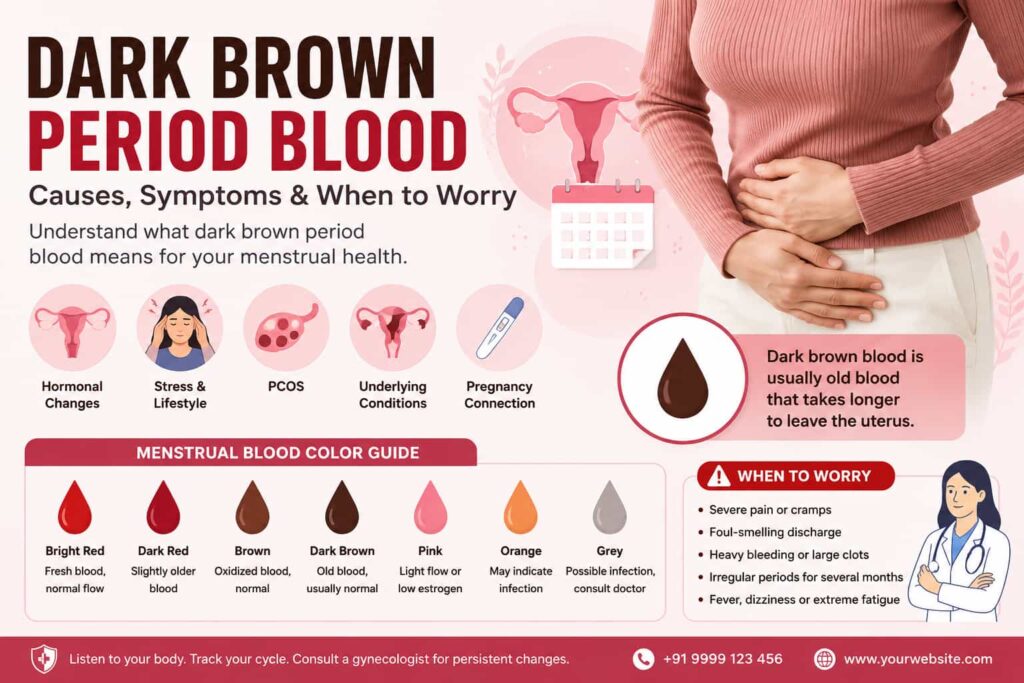
Dark brown period blood is usually oxidized menstrual blood that has taken longer to exit the uterus, causing it to change from bright red to brown or dark brown in color. In most cases, it is a normal variation of the menstrual cycle and is commonly seen at the beginning or end of periods.
Many women often worry whether this is linked to pregnancy, infection, or other reproductive health issues. While concerns are valid, in most cases it is related to normal cycle changes such as slow flow or hormonal fluctuations.
However, in some cases it may also be linked with conditions like hormonal imbalance, PCOS, or other menstrual disorders. If you want to understand related conditions, you can also read our detailed guide on PCOD Problem Symptoms & Causes and Ovary Mein Ganth (Ovarian Cyst).
This article explains everything you need to know about dark brown period blood, including causes, timing, pregnancy connection, warning signs, and when to consult a doctor.
Is Dark Brown Period Blood Normal?
Dark brown period blood is usually normal and represents older blood that has oxidized before leaving the uterus. It is commonly seen at the start or end of menstruation.
However, if it occurs frequently with pain or abnormal discharge, it may require medical attention. In such cases, you may also want to explore related symptoms of Brown Discharge During Pregnancy.
What Is Dark Brown Period Blood?
Dark brown period blood is menstrual blood that has been exposed to oxygen for a longer period inside the uterus or vagina.
How Menstrual Blood Changes Color
Blood color changes depending on flow speed and exposure time.
You may also understand this better by reading Black Period Blood Meaning for deeper cycle color variations.
Fresh Blood vs Old Blood
| Type | Color | Meaning |
| Fresh blood | Bright red | Active flow |
| Older blood | Dark red | Slow flow |
| Oxidized blood | Brown/dark brown | Delayed exit |
Why Is My Period Blood Brown?
Old Blood Leaving the Uterus
Most common cause due to delayed shedding.
Slow Menstrual Flow
Low flow increases oxidation time.
Beginning or End of Period
Common when uterine lining is clearing.
Hormonal Imbalance
Hormonal shifts affect shedding patterns.
For hormonal imbalance-related conditions, read:
PCOD Problem Explained
Stress and Lifestyle Changes
Stress can delay ovulation and affect cycle color.
Birth Control or IUD
Hormonal contraceptives may cause spotting.
Thyroid Disorders
Thyroid imbalance can alter menstrual flow.
Brown Period Blood by Timing
At the Beginning of Period
Often old retained blood from previous cycle.
During Period
Usually due to slow flow.
At the End of Period
Normal clearing of uterine lining.
Instead of Period
May indicate hormonal imbalance or pregnancy.
After Period
Leftover blood discharge.
Brown Spotting Before Period
Brown spotting before menstruation is common and may appear:
- 1 day before period
- 2–3 days before period
- Up to 1 week before
Possible Causes
- Hormonal fluctuation
- Stress
- Ovulation spotting
- Birth control
- PCOS
If spotting is frequent, it may be related to ovarian issues like Ovary Mein Ganth (Ovarian Cyst).
Brown Discharge vs Brown Period Blood
| Feature | Brown Discharge | Brown Period Blood |
| Flow | Light | Moderate |
| Timing | Before period | During period |
| Cause | Hormones | Menstrual shedding |
Can Brown Blood Be a Sign of Pregnancy?
Brown spotting may sometimes be linked to early pregnancy, especially implantation bleeding.
For pregnancy-related guidance, read:
👉 When to Take Pregnancy Test
Implantation Bleeding
- Light spotting
- Brown or pink color
- Lasts 1–3 days
Period vs Pregnancy Spotting
| Feature | Period Blood | Implantation Bleeding |
| Flow | Moderate | Very light |
| Duration | 3–7 days | 1–3 days |
| Cause | Menstruation | Pregnancy |
Brown Period Blood and PCOS
PCOS is a major cause of irregular cycles.
Brown blood may occur due to:
- Irregular ovulation
- Hormonal imbalance
- Delayed uterine shedding
Brown Period Blood and Stress
Stress affects hormonal balance and can cause:
- Delayed periods
- Brown spotting
- Irregular flow
Stress-related cycle issues are common in modern lifestyles.
Different Shades of Brown Period Blood
- Light brown: Start/end of cycle
- Medium brown: Slow flow
- Dark brown: Old blood
- Almost black: Highly oxidized blood
- Brown with clots: Heavier shedding
When Brown Period Blood May Indicate a Problem
It may indicate an underlying issue such as:
- Infection
- Endometriosis
- Fibroids
- Hormonal disorders
- PCOS
For cyst-related issues, read:
👉 Ovary Mein Ganth Kaise Banti Hai
When to See a Doctor
Seek medical help if:
- Severe pelvic pain
- Foul-smelling discharge
- Heavy bleeding
- Fever
- Dizziness
- Pregnancy with bleeding
How Doctors Diagnose the Cause
Doctors may perform:
- Medical history analysis
- Pelvic exam
- Ultrasound
- Hormonal tests
- Pregnancy test
Can Brown Period Blood Be Prevented?
While not always preventable, you can improve cycle health by:
- Managing stress
- Maintaining healthy diet
- Staying hydrated
- Tracking cycles
- Regular checkups
Frequently Asked Questions
Is brown period blood normal?
Yes, it is usually normal.
Why is my period blood brown instead of red?
Because it is older blood that has oxidized.
Can brown blood mean pregnancy?
Sometimes, but confirmation requires a test.
Is dark brown period blood dangerous?
Not usually unless accompanied by symptoms.
Can PCOS cause brown blood?
Yes, due to hormonal imbalance.
When should I worry?
If it is persistent, painful, or foul-smelling.
Conclusion
Dark brown period blood is generally a normal part of the menstrual cycle caused by oxidation of older blood. It is commonly seen at the beginning or end of periods and usually does not indicate any serious health problem.
However, if it becomes frequent or is associated with symptoms such as pelvic pain, foul-smelling discharge, irregular cycles, or abnormal bleeding, it may point toward underlying conditions like hormonal imbalance, PCOS, or infection.
In such cases, proper medical evaluation is important for accurate diagnosis and timely treatment.
For personalized guidance and women’s health consultations, you can refer to Dr. Chanchal Sharma.