
Home › Ayurveda Treatments › Fallopian Tube Blockage
Learn about Raktamokshana Treatment in Ayurveda, including its traditional methods, procedure, potential benefits, preparation, safety considerations and personalised Ayurvedic care
✦ Personalised Ayurvedic Assessment ✦ Traditional Raktamokshana Therapy
✦ Supervised Treatment Procedure ✦ Individualised Pre & Post-Treatment Care
Get an Appointment
Raktamokshana Treatment is a traditional Ayurvedic therapeutic procedure involving controlled bloodletting through selected methods. In Ayurveda, it has traditionally been considered for specific conditions where this approach is considered appropriate after individual assessment.
Raktamokshana is also commonly described as an Ayurvedic bloodletting therapy. The method used depends on the person’s condition, treatment objectives and professional assessment.
It is not a single standard procedure for everyone. Different traditional techniques may be selected according to the area being treated and the individual’s health status.
Raktamokshana Treatment in Ayurveda has a long-standing place in traditional Ayurvedic practice. It may be considered as part of a broader therapeutic approach when a qualified practitioner determines that bloodletting is appropriate.
The treatment should always be personalised. Factors such as age, general health, symptoms, current medicines, bleeding tendency and previous medical history may influence whether a person is suitable for the procedure.
Modern research has also examined specific Raktamokshana-related techniques, including leech therapy, but evidence and outcomes can vary depending on the method and health condition being studied.
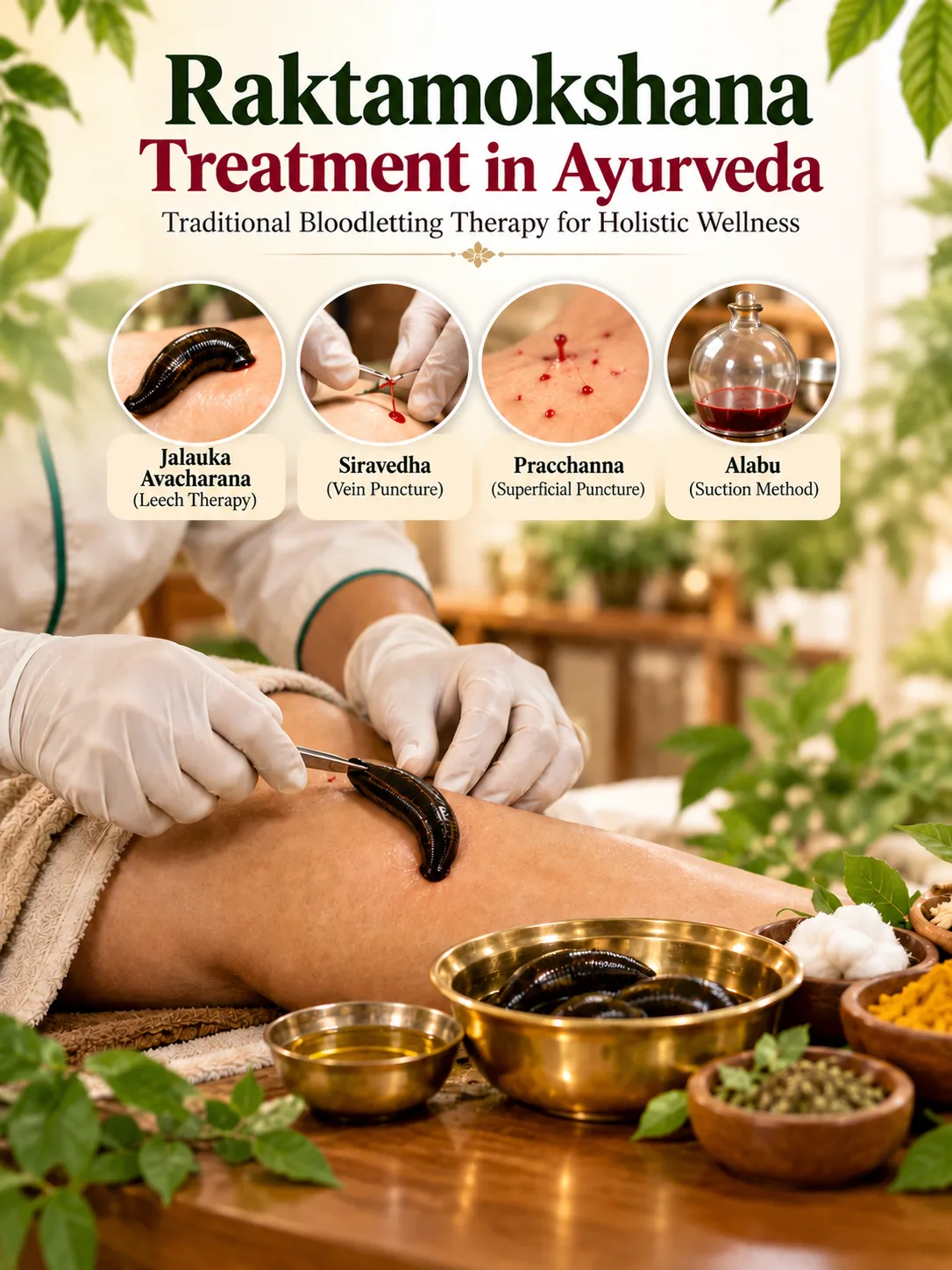
Ayurvedic literature describes different approaches to Raktamokshana. Commonly discussed methods include:
Jalauka Avacharana refers to the traditional use of medicinal leeches for controlled bloodletting. It is one of the better-known methods associated with Raktamokshana.
Siravedha is a traditional venepuncture-based method of Raktamokshana. It involves controlled bloodletting through a selected vein and should be performed only by a qualified practitioner following appropriate assessment.
Pracchanna is a traditional method involving controlled superficial puncturing of the skin to allow bloodletting from the affected area.
Alabu is a traditional suction-based method described in Ayurvedic Raktamokshana practice. Its use and suitability depend on the individual’s condition and the practitioner’s assessment.
Other traditional classifications and techniques may also be described in Ayurvedic literature. The appropriate method should be selected by a qualified practitioner rather than chosen for self-treatment.
The exact procedure varies according to the selected technique and the individual’s condition. A supervised treatment generally involves the following steps:
The practitioner reviews symptoms, health history, current medicines and overall suitability for Raktamokshana.
An appropriate method, such as Jalauka Avacharana, Siravedha, Pracchanna or Alabu, may be selected according to the treatment plan.
The treatment area and required equipment are prepared appropriately, with attention to hygiene and safety.
The selected technique is performed under qualified supervision with appropriate monitoring throughout the procedure.
After treatment, the area may be cleaned and dressed where required. The practitioner may also provide individual advice regarding rest, diet, activity and follow-up.
Raktamokshana Benefits depend on the technique, condition and individual response.
Traditionally, it has been considered for selected:
Skin-related concerns
Localised swelling or inflammation
Musculoskeletal concerns
Certain Rakta-related Ayurvedic conditions
Selected uses of leech therapy
These are traditional or potential applications, not guaranteed outcomes. Results can vary depending on the technique and individual condition.
The Raktamokshana Treatment Cost can vary depending on the technique used, number of sessions, consultation requirements, materials and the overall treatment plan.
For example, the cost may differ between leech-based therapy and other Raktamokshana procedures. Additional medicines, dressings or supportive Ayurvedic therapies may also influence the total cost.
There is therefore no single price that is appropriate for every patient. A personalised consultation is the best way to understand the treatment requirements and expected cost.
Raktamokshana is a specialised procedure and should be performed only under qualified supervision.
Before treatment, the practitioner should consider factors such as anaemia, bleeding disorders, low blood pressure, pregnancy, current medicines, infection, general weakness and other relevant health conditions.
Possible concerns can include temporary discomfort, bruising, bleeding or infection depending on the technique used. Appropriate hygiene, assessment and monitoring are therefore important.
Raktamokshana should not be self-administered. Anyone with a significant medical condition or taking medicines that affect bleeding should seek appropriate professional advice before considering treatment.
Explore personalised Ayurvedic care with Dr. Chanchal Sharma.
Book a consultation to discuss your concerns and understand your options.
Raktamokshana is a traditional Ayurvedic therapeutic procedure involving controlled bloodletting through selected methods under professional supervision.
Potential benefits depend on the method and individual condition. Raktamokshana has traditionally been considered for selected skin, inflammatory and musculoskeletal concerns.
The procedure depends on the selected method. After assessment and preparation, the therapy is performed under qualified supervision followed by appropriate aftercare.
Yes. Jalauka Avacharana, or traditional leech therapy, is one of the methods associated with Raktamokshana.
The cost varies according to the technique, number of sessions, consultation and other treatment requirements. A personalised assessment is needed for an accurate estimate.
People with conditions such as significant anaemia, bleeding disorders, pregnancy, severe weakness or other relevant health concerns may require special assessment before treatment.
Raktamokshana is a traditional Ayurvedic bloodletting therapy with different methods and applications. Treatment should be selected after individual assessment and performed under qualified supervision.
Outcomes can vary, so proper hygiene, aftercare and professional guidance are important. Consult a qualified Ayurvedic practitioner before beginning treatment.
This page provides general health information and is not a substitute for individual medical diagnosis, treatment or professional advice. Raktamokshana should be undertaken only after appropriate assessment and under qualified supervision. If you have an existing medical condition, take regular medication, are pregnant or have concerns about your health, consult an appropriate healthcare professional before starting treatment.