
Home › Ayurveda Treatments › Fallopian Tube Blockage
Personalised Ayurvedic care explaining the Virechana process, traditional purpose, preparation, dietary guidance, benefits and post-treatment care.
✦ Personalised Ayurvedic Assessment ✦ Panchakarma-Based Care
✦ Guided Virechana Process ✦ Diet & Lifestyle Guidance
Get an Appointment
Virechana is one of the traditional therapeutic procedures included in Panchakarma, the classical Ayurvedic approach to therapeutic cleansing and internal care. It involves medically supervised therapeutic purgation after appropriate preparation and assessment.
In Ayurveda, Virechana is traditionally associated with the management of aggravated Pitta-related conditions. However, it is not a procedure that should be performed routinely or without professional evaluation. The suitability, preparation and procedure may differ according to an individual’s health, digestive capacity, medicines, age and overall condition.
Virechana therapy is a structured Ayurvedic procedure rather than simply taking a laxative. Before treatment, an Ayurvedic practitioner evaluates the person’s health history and determines whether Virechana is appropriate.
The treatment generally involves preparation, administration of a selected purgative approach under supervision, observation during the procedure and dietary care afterward. The objective is to provide a controlled therapeutic process rather than induce uncontrolled bowel movements.
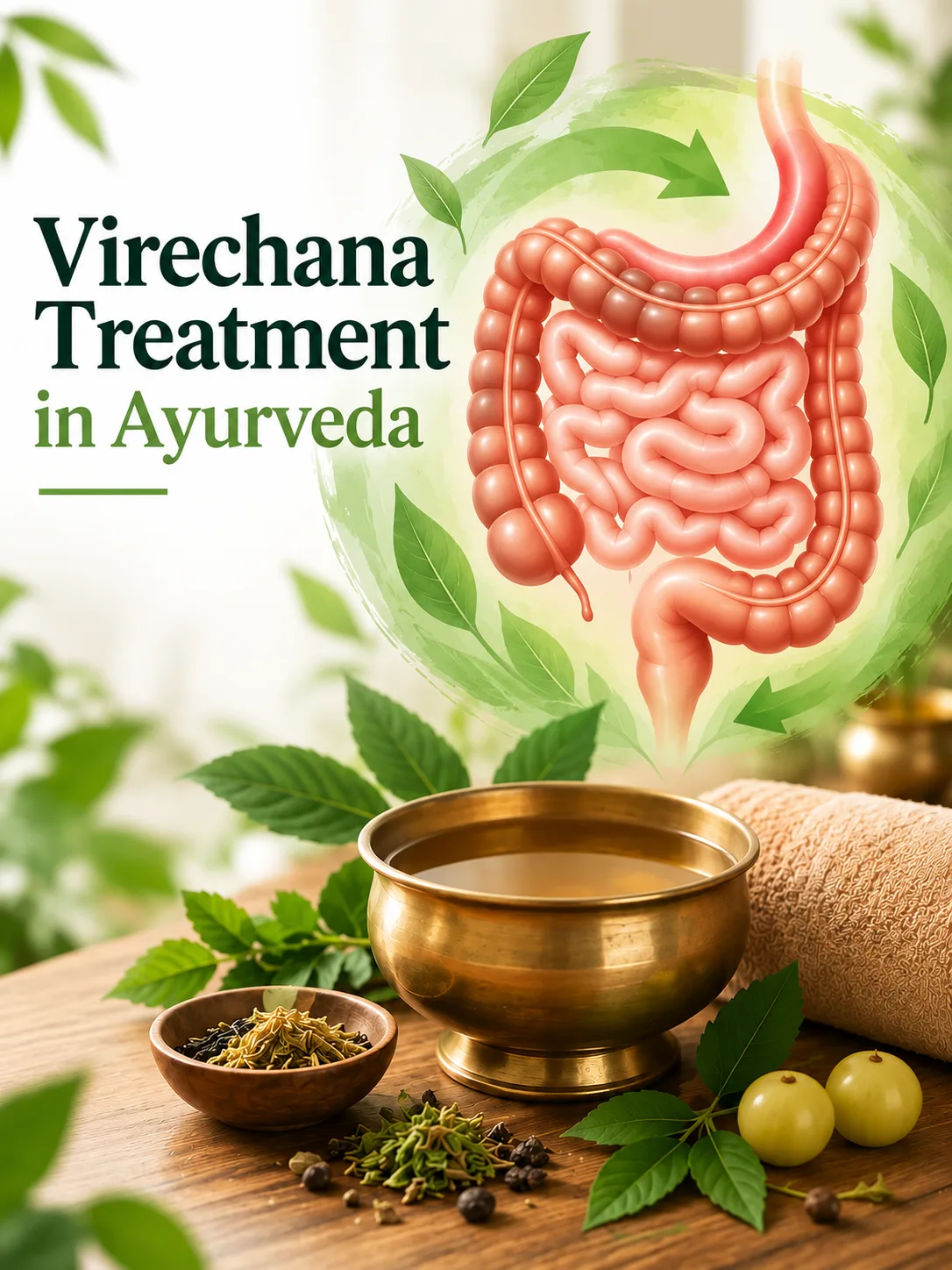
Virechana is traditionally considered one of the five Panchakarma procedures. The broader Panchakarma approach may include Vamana, Virechana, Sneha Basti, Nasya and Raktamokshana, depending on the traditional framework and clinical context.
A Panchakarma Virechana treatment plan should therefore be individualised. Not every person undergoing Ayurvedic care requires Virechana, and the procedure should not be selected only because it is described as a cleansing treatment online.
The Virechana Panchakarma process generally follows a structured sequence:
The practitioner reviews medical history, current symptoms, digestion, medications, general health and other relevant factors before deciding whether the procedure is suitable.
Traditional Ayurvedic preparation may be recommended before the main procedure. The exact preparation depends on the individual’s condition and the practitioner’s assessment.
A selected therapeutic purgative approach is administered under professional supervision. The response is observed carefully rather than treating the process as a self-care laxative routine.
After the procedure, dietary and lifestyle instructions are usually given to support a gradual return to normal meals and daily activities.
The traditional Virechana treatment benefits described in Ayurveda are associated with therapeutic purgation and the management of conditions considered suitable for this procedure.
People may seek Virechana as part of an Ayurvedic treatment plan for certain digestive, metabolic or Pitta-related concerns. However, the benefits can vary considerably between individuals, and modern clinical evidence does not establish Virechana as a universal treatment for specific diseases.
For this reason, it is better to view Virechana as an individualised Ayurvedic procedure rather than a guaranteed detoxification or cure.
Diet is an important part of post-Virechana care. After therapeutic purgation, the digestive system may need a gradual transition back to a normal diet.
Depending on the practitioner’s instructions, meals may initially be kept light, simple and easy to digest. Foods such as soft rice preparations, light khichdi, soups or other suitable easily digestible meals may be recommended.
The diet should then be progressed gradually according to digestion and recovery. Heavy, excessively oily, very spicy or difficult-to-digest foods may be restricted temporarily when advised by the practitioner.
Adequate fluid intake is also important, particularly because therapeutic purgation can involve substantial bowel movements. However, the exact diet after Virechana therapy should be personalised rather than followed from a generic online food list.
If you have diabetes, kidney problems, gastrointestinal conditions, are pregnant, or take regular medicines, dietary and post-treatment instructions should be discussed with an appropriate healthcare professional.
The Virechana therapy cost can vary depending on the clinic, practitioner, preparation required, number of treatment days, medicines or therapies involved and the level of supervision provided.
A single fixed price cannot accurately represent every person’s treatment plan. A consultation and assessment are generally needed before determining the appropriate procedure and associated costs.
Virechana is not suitable for everyone. Individual health, hydration, digestion and medications should be assessed before treatment.
Since therapeutic purgation can affect fluid balance, it should not be performed without professional supervision. Pregnancy, dehydration, weakness and certain medical conditions may require avoiding or modifying the procedure.
Fertility concerns can have different underlying causes. Explore our treatment guides for low AMH, PCOS, endometriosis, female infertility, and fallopian tube blockage to learn more about these conditions and the Ayurvedic treatment approaches available for each.
Explore personalised Ayurvedic care with Dr. Chanchal Sharma.
Book a consultation to discuss your concerns and understand your options.
Virechana should not be done at home. It requires proper assessment, preparation and professional supervision.
Light, simple and easily digestible foods are generally preferred, based on your practitioner’s advice.
Virechana may cause temporary weight changes due to fluid and bowel loss, but it is not a weight-loss treatment.
Gas may be supported through appropriate diet, hydration and lifestyle changes. Persistent gas should be medically evaluated.
The duration varies depending on the individual’s condition, preparation, procedure and recovery needs.
The pre-treatment diet depends on the individual’s assessment and preparation plan prescribed by the Ayurvedic practitioner.
Virechana Treatment in Ayurveda is a traditional Panchakarma procedure that includes assessment, preparation, therapeutic purgation and post-treatment dietary care. Its suitability depends on individual health, treatment needs and overall condition. Professional guidance is important because fluid balance, medicines and existing health conditions can affect safety.
If you are considering Virechana therapy, consult a qualified Ayurvedic practitioner before choosing the procedure or using any purgative on your own.
Medical Disclaimer: This page provides general health information and is not a substitute for individual medical diagnosis, treatment, or professional advice. Virechana should be undertaken only after appropriate assessment and under qualified supervision. If you have a medical condition, take regular medication, are pregnant, or have health concerns, consult a qualified healthcare professional before starting treatment.