
Home › Ayurveda Treatments › Fallopian Tube Blockage
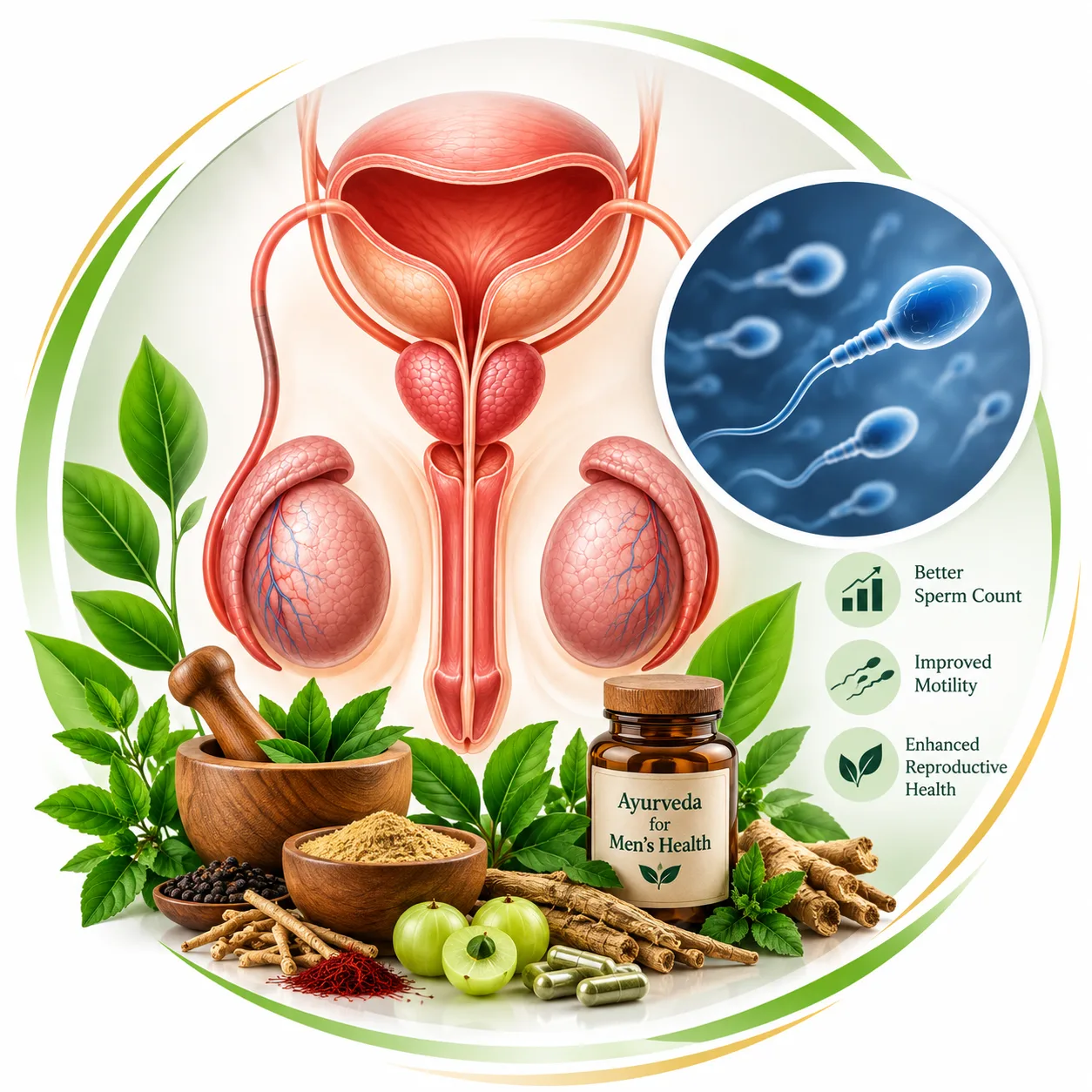
Personalised Ayurvedic support for men preparing for IVF, with attention to sperm health, lifestyle, nutrition and overall reproductive wellbeing.
✦ Male Fertility Assessment ✦ Personalised Ayurvedic Care
✦ Sperm Health & Lifestyle Guidance ✦ Pre-IVF Support
Get an Appointment
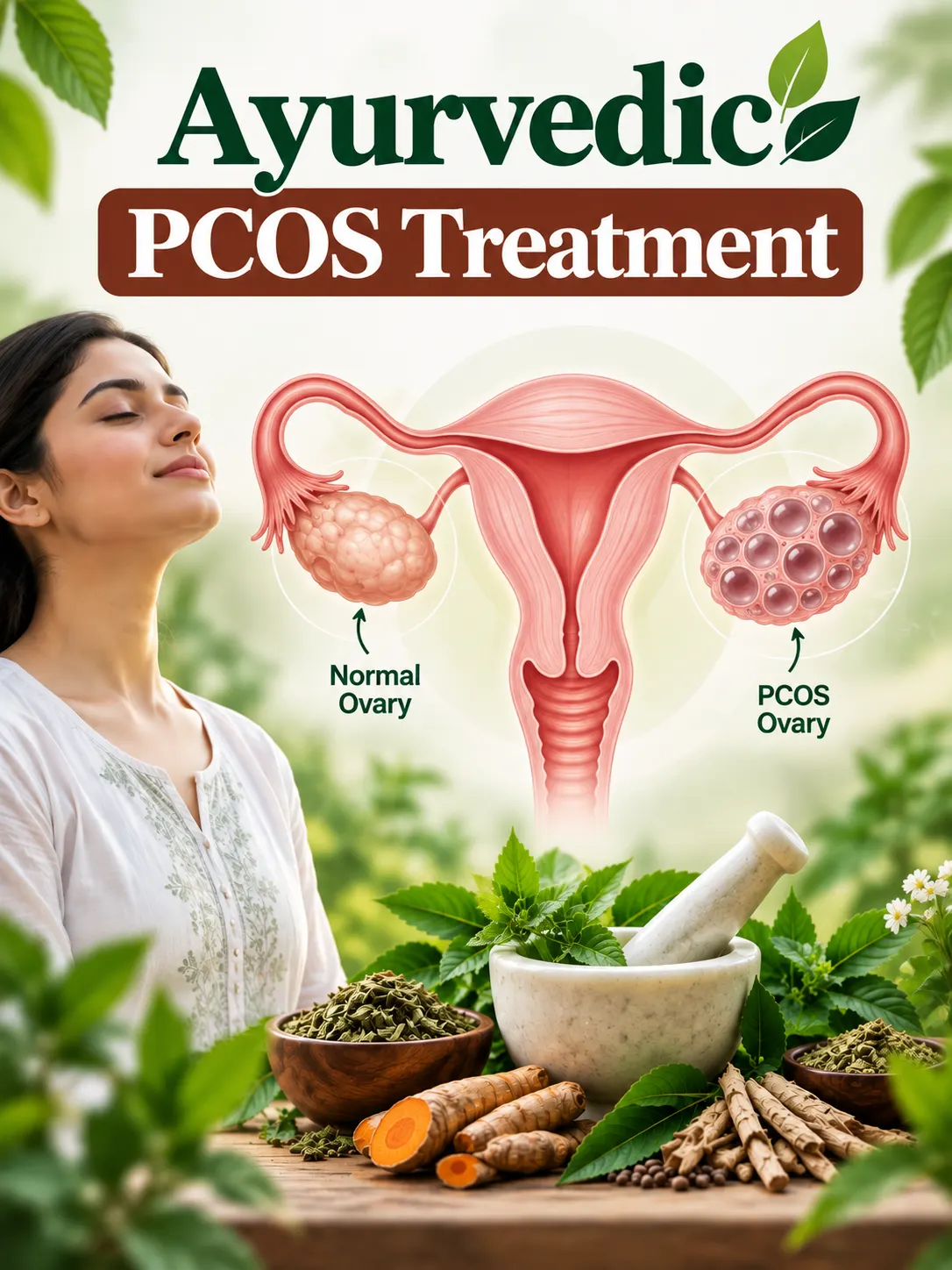
Polycystic Ovary Syndrome (PCOS) is a common hormonal condition that can affect periods, ovulation, skin, weight and fertility. Its symptoms and severity can vary considerably from one woman to another, so treatment is best planned according to individual health needs rather than following a single approach.
If you are looking for Ayurvedic PCOS treatment in Delhi, Dr. Chanchal Sharma provides personalised Ayurvedic care based on your symptoms, menstrual history, lifestyle, medical reports and fertility goals. The focus is on understanding the factors affecting your reproductive health and creating a treatment plan suited to your individual condition.
PCOS, or Polycystic Ovary Syndrome, is a hormonal and metabolic condition that can affect ovulation and menstrual health. Some women experience irregular or missed periods, while others may notice acne, unwanted facial hair, hair thinning or changes in weight.
PCOS does not look the same in every woman. Some women mainly experience menstrual irregularities, while others may seek treatment because of difficulty conceiving.
Despite its name, PCOS is not simply a condition of having cysts in the ovaries. Diagnosis involves considering symptoms, medical history and, when appropriate, clinical investigations.
PCOS and PCOD are terms that are often used interchangeably, but they are not always used in exactly the same way.
PCOS refers specifically to Polycystic Ovary Syndrome, a recognised hormonal condition that can affect ovulation, androgen levels and metabolic health.
PCOD is a term commonly used to describe a range of ovarian and hormonal concerns. Because the terminology can sometimes be confusing, a proper medical evaluation is more useful than relying on the label alone.
If you have been told that you have PCOS or PCOD, your symptoms and reports should be reviewed to understand what is actually affecting your health.
PCOS symptoms can differ from one woman to another. Some common concerns include:
Having one or more of these symptoms does not necessarily mean that you have PCOS. Similar symptoms can occur with other hormonal or reproductive conditions, which is why proper evaluation is important.
There is no single cause of PCOS. It can involve several factors, including hormonal changes, insulin-related metabolic factors, genetics and individual lifestyle factors.
For some women, irregular ovulation is the most noticeable concern. For others, weight management, acne, unwanted hair growth or fertility difficulties may be more prominent.
Understanding these individual factors can help make PCOS treatment in Delhi more personalised and practical.
There is no single test that confirms PCOS in every woman. Diagnosis generally involves understanding your symptoms, menstrual pattern and medical history, along with appropriate clinical investigations.
Depending on the situation, your doctor may consider:
Your period cycle, duration, frequency, previous hormonal concerns and reproductive history can provide important information.
Hormonal or other laboratory investigations may be recommended when clinically appropriate. These can also help evaluate other conditions that may cause similar symptoms.
Pelvic or transvaginal ultrasound may be recommended to assess the reproductive organs and ovaries when appropriate.
A proper evaluation is important because irregular periods or hormonal symptoms do not automatically mean PCOS.
Ayurveda takes an individualised approach rather than treating every woman with PCOS in exactly the same way.
At Dr. Chanchal Sharma’s clinic, the treatment approach may be planned after considering your symptoms, menstrual cycle, general health, lifestyle, medical history and available reports.
Depending on individual needs, Ayurvedic care may focus on:
The specific treatment plan should always be personalised. Medicines or therapies should not be self-prescribed simply because they are commonly recommended for PCOS.
Consider consulting a doctor if you regularly experience:
Early evaluation can help identify whether PCOS is actually responsible for your symptoms and whether another condition may also need attention.
PCOS can sometimes occur alongside other reproductive health concerns. Depending on your symptoms and reports, you may also need evaluation for conditions such as endometriosis, low AMH, fallopian tube blockage or hydrosalpinx.
Women with suspected endometriosis can learn more about Endometriosis Treatment, while those with reduced ovarian reserve may benefit from understanding the available approach to Low AMH Treatment.
If a fallopian tube problem has been identified, information about Fallopian Tubal Blockage Treatment or Hydrosalpinx Treatment in Delhi may also be relevant to your fertility evaluation.
Explore personalised Ayurvedic care with Dr. Chanchal Sharma.
Book a consultation to discuss your concerns and understand your options.
PCOS is a long-term hormonal and metabolic condition, so there is no medically established permanent cure that works for everyone. However, its symptoms and associated health concerns can often be managed effectively through personalised lifestyle measures and appropriate medical treatment.
There is no single treatment approach that is considered better for every person with PCOS. Evidence-based PCOS care may include lifestyle management, medical treatment and fertility care depending on the individual’s symptoms and goals. Ayurveda may be considered as complementary care, but it should not replace medically indicated diagnosis or treatment.
There is no single food that every woman with PCOS must completely avoid. A balanced and sustainable eating pattern is generally recommended, with attention to overall nutrition, metabolic health and individual needs. Current international guidance does not recommend one specific diet as superior for all women with PCOS.
Ashwagandha should not be taken automatically just because you have PCOS. Its suitability can depend on your health condition, medicines, pregnancy plans and other individual factors. Speak with a qualified healthcare professional before starting Ashwagandha or any herbal supplement.
There is no specific drink proven to cure or eliminate PCOS. Water and unsweetened beverages can be part of a healthy routine. The overall dietary pattern, physical activity and appropriate medical care are more important than relying on one particular drink.
Yes. PCOS can affect ovulation and therefore make conception more difficult for some women. However, many women with PCOS can conceive with appropriate fertility care. The right approach depends on ovulation, age, other fertility factors and individual reproductive goals.
Preparing for IVF can involve many questions, particularly when previous semen reports or male fertility concerns are involved. A personalised consultation can help you understand your reports, discuss relevant lifestyle factors and determine whether Ayurvedic supportive care may be appropriate before your IVF journey.