
Home › Ayurveda Treatments › Fallopian Tube Blockage
Personalised Ayurvedic care for hydrosalpinx, focusing on reproductive health, fertility concerns, lifestyle and individual treatment needs.
✦ Hydrosalpinx Assessment ✦ Personalised Ayurvedic Care
✦ Fertility-Focused Support ✦ Diet & Lifestyle Guidance
Get an Appointment
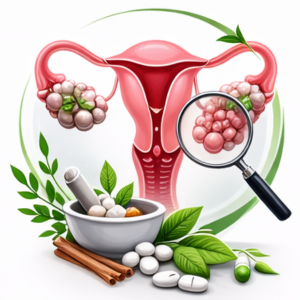
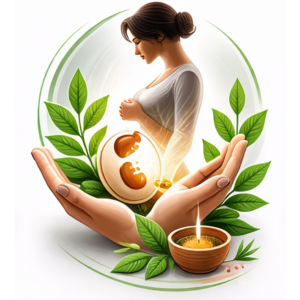
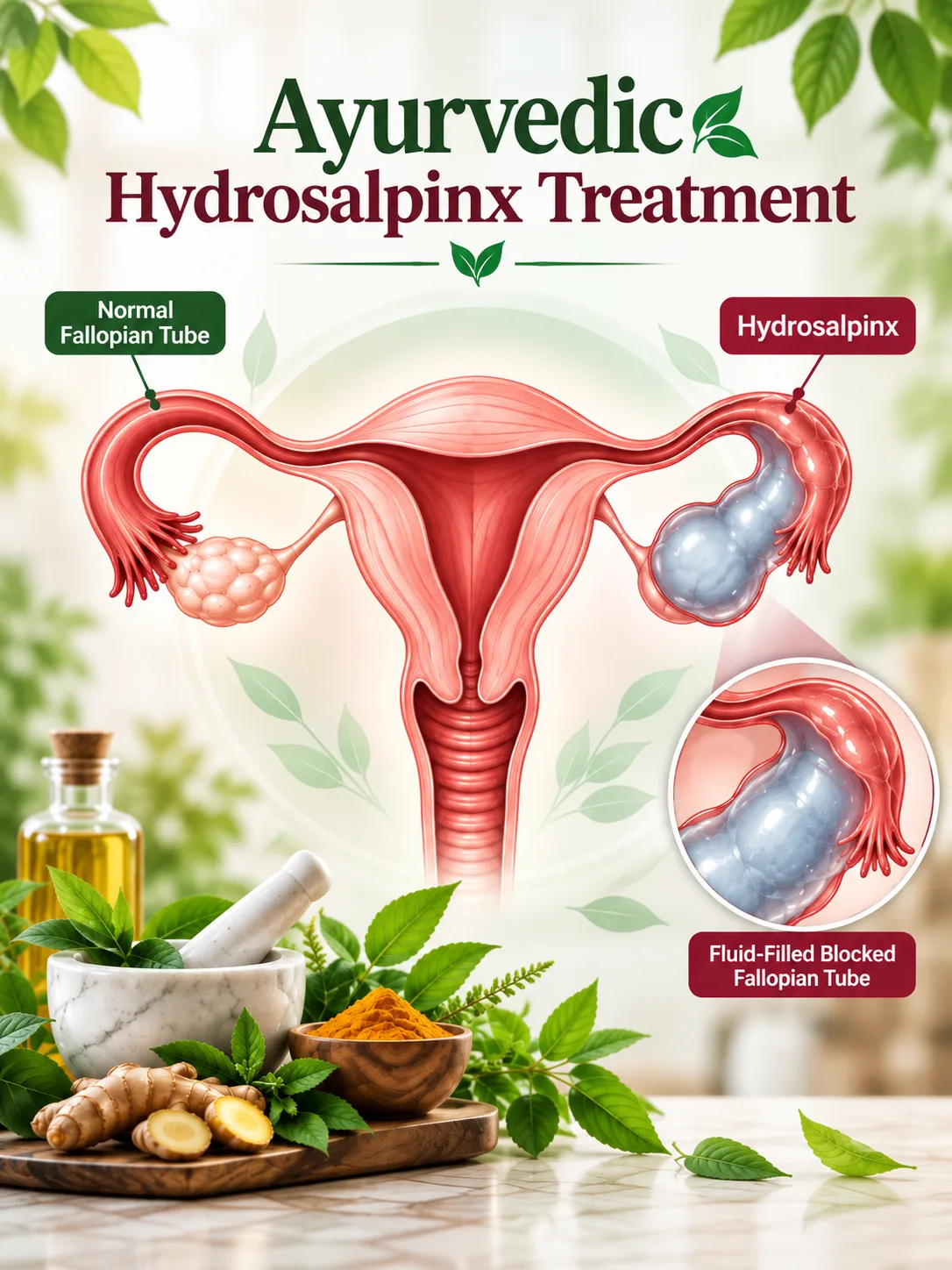
Hydrosalpinx is a condition in which a fallopian tube becomes blocked or damaged and fills with fluid. It may affect one or both tubes and is sometimes discovered during a fertility evaluation.
Its effect on fertility can vary depending on whether one or both tubes are affected, the underlying cause and other reproductive health factors.
Ayurvedic care for hydrosalpinx is personalised according to your fertility history, health, symptoms and medical reports. A detailed consultation can help determine an appropriate approach for your individual condition.
Hydrosalpinx occurs when a fallopian tube becomes blocked and fluid accumulates inside it. The blockage may be associated with previous infection, inflammation, scarring, adhesions or other damage to the tube.
Fallopian tubes play an important role in natural conception. They provide a pathway through which the egg and sperm can meet and allow a fertilised egg to travel towards the uterus.
When a tube is blocked or damaged, its normal function may be affected.
Hydrosalpinx does not always cause noticeable symptoms. In some women, it may only be discovered while investigating difficulty conceiving.
Several conditions can contribute to fallopian tube damage or blockage.
Previous reproductive infections can cause inflammation and scarring. Over time, this may affect the normal structure and function of the fallopian tubes.
Pelvic inflammatory disease can affect the uterus, fallopian tubes and surrounding tissues. Previous or untreated pelvic infections may contribute to tubal damage.
Endometriosis can cause inflammation and adhesions in the pelvic area. In some women, these changes may affect the fallopian tubes and surrounding reproductive organs.
If endometriosis is part of your medical history, you can also learn more about Endometriosis Treatment.
Previous pelvic or abdominal surgery may sometimes lead to scar tissue or adhesions around the reproductive organs. Similarly, a previous ectopic pregnancy can cause damage to a fallopian tube.
Because the cause and severity can vary, treatment should be based on individual assessment rather than the diagnosis alone.
Hydrosalpinx can be associated with difficulty conceiving because the affected tube may not function normally.
If only one tube is affected and the other tube is healthy, natural conception may still be possible in some women. When both tubes are affected, fertility may be more significantly impacted.
Other factors can also influence fertility, including:
For broader fertility concerns, you can also explore Ayurvedic Female Infertility Treatment.
Hydrosalpinx may not always produce clear symptoms. Difficulty conceiving may sometimes be the first reason for further investigation.
Depending on the underlying condition, some women may experience:
These symptoms are not specific to hydrosalpinx and cannot confirm the condition by themselves. Proper medical evaluation and appropriate investigations are needed for diagnosis.
A proper diagnosis is important before deciding how to manage hydrosalpinx.
Pelvic or transvaginal ultrasound may help identify changes in the fallopian tubes and surrounding reproductive organs.
A hysterosalpingography (HSG) uses contrast and imaging to assess the uterine cavity and whether the fallopian tubes are open.
Depending on your medical history and initial findings, additional investigations may sometimes be recommended.
Previous infections, surgeries, ectopic pregnancy, endometriosis and fertility treatments can provide useful clinical information.
If you already have HSG, ultrasound, hormone tests or other fertility reports, keep them available for consultation.
The Ayurvedic approach to hydrosalpinx should be individualised.
Rather than assuming that the same medicine or therapy is suitable for everyone, the treatment plan may consider:
Depending on the individual case, Ayurvedic care may include:
The exact treatment should be decided after an individual consultation.
Ayurvedic treatment should not be presented as a guaranteed way to reverse every structural tubal condition. The nature and extent of hydrosalpinx can differ considerably between patients.
Many women search for hydrosalpinx treatment without surgery because they want to understand whether non-surgical approaches may be appropriate.
The answer depends on the individual diagnosis, severity and fertility situation.
There is no single treatment suitable for every case. Medical assessment is important to understand the condition of the affected tube and how it may relate to fertility.
Ayurvedic treatment may be considered as part of an individualised approach in selected cases. However, it should not be presented as a guaranteed alternative to every form of medical or surgical management.
If surgery has already been recommended, discuss the reason for that recommendation and available options with an appropriately qualified healthcare professional before making a decision.
Hydrosalpinx can be associated with different reproductive health concerns. Explore our treatment pages for female infertility, fallopian tube blockage, endometriosis, PCOS and low AMH to understand related conditions and their available Ayurvedic treatment approaches.
Explore personalised Ayurvedic care with Dr. Chanchal Sharma.
Book a consultation to discuss your concerns and understand your options.
Hydrosalpinx is a condition in which a fallopian tube becomes blocked or damaged and fills with fluid. It can affect one or both tubes and may be associated with difficulty conceiving.
Hydrosalpinx can be associated with tubal-factor infertility. Its effect depends on whether one or both tubes are affected and on other fertility factors.
Yes. Hydrosalpinx can affect one tube or both tubes. The condition of the other tube can be relevant when assessing fertility.
Treatment depends on the individual diagnosis and fertility situation. Ayurvedic care may be considered in selected cases, but treatment outcomes cannot be guaranteed.
There is no single treatment that is best for every patient. Ayurvedic care should be personalised according to health history, fertility concerns and diagnostic findings.
There is no universally appropriate medicine for every case. Medicines should be selected by a qualified practitioner after reviewing the individual’s condition and reports.
Hydrosalpinx can affect fertility, but every case is different. Understanding the condition, its possible cause and relevant fertility reports is an important first step.
If you are considering Ayurvedic care for hydrosalpinx, discuss your medical history and existing reports with a qualified healthcare professional to understand the most appropriate approach.
The information on this page is provided for general educational purposes and is not a substitute for medical diagnosis or treatment. Hydrosalpinx can have different causes and degrees of severity, and treatment suitability varies from person to person. Appropriate medical evaluation and diagnostic investigations may be required. Ayurvedic treatment should be undertaken under the guidance of a qualified practitioner, and treatment outcomes cannot be guaranteed.