
Home › Ayurveda Treatments › Fallopian Tube Blockage
Learn about Sneha Basti Treatment, including its purpose, procedure, potential benefits, preparation, aftercare and important safety considerations.
✦Personalised Ayurvedic Assessment ✦ Traditional Vasti-Based Care
✦ Supervised Treatment Procedure ✦ Individualised Post-Treatment Guidance
Get an Appointment
Sneha Vasti is an Ayurvedic Vasti therapy in which a suitable medicated oil or other unctuous preparation is administered through the rectal route. The therapy is also referred to as Sneha Basti in Ayurvedic literature and healthcare resources.
Sneha Vasti is associated with the oil-based forms of Basti therapy, including Anuvasana Basti. The exact preparation, quantity, timing and treatment approach depend on the individual’s condition and Ayurvedic assessment.
In traditional Ayurvedic practice, Sneha Vasti is considered an unctuous form of Vasti therapy and is commonly associated with Vata-oriented treatment approaches.
Depending on the individual’s assessment, it may be included as part of Ayurvedic care for concerns such as:
The suitability of Sneha Vasti depends on the person’s symptoms, health history, digestive and bowel patterns, and overall treatment objectives.
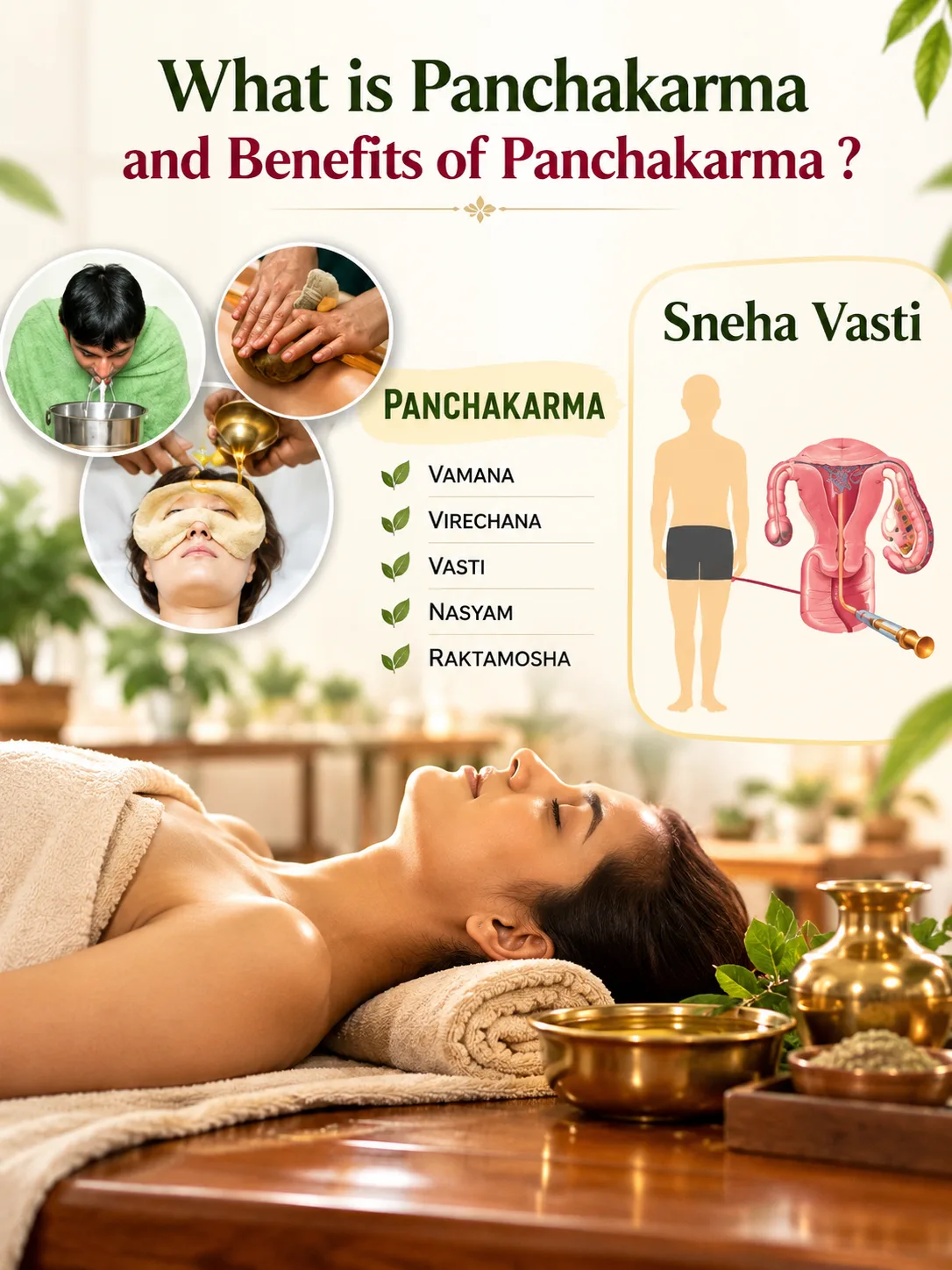
You may come across both Sneha Vasti and Sneha Basti when researching this therapy. These terms are used in Ayurvedic healthcare content for oil-based Basti therapy.
Basti therapy includes different forms and preparations. Oil-based forms include Sneha Basti and Anuvasana Basti, while other forms use different preparations and have different therapeutic purposes.
The specific type of Basti should therefore be selected according to the individual’s condition and treatment plan rather than following a fixed approach.
The exact procedure can vary depending on the individual’s condition and treatment plan. A supervised treatment generally involves preparation, administration and post-treatment care.
Before treatment, the Ayurvedic practitioner assesses the patient’s symptoms, general health, digestion, bowel habits and suitability for Vasti therapy.
Depending on the treatment plan, preparatory measures such as Ayurvedic oil massage or other supportive procedures may be recommended.
The practitioner may also provide instructions regarding food, bowel evacuation and other preparation requirements.
A suitable medicated oil or other unctuous preparation is selected according to the practitioner’s assessment.
The patient is positioned appropriately, and the preparation is administered through the rectal route using suitable equipment under professional supervision.
The preparation and quantity are individualised according to the treatment plan rather than being identical for every person.
After administration, the patient may receive specific instructions regarding food, rest, daily activities and other aspects of post-treatment care.
The recommended aftercare depends on the type of Vasti, the preparation used and the individual’s overall treatment plan.
In Ayurvedic practice, Sneha Vasti is traditionally used as an unctuous form of Basti therapy, particularly within treatment approaches focused on Vata-related concerns.
Depending on the individual’s treatment plan, an Ayurvedic practitioner may consider it for:
The response to treatment can vary between individuals. These traditional uses should not be interpreted as guaranteed outcomes, and Sneha Vasti should not replace appropriate medical diagnosis or treatment when required.
Sneha Vasti may be considered when an Ayurvedic practitioner determines that an oil-based Vasti approach is appropriate.
The assessment may take into account:
Vasti therapy is not appropriate for every person or every health situation. An individual assessment should therefore be completed before treatment.
Sneha Vasti is a specialised Ayurvedic procedure and should be performed under qualified supervision.
Before treatment, the practitioner should consider the individual’s health history, current medicines and any relevant gastrointestinal or rectal concerns.
People with active gastrointestinal or rectal problems should inform the practitioner before treatment so that suitability can be assessed appropriately.
Therapeutic Sneha Vasti should not be self-administered at home because the preparation, quantity, timing and technique require appropriate professional assessment.
If unexpected pain, bleeding, significant irritation or another concerning symptom occurs, appropriate medical advice should be sought.
If you are exploring Panchakarma and related Ayurvedic therapies, you can also learn more about:
Each Ayurvedic therapy has its own purpose, preparation and treatment protocol. The appropriate approach should be selected after individual assessment.
Explore personalised Ayurvedic care with Dr. Chanchal Sharma.
Book a consultation to discuss your concerns and understand your options.
Sneha Vasti is an oil-based Ayurvedic Vasti therapy in which a suitable medicated oil or other unctuous preparation is administered through the rectal route under appropriate supervision.
Yes. Sneha Vasti and Sneha Basti are terms used for oil-based Basti therapy in Ayurvedic healthcare content. The spelling may vary between sources and transliterations.
Sneha Vasti is traditionally used for its unctuous and supportive therapeutic approach, particularly within Ayurvedic care involving Vata-related concerns. Individual responses can vary.
After appropriate assessment and preparation, a suitable medicated oil or unctuous preparation is administered through the rectal route using appropriate equipment. The procedure and aftercare depend on the individual’s treatment plan.
Therapeutic Sneha Basti should not be self-administered without appropriate professional guidance. The preparation, quantity, timing and technique should be determined according to individual assessment.
There is no fixed number of sessions suitable for everyone. The frequency and duration depend on the individual’s condition, treatment objectives and Ayurvedic assessment.
Sneha Vasti is a traditional Ayurvedic therapy involving the administration of an oil-based or other unctuous preparation through the rectal route. When researching this therapy, you may also see the term Sneha Basti. Both terms are used in Ayurvedic healthcare content to describe oil-based Basti therapy.
The appropriate preparation, quantity, timing and treatment schedule should be decided after individual assessment rather than following a fixed protocol.
This page provides general health information and is not a substitute for individual medical diagnosis, treatment or professional advice. Sneha Vasti should be undertaken only after appropriate assessment and under qualified supervision. If you have an existing medical condition, take regular medication, are pregnant, or have concerns about your health, consult an appropriate healthcare professional before starting treatment.